
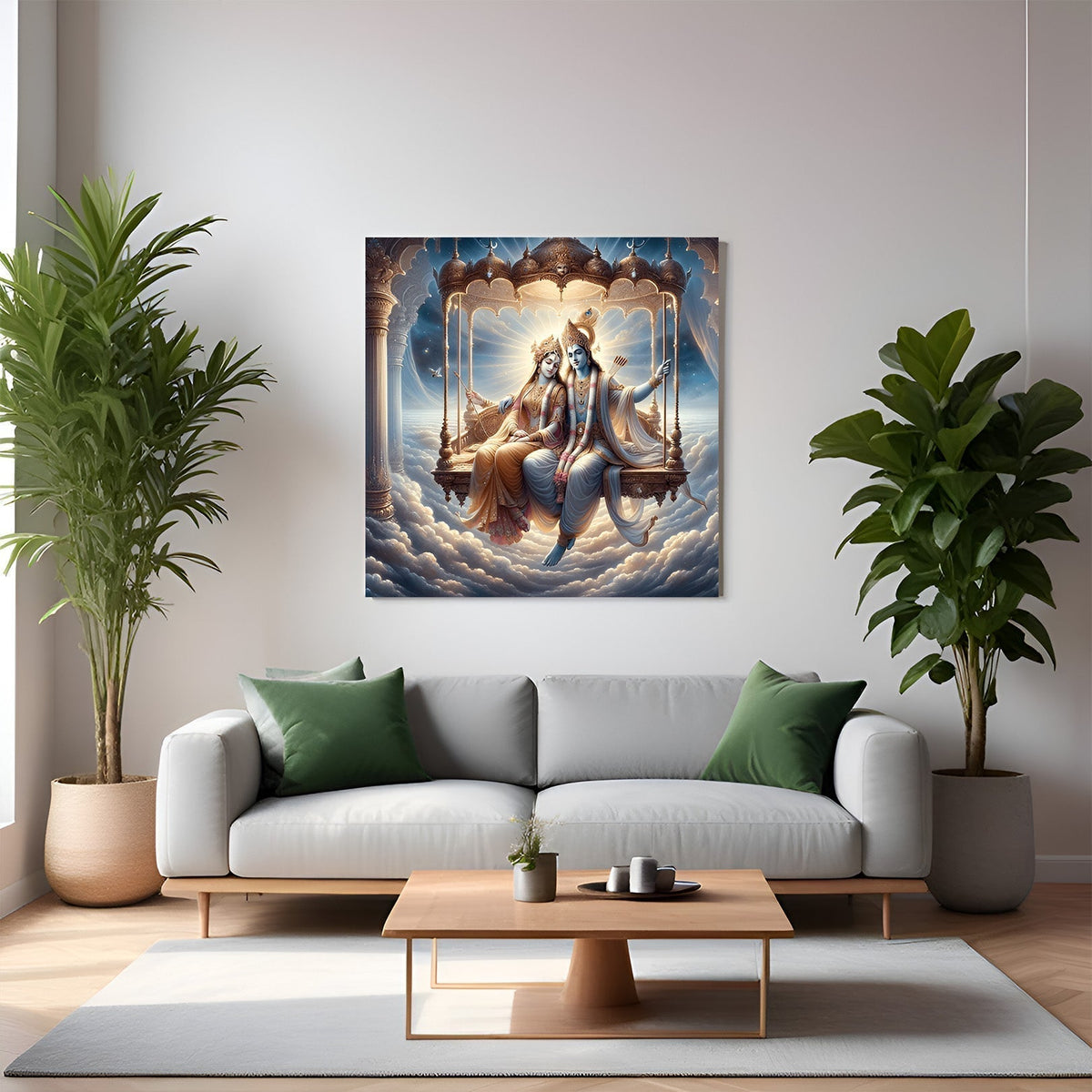
Radha Krishna paintings are commonly chosen for Indian homes because they represent divine love, devotion, emotional harmony and spiritual connection. In Vastu traditions, where you place the artwork also matters, especially when it is being used in a bedroom, living room, pooja room or meditation space.
For most homes, the east or northeast is traditionally considered suitable for Radha Krishna artwork. The bedroom is also a popular placement for couples, provided the image has a peaceful and harmonious composition.
This guide explains the meaning of Radha Krishna paintings, suitable Vastu directions, room-by-room placement, designs to choose and placements traditionally avoided.
Is a Radha Krishna painting good for home?
Yes. In Hindu devotional tradition, Radha and Krishna together represent a bond based on love, devotion and spiritual union. This is why their imagery is commonly used in homes, prayer spaces and rooms associated with relationships and family life.
From a Vastu perspective, Radha Krishna artwork is traditionally associated with a peaceful and harmonious atmosphere when placed thoughtfully. These are traditional and cultural interpretations rather than scientifically established effects.
For shoppers looking specifically for this subject, our Radha Krishna Wall Art collection brings together traditional, modern, devotional and bedroom-friendly canvas designs.
What does a Radha Krishna painting symbolize?
The meaning of Radha Krishna imagery goes beyond romantic love.
In devotional interpretation, Radha is often associated with complete devotion, while Krishna represents the divine. Their relationship is therefore commonly understood as the connection between the individual soul and the divine.
The imagery is traditionally associated with:
- divine love and devotion
- spiritual companionship
- emotional harmony
- faith and surrender
- the bond between the devotee and the divine
Details within the artwork can add further layers of meaning. Krishna's flute is traditionally associated with the divine call, lotus imagery with spiritual growth, and peaceful Vrindavan settings with devotion and serenity.
Which direction is best for a Radha Krishna painting as per Vastu?
East and northeast are among the most commonly recommended directions for Radha Krishna paintings in traditional Vastu guidance.
East wall
East is associated with the rising sun, new beginnings and positive movement. It can be a suitable direction for Radha Krishna artwork in living rooms, bedrooms, prayer areas and meditation spaces.
If you are specifically arranging artwork according to wall direction, you can also browse our East Wall Art collection.
Northeast wall
The northeast is traditionally regarded as a spiritually significant area of the home and is often preferred for devotional imagery, prayer spaces and meditation areas.
If you are planning a devotional or Vastu-focused wall in this part of the home, you can also explore our North East Wall Art collection.
What about the north wall?
Some Vastu interpretations also consider north suitable for peaceful and spiritually positive artwork. However, if you have a practical choice between east, northeast and north specifically for Radha Krishna devotional art, east or northeast is the clearer traditional fit.
Room-by-room Radha Krishna painting placement
| Room | Suggested direction | Suitable composition | Colour palette |
|---|---|---|---|
| Bedroom | East or northeast where layout allows | Peaceful couple, embracing or flute scenes | Soft blue, pink, cream, beige and gold |
| Living room | East or northeast-facing wall | Large landscape, panoramic or dancing compositions | Deeper tones and more detailed compositions |
| Pooja room | Northeast preferred | Traditional devotional scenes, flute imagery and Vrindavan settings | Traditional and devotional tones |
Can we keep a Radha Krishna painting in the bedroom?
Yes. Radha Krishna paintings are commonly used in bedrooms, particularly by couples, because the imagery represents love, companionship and emotional harmony.
Choose a composition where Radha and Krishna appear peaceful, affectionate and together. Softer colours and calm expressions generally work better in a bedroom than highly dramatic devotional scenes.
Where should a Radha Krishna painting be placed in the bedroom?
A clean, prominent wall where the artwork can be viewed comfortably is preferable. East or northeast can be considered where the layout allows, but the painting should not be squeezed into an awkward location simply to meet a directional preference.
A wall above a console, opposite a seating area or another uncluttered bedroom wall can work well. If you are choosing artwork specifically for this room, our Bedroom Wall Art collection includes Radha Krishna and other calmer subjects suited to bedroom interiors.
Which Radha Krishna painting is best for a bedroom?
Look for compositions that emphasize togetherness rather than dramatic religious imagery. Suitable options may include:
- Radha and Krishna standing or sitting together
- peaceful Vrindavan scenes
- Krishna playing the flute with Radha beside him
- gentle dancing compositions
- artwork using soft blue, pink, cream, beige or gold tones
For a bedroom, the overall mood matters as much as the subject. The piece should feel peaceful rather than visually overwhelming.
Where should Radha Krishna paintings be placed in the living room?
A living room is another natural location for Radha Krishna artwork, especially when the piece is large enough to become a focal point.
An east or northeast-facing wall can be considered under traditional Vastu guidance. From an interior-design perspective, use an uncluttered wall where the proportions of the artwork match the furniture below it.
Large landscape or panoramic Radha Krishna pieces can work particularly well above a sofa or console. Square and vertical compositions are better suited to narrower feature walls.
You can compare room-appropriate formats in our Living Room Wall Art collection.
Can Radha Krishna paintings be kept in a pooja room?
Yes. Radha Krishna imagery is widely used in prayer and devotional spaces.
The northeast portion of the home is traditionally preferred for pooja and meditation areas. The artwork should be placed in a clean, respectful and uncluttered setting.
For a dedicated prayer area, devotional compositions usually work better than highly stylized romantic interpretations. Traditional Radha Krishna scenes, flute imagery, Vrindavan settings and peaceful devotional portraits are all suitable choices.
See our Pooja Room Wall Art collection for other artwork selected specifically for prayer and meditation spaces.
What are the traditional benefits of keeping a Radha Krishna painting at home?
The symbolism explains what Radha Krishna imagery represents. The traditional benefits describe why people choose to place that imagery in their homes.
Harmony in relationships
Because Radha and Krishna are associated with devotion, affection and companionship, their artwork is traditionally chosen for spaces connected with couples and family relationships.
A peaceful visual presence
Paintings with calm expressions, gentle colours and natural surroundings can contribute visually to a quieter and more reflective atmosphere.
A reminder of devotion and companionship
For many people, Radha Krishna imagery acts as a personal reminder of patience, affection, commitment and devotion rather than simply functioning as decoration.
Spiritual focus
For devotees, Radha Krishna artwork can support a prayer or meditation space by representing bhakti and spiritual love.
These associations come from religious, cultural and Vastu traditions and should not be interpreted as guaranteed outcomes from displaying a particular painting.
How is Radha Krishna different from a general Krishna painting?
This distinction is useful when choosing artwork.
Radha Krishna artwork focuses primarily on divine love, companionship, devotion and harmony.
Krishna-only artwork can carry different meanings depending on the depiction. Bal Krishna, flute-playing Krishna, Krishna with cows, Vishwaroop and other forms have their own symbolism and traditional placement considerations.
If you are choosing between different depictions of Krishna rather than specifically Radha Krishna, read our separate guide on where to place Krishna paintings at home as per Vastu.
Which type of Radha Krishna painting should you choose?
There is no single design that is right for every home. The room, wall size and desired mood should guide your choice.
Radha Krishna with flute
A classic devotional composition associated with Krishna's music and the spiritual connection between Radha and Krishna. It suits pooja rooms, meditation areas and traditional interiors.
Radha Krishna dancing
These compositions feel more expressive and celebratory. They can work well in living rooms and larger feature spaces.
Radha Krishna together or embracing
These artworks place greater visual emphasis on companionship and love, making them a popular choice for bedrooms and couple spaces.
Traditional Radha Krishna art
Pichwai-inspired, Kerala mural and other traditional Indian interpretations suit interiors with ethnic, classical or devotional styling.
Modern Radha Krishna canvas art
Contemporary versions may use simplified forms, textured backgrounds, gold details or modern colour palettes. These work well when you want the symbolism of Radha Krishna in a more contemporary interior.
Which colours are suitable for Radha Krishna paintings?
Colour should primarily suit your interior, although different colours also carry traditional associations.
- Blue: strongly associated with Krishna and commonly linked with calmness and spirituality.
- Pink and soft red: visually associated with affection, warmth and love.
- Yellow and gold: commonly used in devotional artwork and traditionally associated with warmth, divinity and abundance.
- White and cream: useful for quieter, minimal and peaceful interiors.
- Green and natural tones: work well in Vrindavan and garden-style compositions.
For bedrooms, softer palettes usually work better. Larger living rooms can comfortably carry deeper colours or more detailed compositions.
What should you avoid when placing Radha Krishna artwork?
If you are following traditional placement practices, avoid:
- placing devotional artwork immediately beside or facing a bathroom
- placing it close to a shoe rack or visibly unclean area
- squeezing the artwork into a cluttered corner
- using a damaged, torn or badly faded image
- choosing imagery where the figures appear distressed, separated or visually aggressive
- placing an oversized canvas on a wall that cannot visually support it
Practical presentation matters too. Even when a direction is considered suitable, choose a wall where the artwork has enough breathing room and can be seen properly.
What size Radha Krishna painting should you choose?
Choose the size according to the wall and furniture rather than treating one size as universally correct.
For a painting above a sofa, bed or console, the artwork should generally feel visually connected to the furniture instead of appearing like a small isolated object on a large wall.
Large living-room walls can carry panoramic or oversized Radha Krishna art, while compact bedrooms and pooja corners often work better with medium or vertical formats.
If your main concern is choosing the right dimensions rather than Vastu, measure the usable wall width first and then choose an artwork that feels proportionate to the space.
Can you gift a Radha Krishna painting?
Yes. Radha Krishna paintings are commonly chosen for weddings, anniversaries and housewarming gifts because of their traditional association with love, companionship and devotion.
Gifting is a separate decision from choosing artwork for your own home, so we have covered it in detail in our guide: Can You Gift a Radha Krishna Painting?
Frequently asked questions
Which direction is best for a Radha Krishna painting?
East and northeast are among the most commonly recommended directions in traditional Vastu guidance. Northeast is particularly associated with prayer and spiritual spaces.
Can we keep Radha Krishna paintings in the bedroom?
Yes. Radha Krishna artwork is commonly kept in couple bedrooms because it represents love, companionship and devotion. Choose peaceful imagery and a suitable uncluttered wall.
Which Radha Krishna painting is best for a bedroom?
A calm composition showing Radha and Krishna together, playing the flute, embracing or sharing a peaceful Vrindavan scene is generally better suited to a bedroom than a highly dramatic composition.
What does a Radha Krishna painting symbolize?
It commonly symbolizes divine love, devotion, harmony and the spiritual connection between the individual soul and the divine.
Can Radha Krishna paintings be kept in the living room?
Yes. They can work as spiritual or decorative focal points in living rooms. East or northeast can be considered if you are following traditional Vastu placement guidance.
Can Radha Krishna artwork be placed in a pooja room?
Yes. Radha Krishna imagery is suitable for devotional and prayer spaces. A clean, quiet area, traditionally in the northeast where possible, is commonly preferred.
Can an unmarried person keep a Radha Krishna painting?
Yes. There is no general religious rule that Radha Krishna artwork is only for married couples. Their imagery has devotional and spiritual significance beyond romantic relationships.
Is Radha Krishna artwork only suitable for traditional interiors?
No. Traditional paintings suit classical interiors, while modern, minimal and contemporary interpretations can work well in modern homes without changing the central subject or symbolism.
Choosing Radha Krishna art for your home
The right Radha Krishna painting depends on the room as much as the direction. Choose peaceful compositions for bedrooms, devotional artwork for pooja spaces and larger statement pieces for living rooms. If you are following traditional Vastu guidance, east and northeast are useful starting points.
Browse the complete Radha Krishna Wall Art collection to compare different compositions, orientations and sizes.