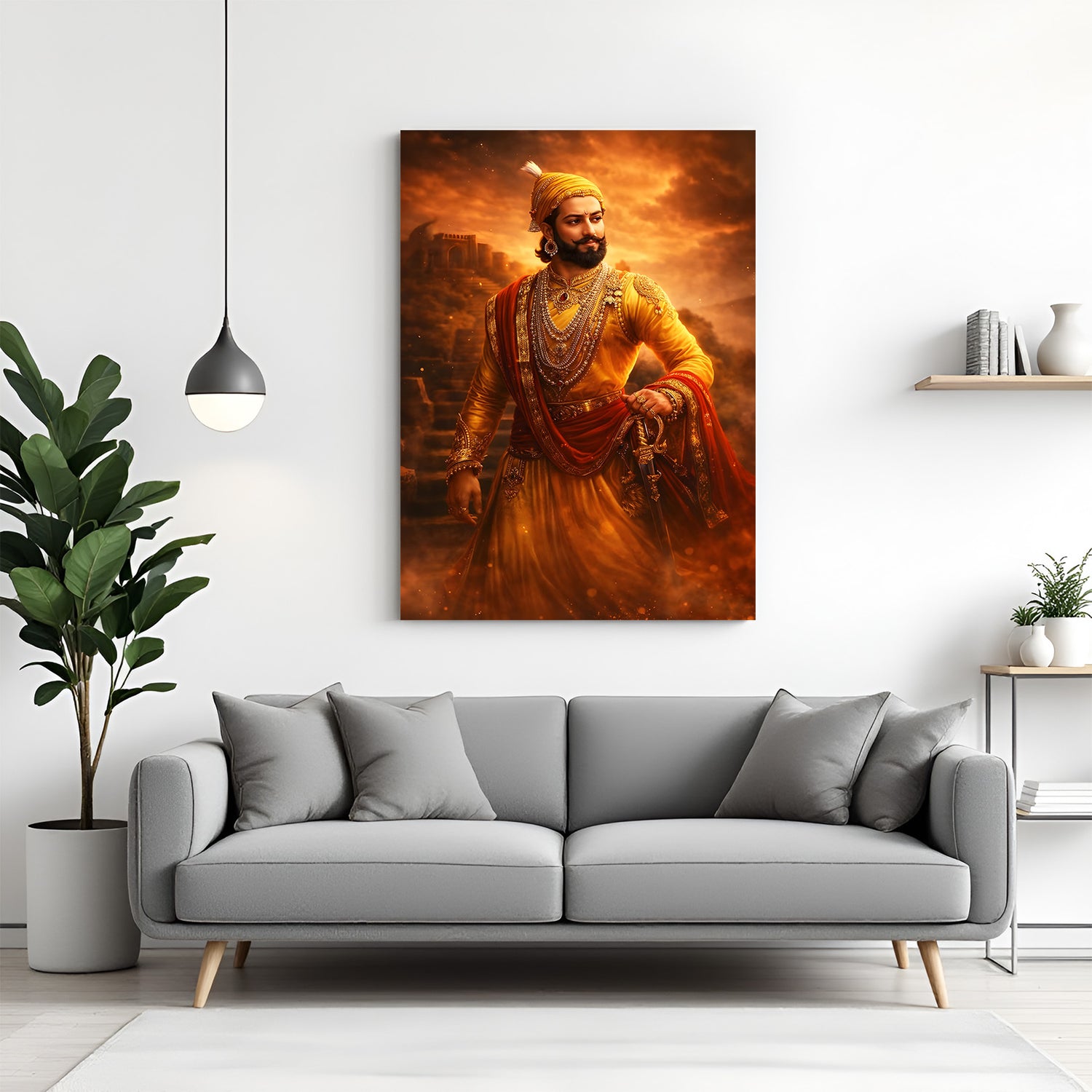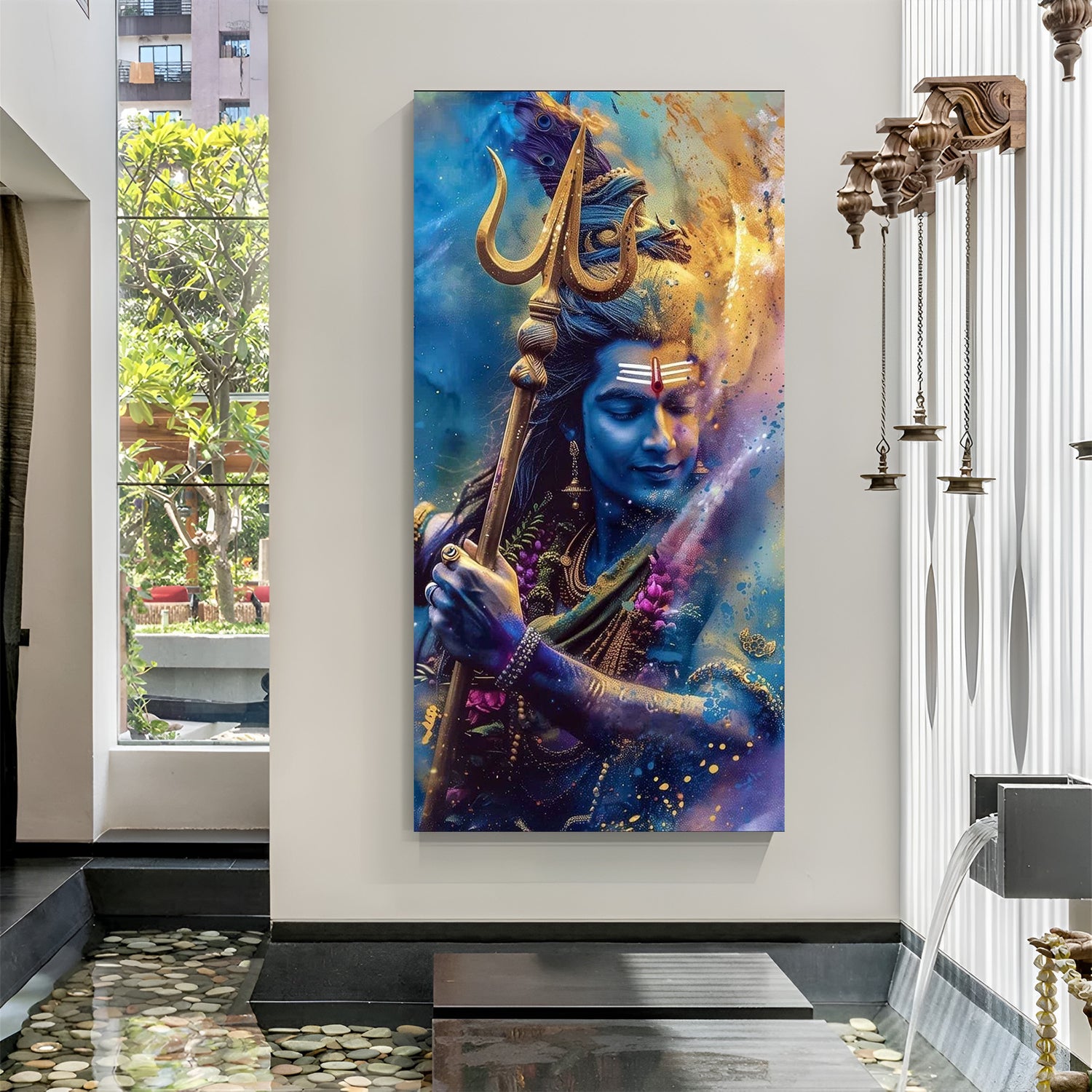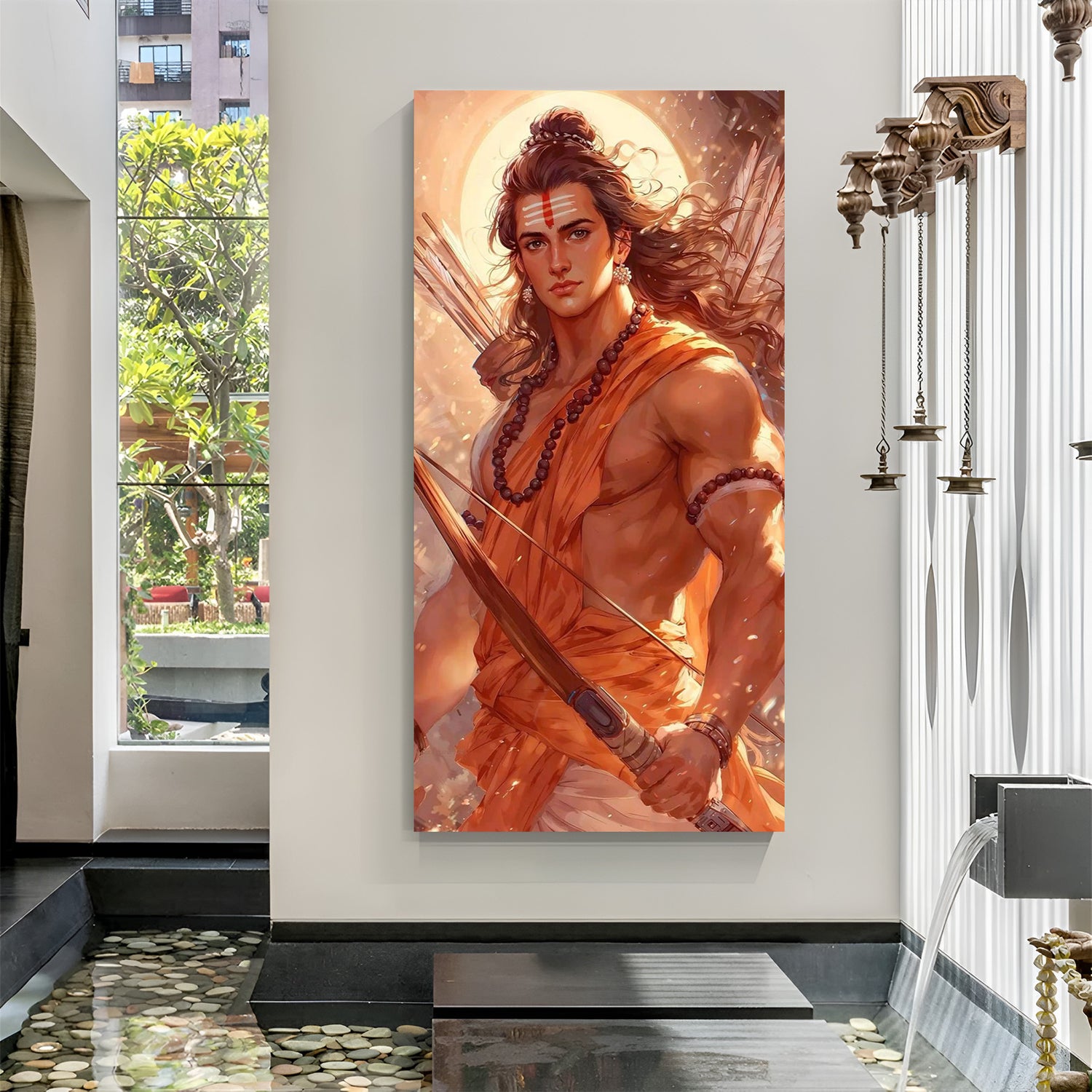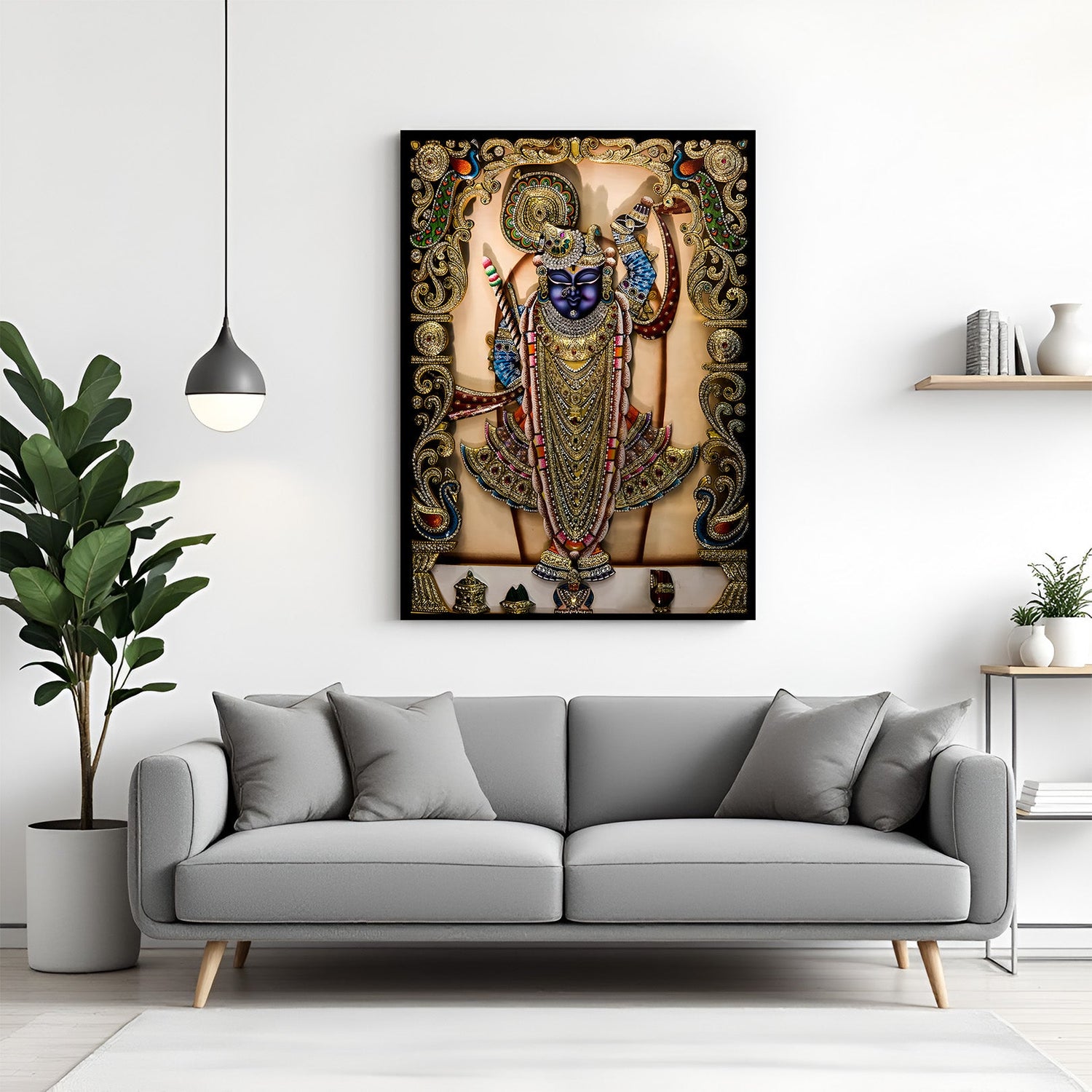
Buy Kerala Mural Wall Art
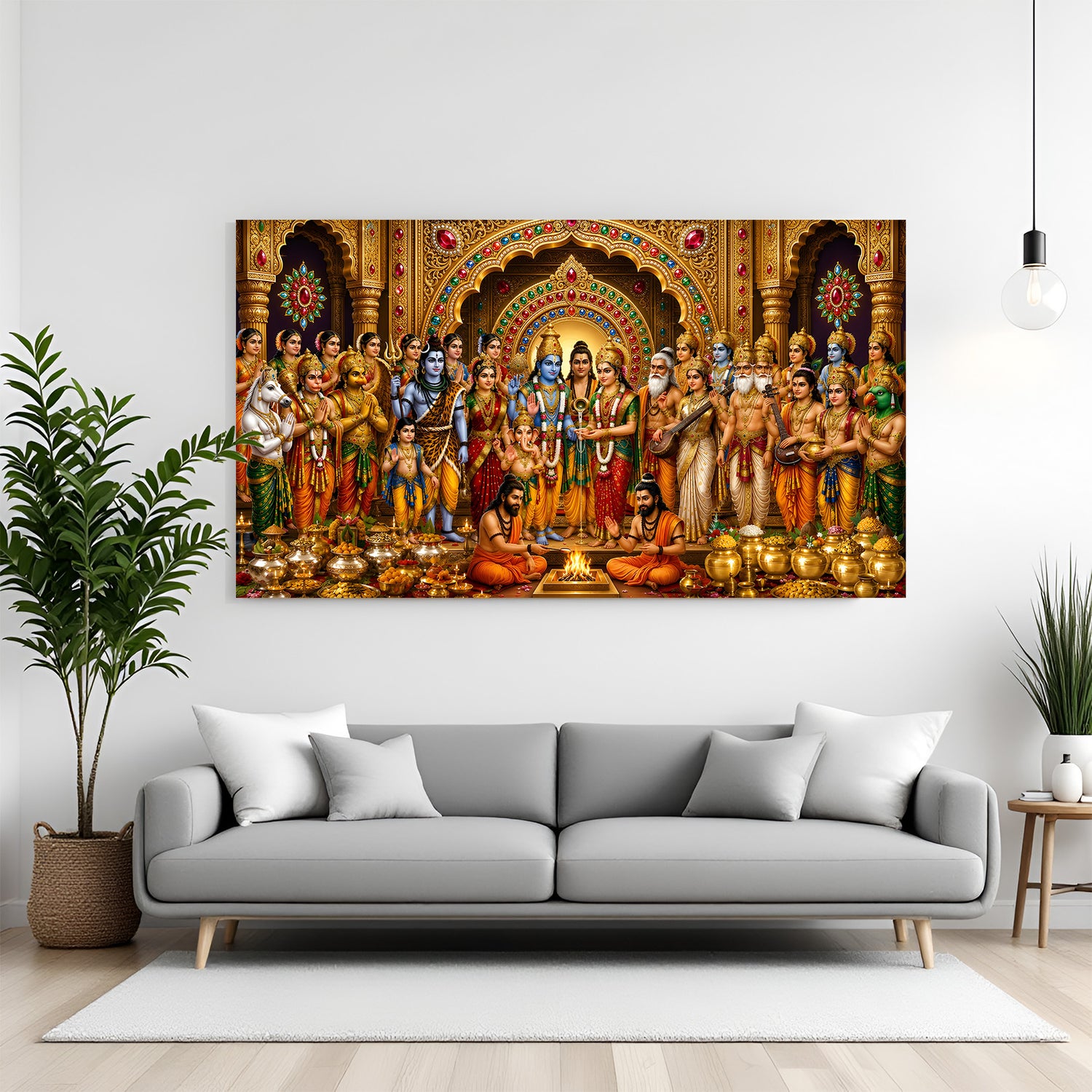
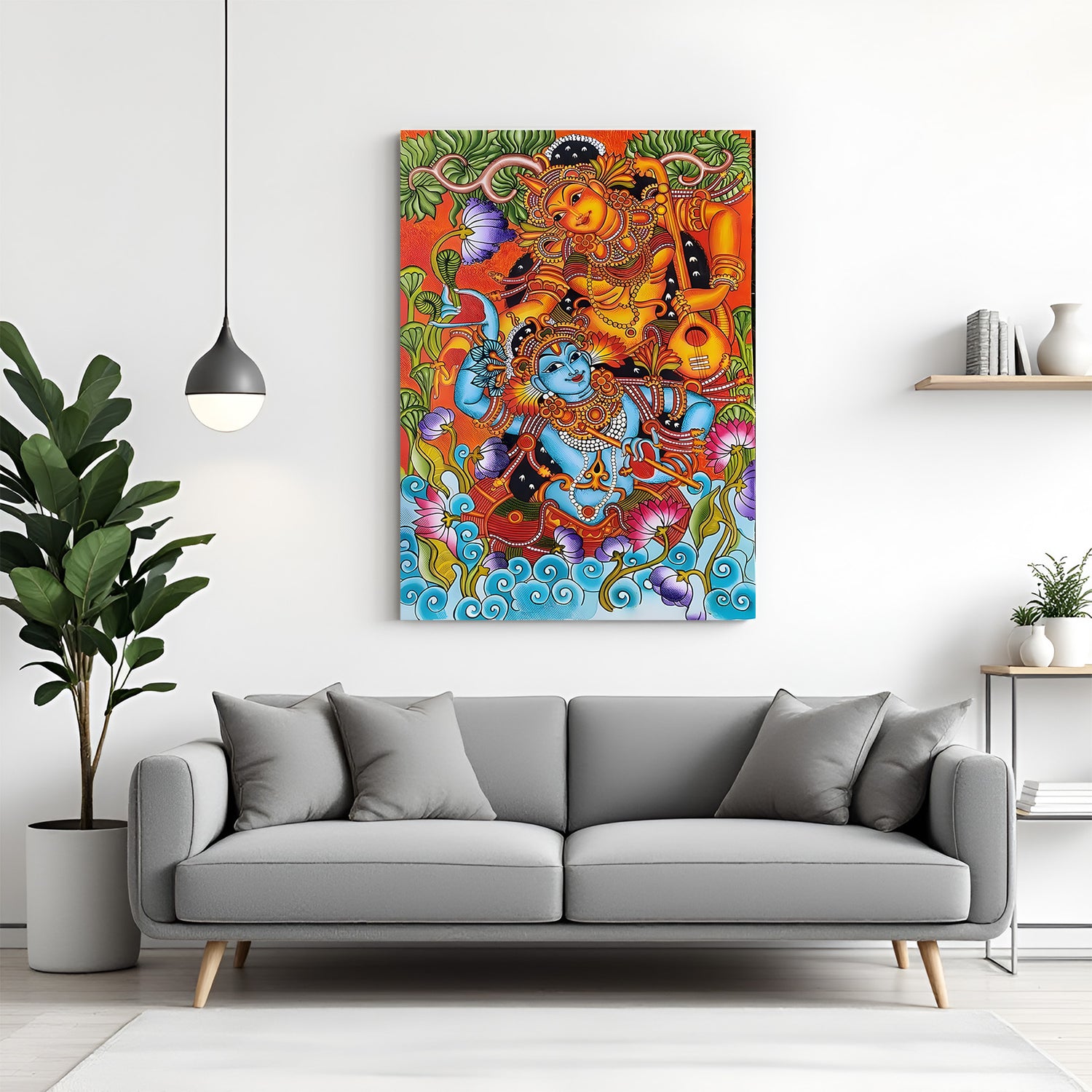
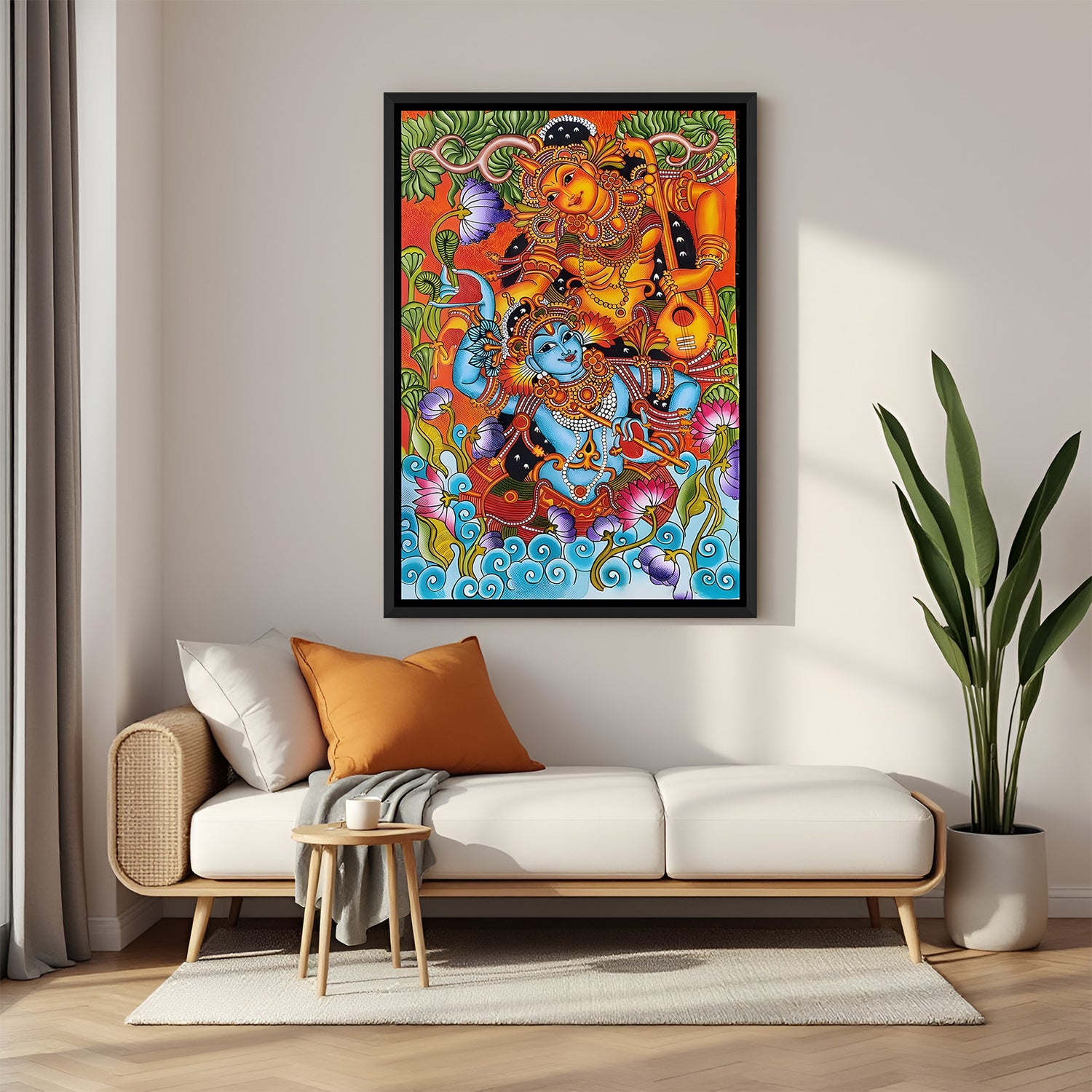
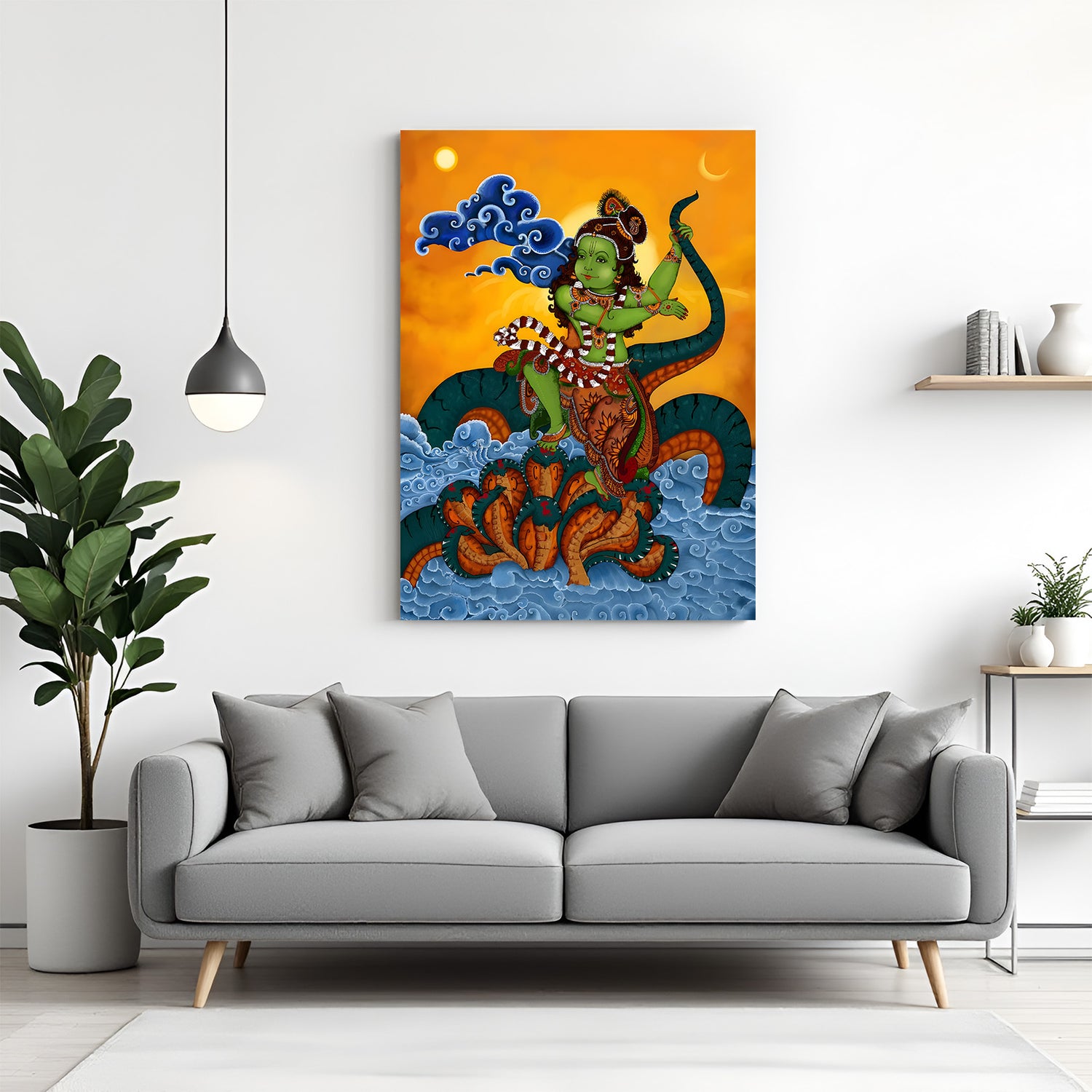
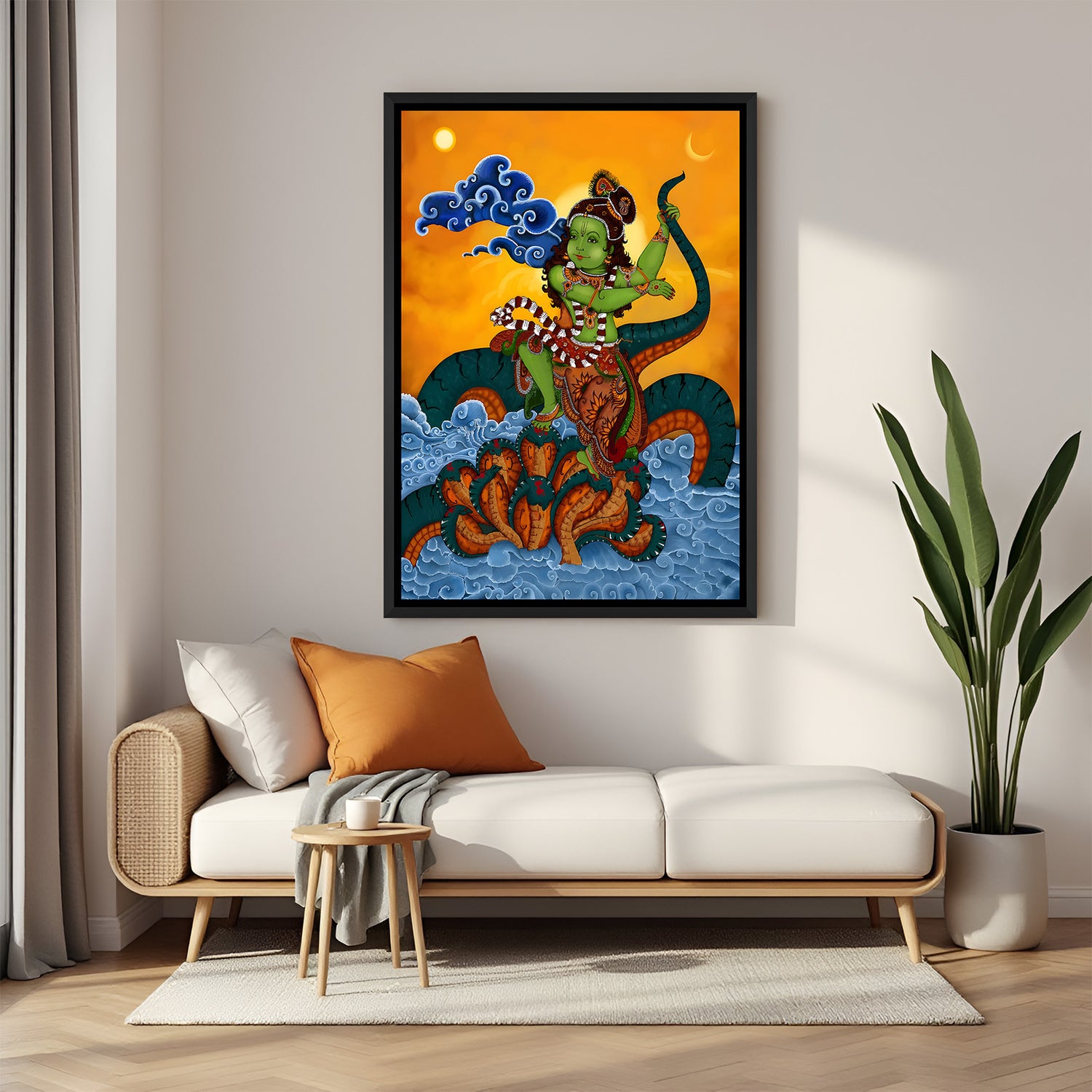
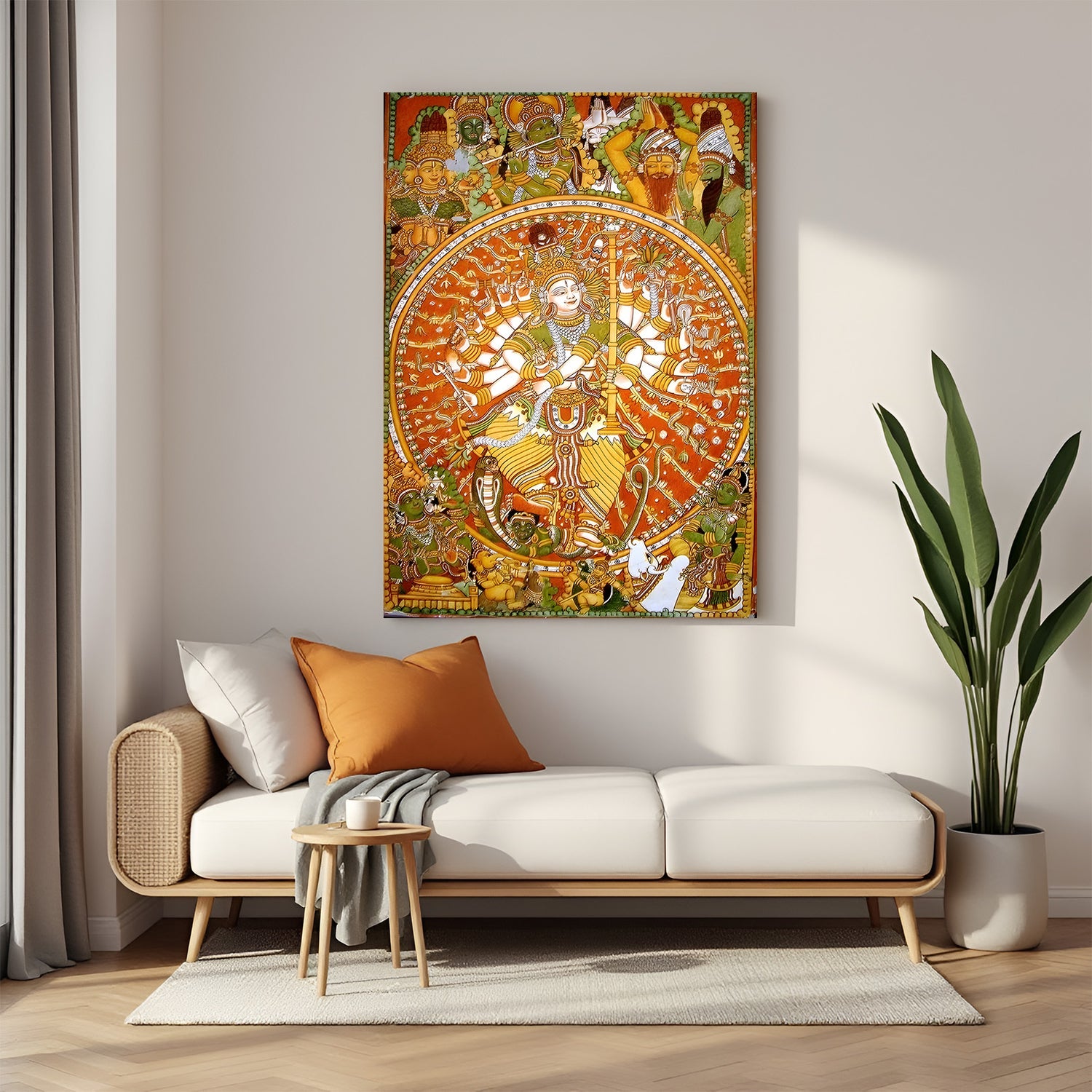
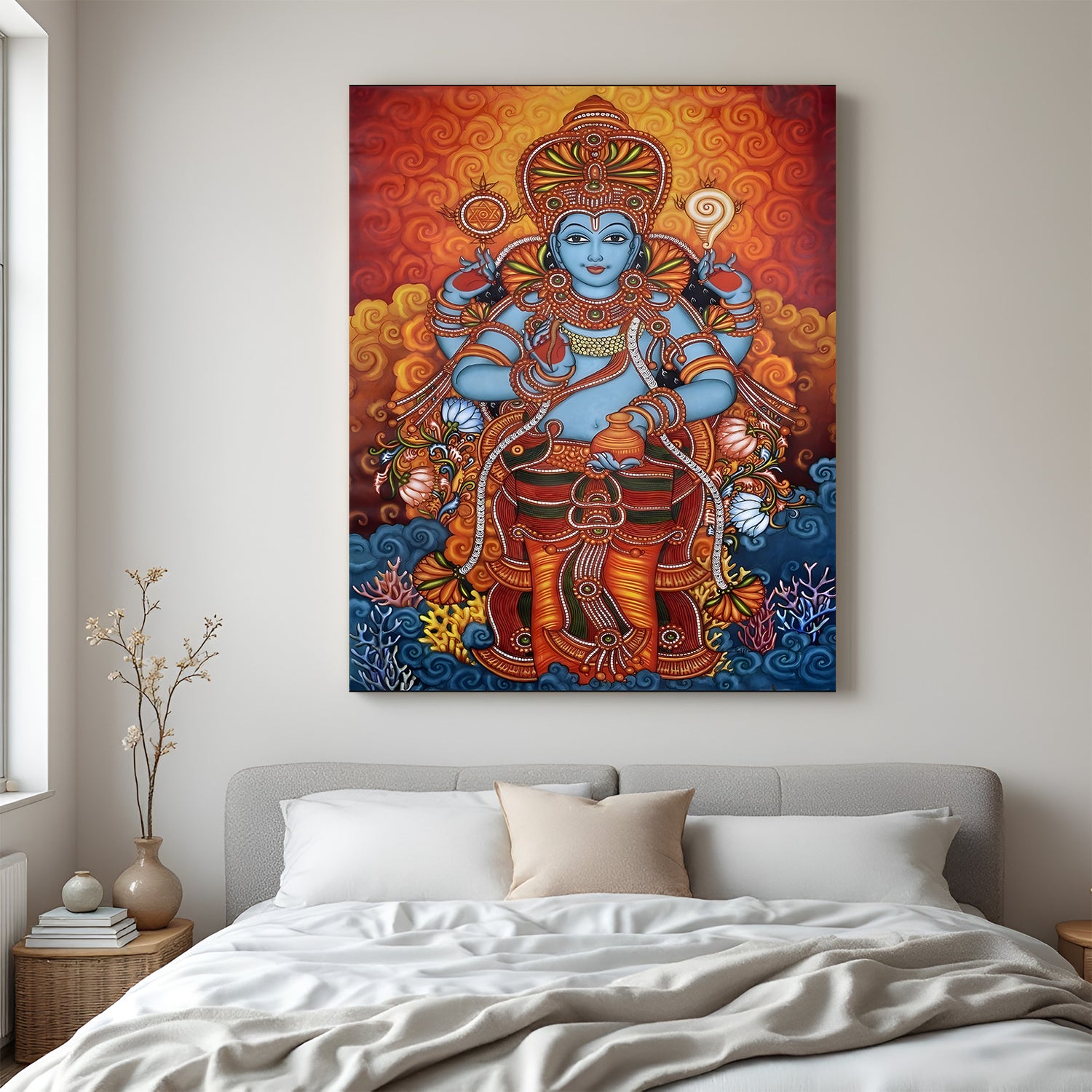
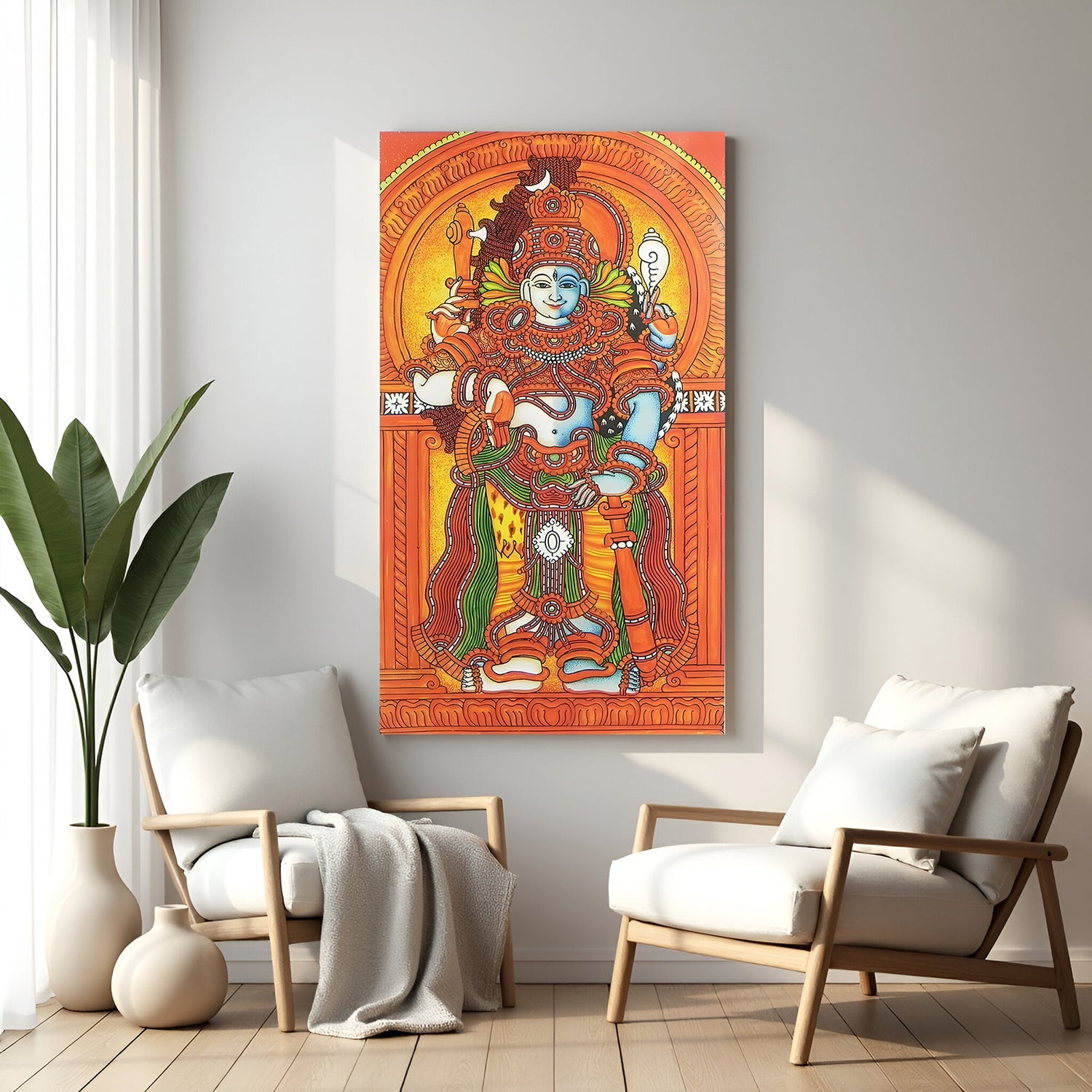
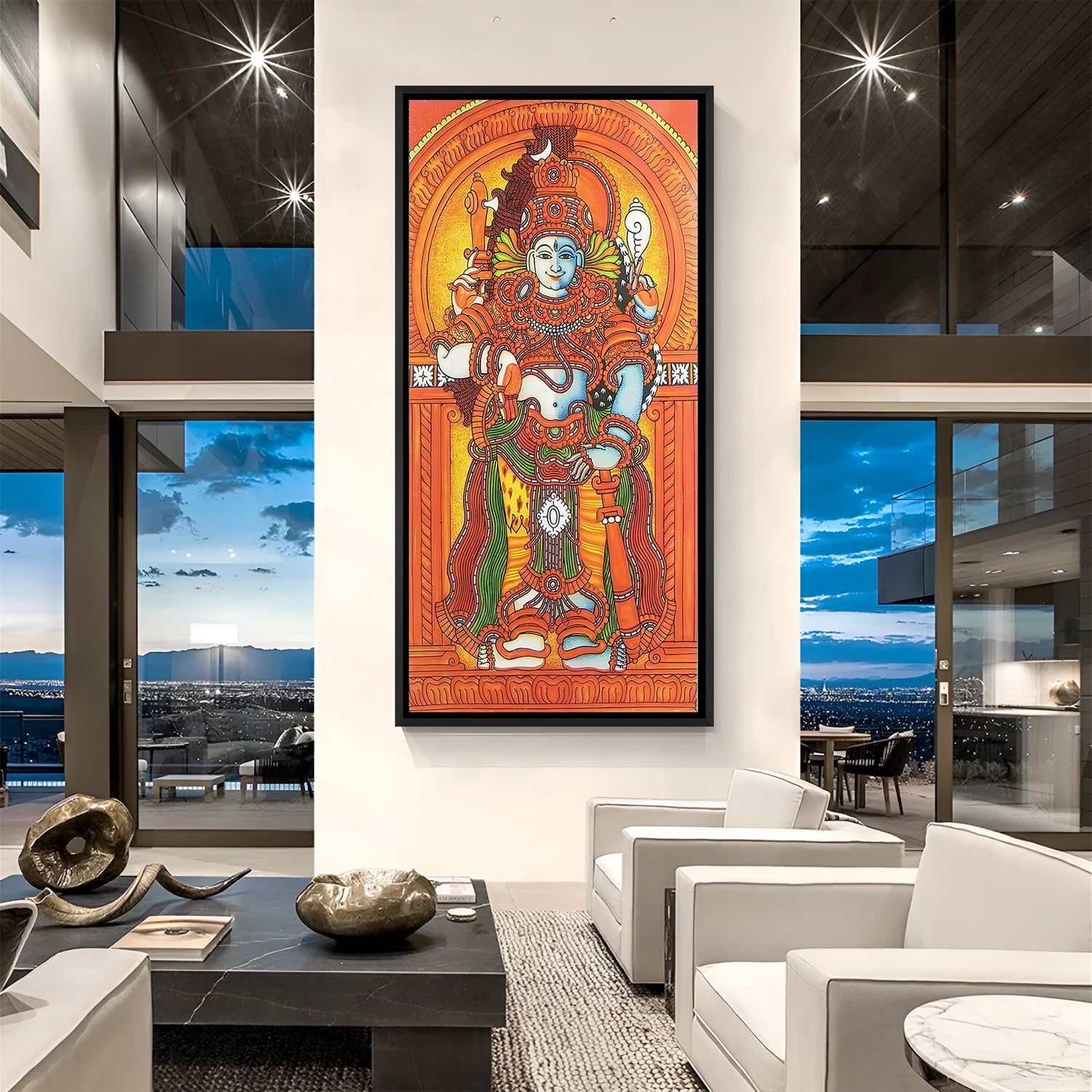
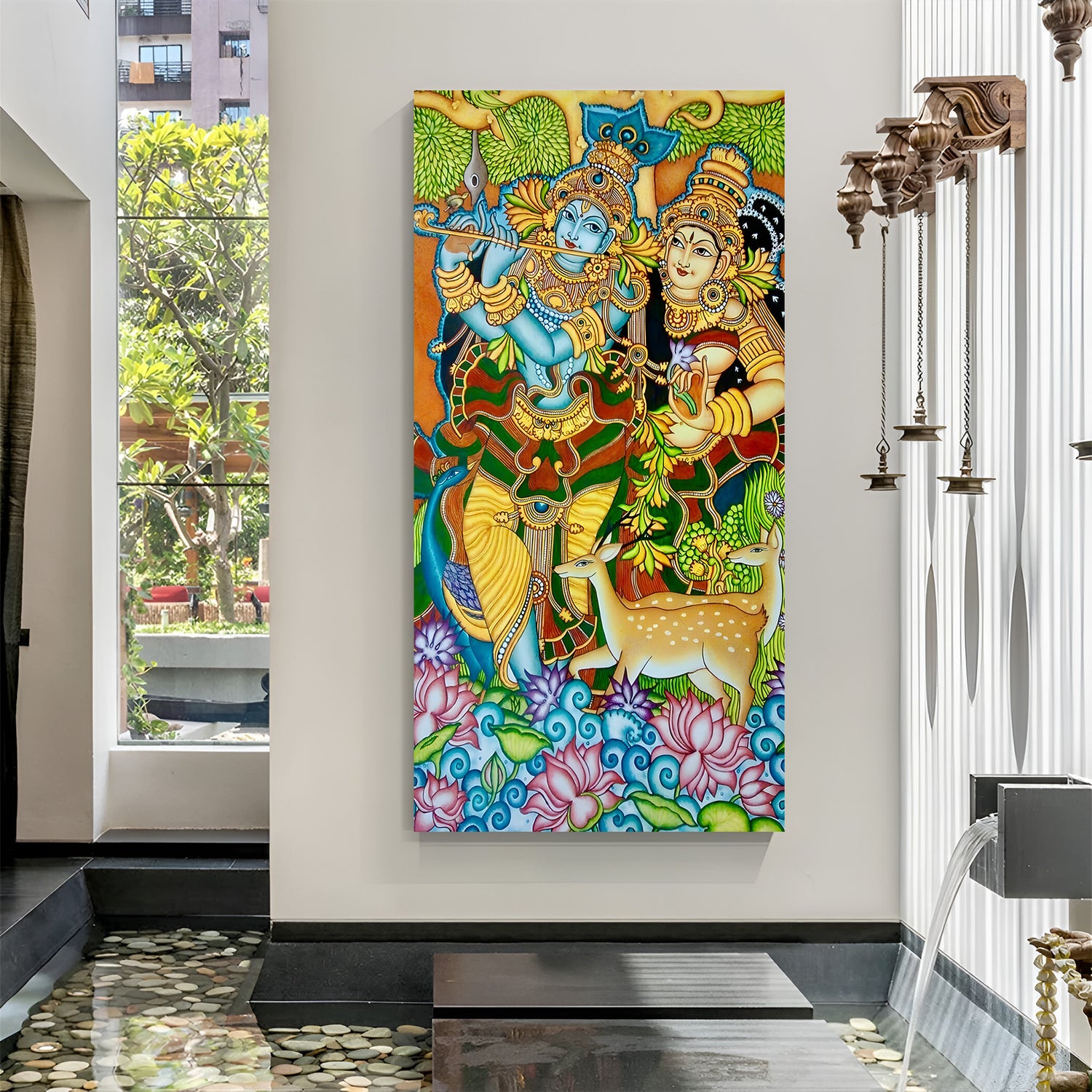
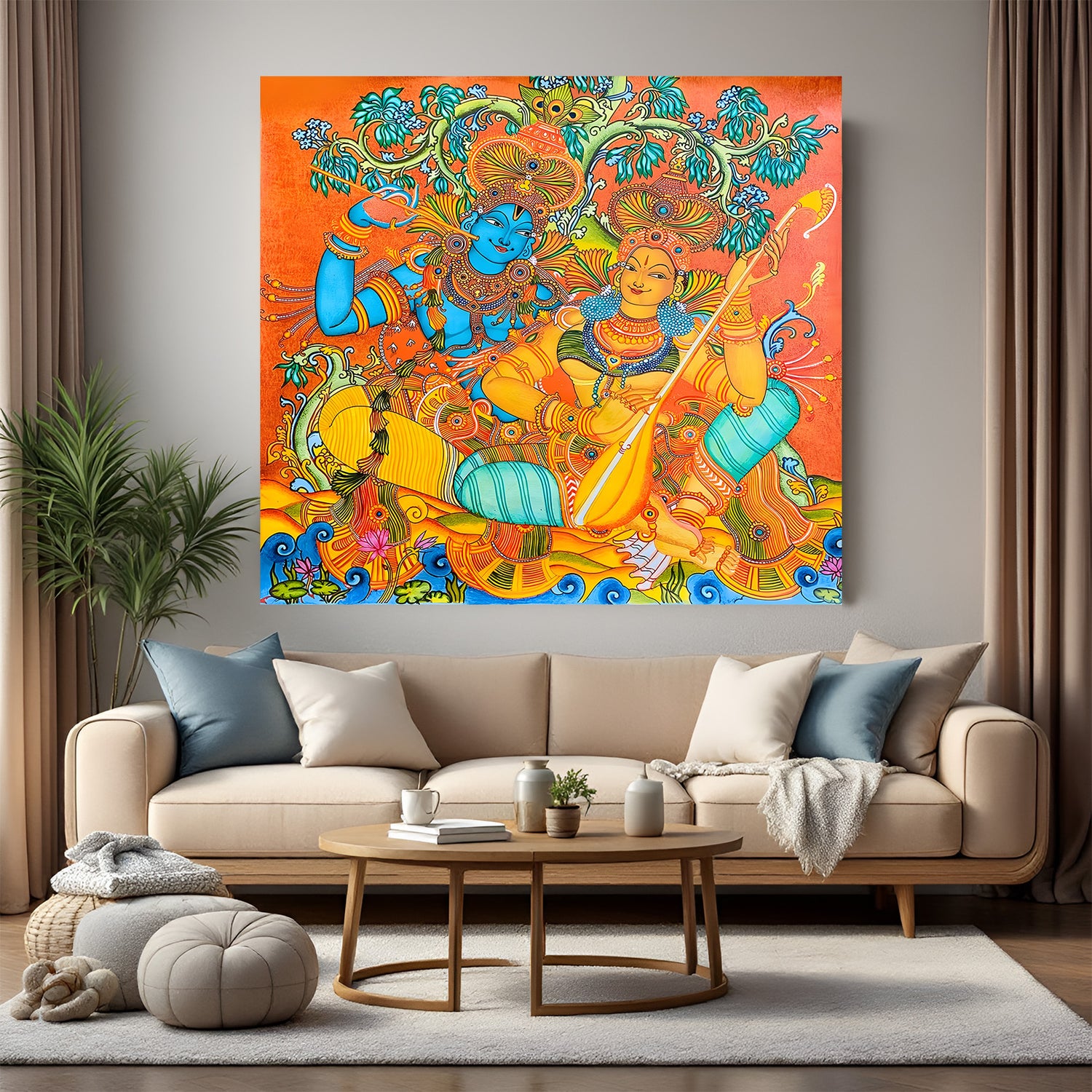
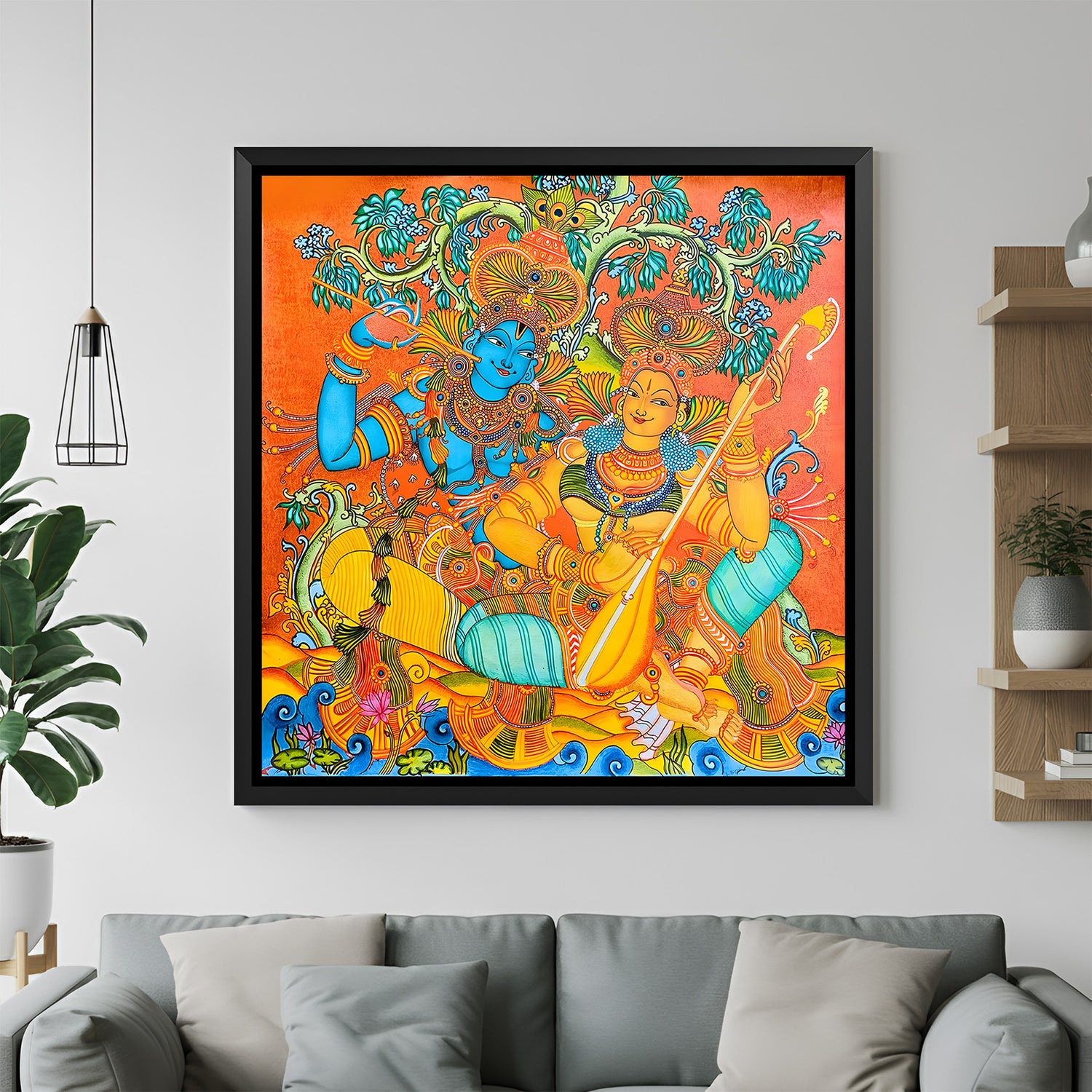
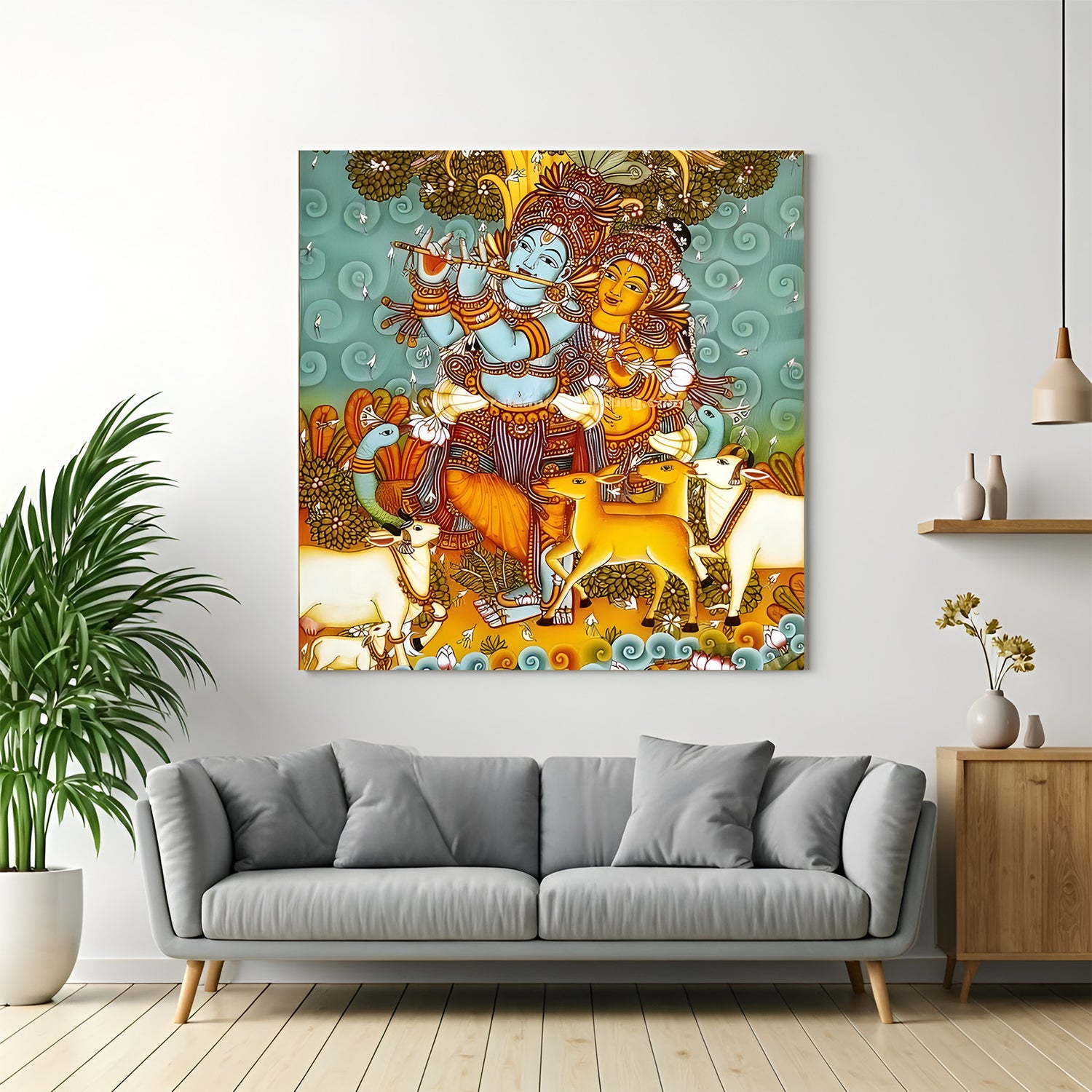
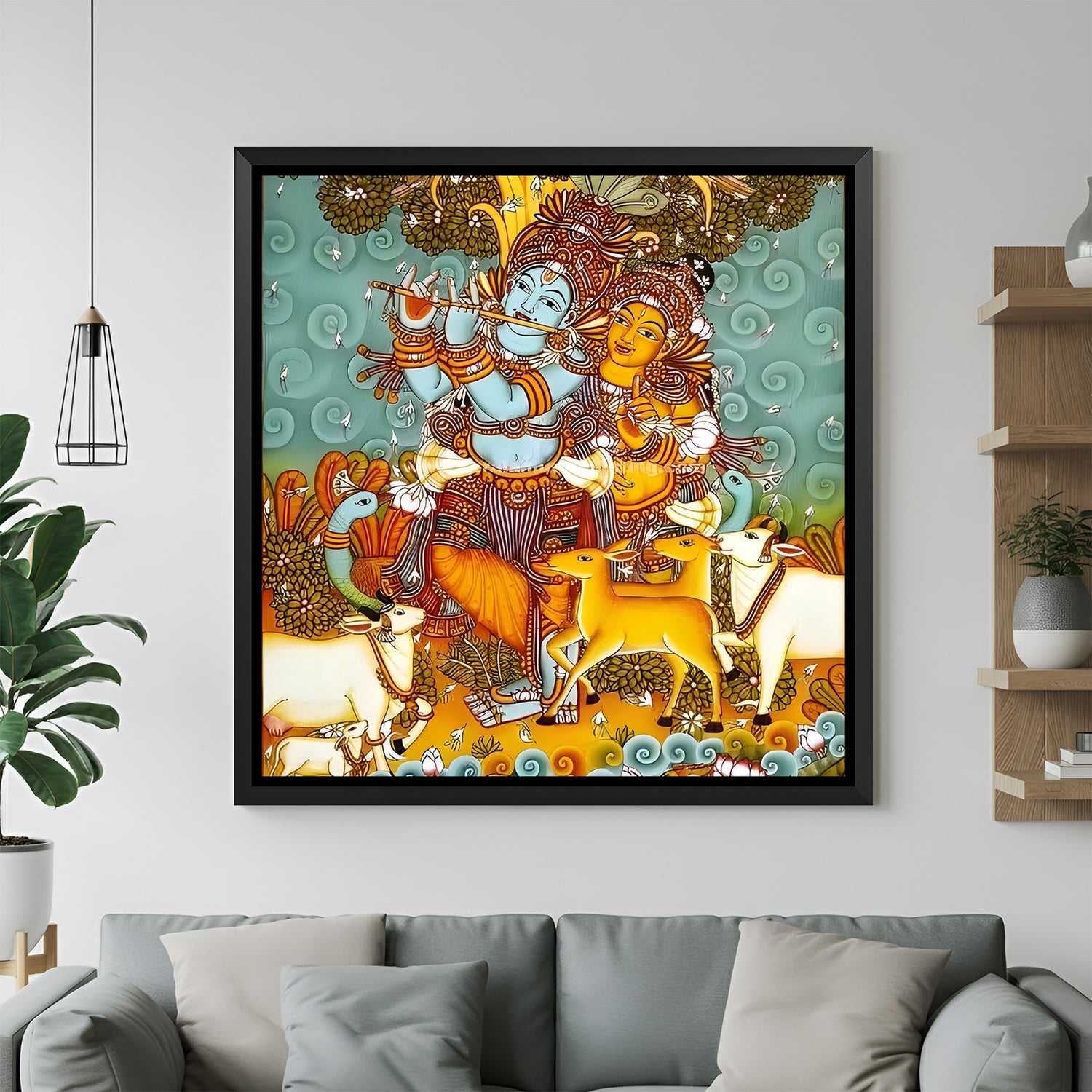
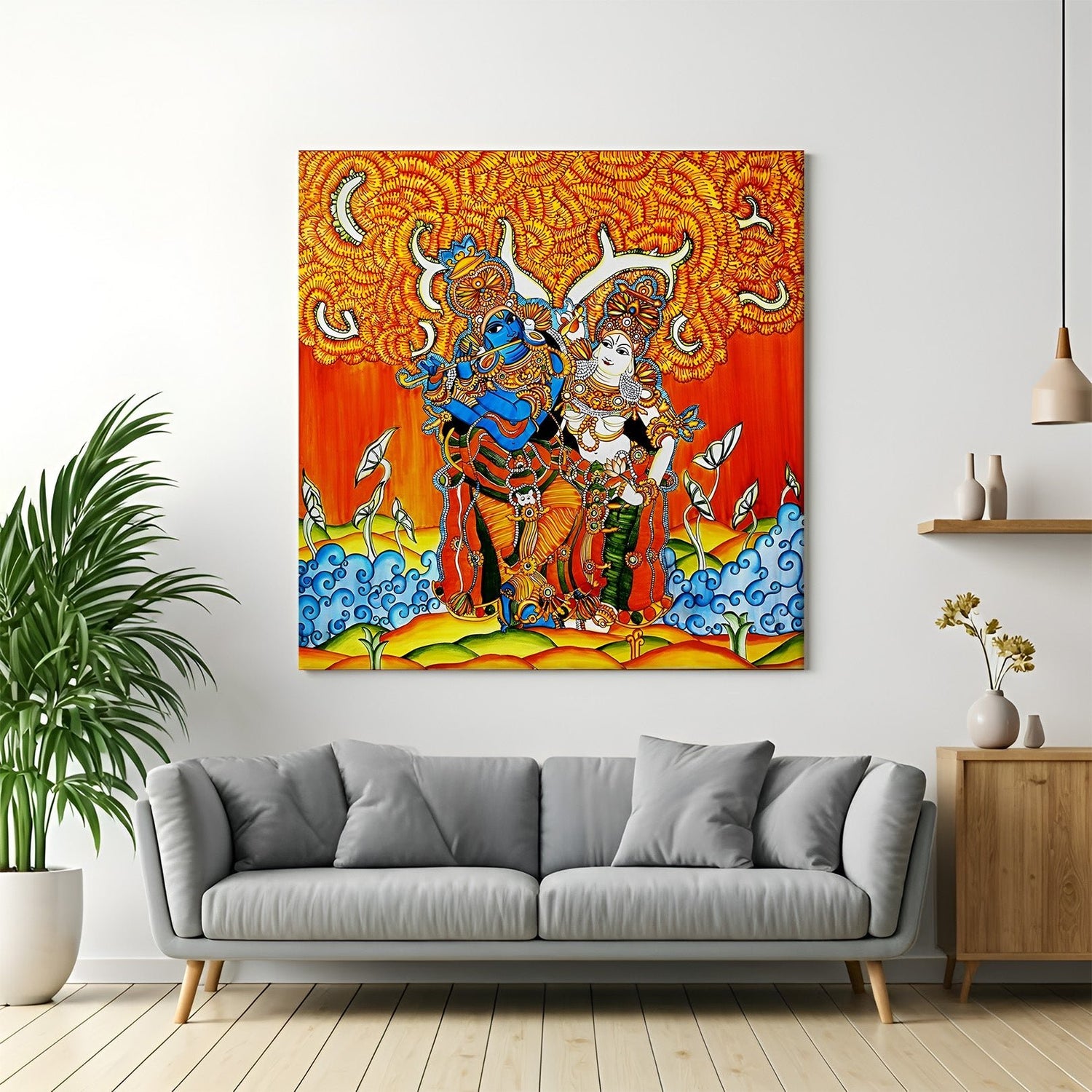
Kerala mural painting is a traditional South Indian art form, originally painted directly onto temple and palace walls, known for flat, two-dimensional figures, bold black outlines, and a fixed palette of natural, mineral-based colors. At Cipher Spaces, our Kerala mural collection brings that same style onto canvas, through devotional scenes — Radha Krishna, Shiv Parvati, Ganesha — reproduced in the same iconographic tradition rather than reinterpreted for a modern look.
| Origin |
Technique |
Typical Subjects |
Price Range (Cipher Spaces) |
| Kerala, South India — temple & palace fresco tradition |
Flat composition, bold outlines, natural/mineral pigments |
Radha Krishna, Shiv Parvati, Ganesha, mythological scenes |
Rs. 2,499 – Rs. 6,999 |
A Short History of Kerala Mural Painting
The tradition traces back over a thousand years, developing largely on the interior and exterior walls of Kerala's temples and royal palaces — Padmanabhapuram Palace and the Mattancherry (Dutch) Palace in Kochi are among the best-known surviving examples, alongside temple murals at sites like Guruvayur and Ettumanoor. Unlike the more ornamental Rajasthani or Mughal miniature traditions, Kerala mural work grew out of a religious rather than courtly purpose — the paintings were devotional aids as much as decoration, meant to be read as visual scripture by people who couldn't read Sanskrit texts directly. That's part of why the compositions are so legible from a distance: bold, flat figures with clear outlines, designed to be seen and understood at temple scale, not examined up close.
Technique, Color, and What Makes It Look the Way It Does
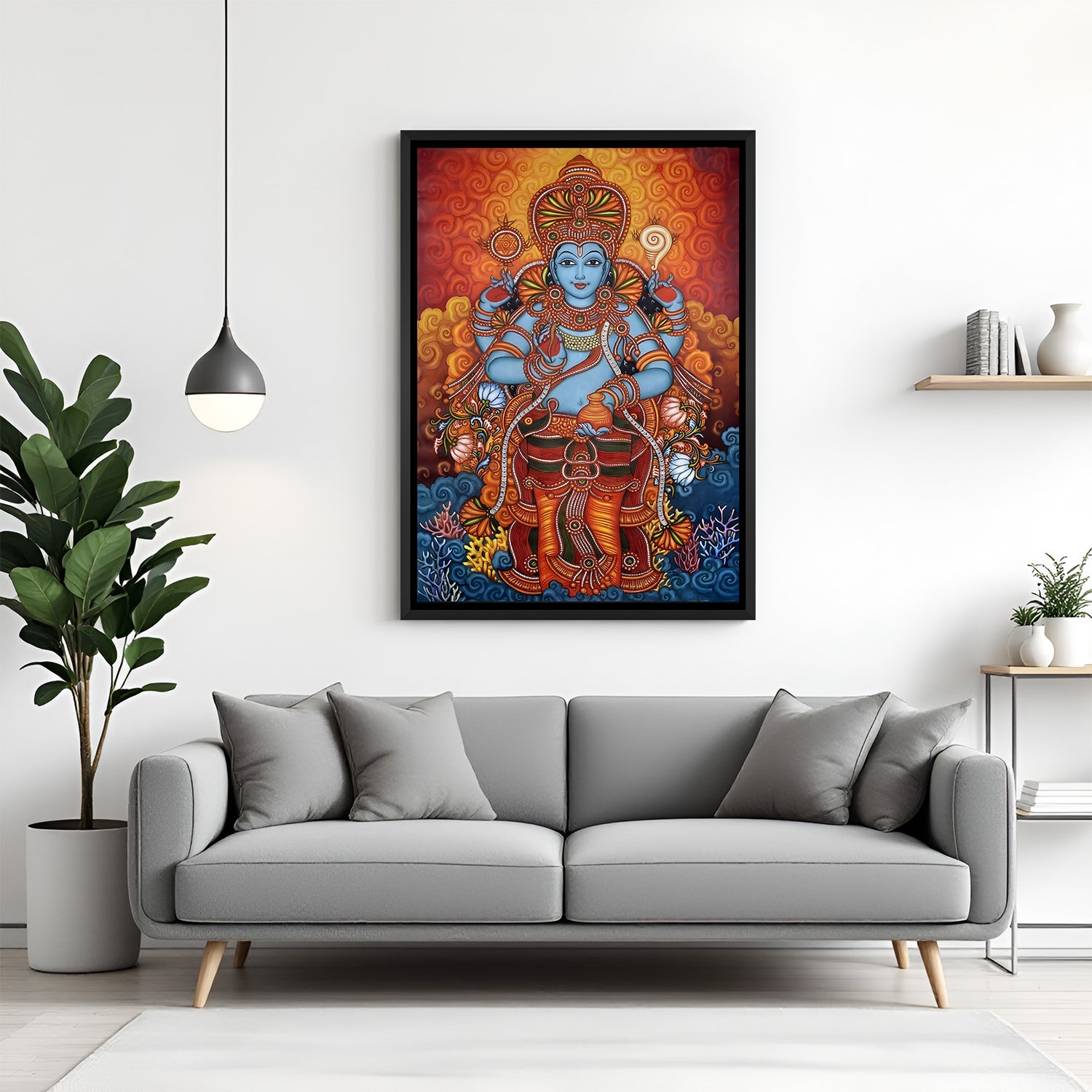
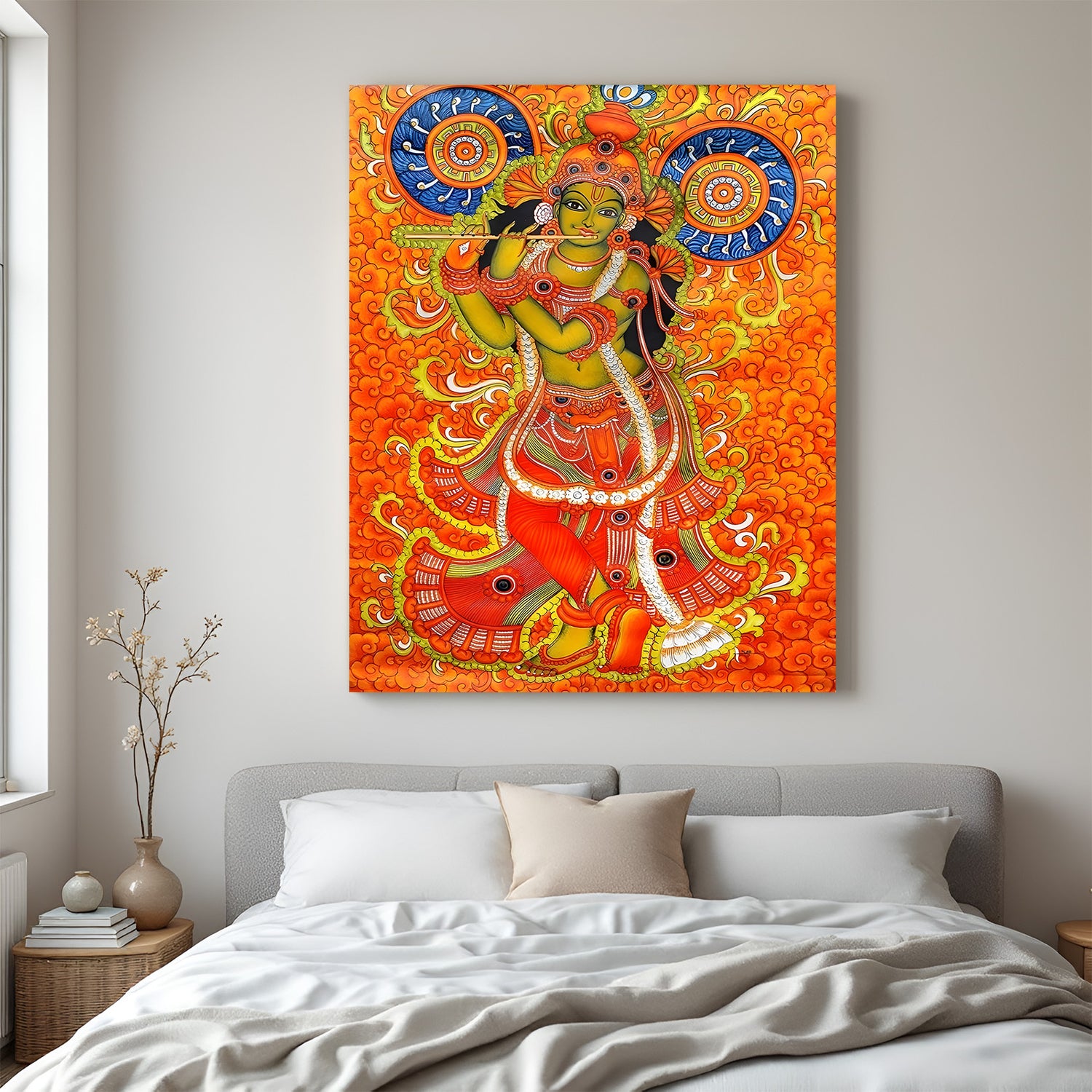
Traditional Kerala mural artists worked with what's sometimes called the panchavarna or five-color palette — derived from natural, locally sourced materials rather than commercial pigment. Yellow ochre, red ochre, a deep green, black (from lamp soot or charcoal), and white (from lime) formed the core range, applied in flat, unshaded blocks rather than blended gradients. Figures are drawn with continuous, confident outlines and stylized facial expressions — wide eyes, arched eyebrows, specific hand gestures (mudras) tied to the emotion or narrative moment being depicted. On canvas, that translates into artwork with strong graphic presence: it reads as a single, immediate image rather than something the eye wanders through slowly, which is part of why it works so well as a large single statement piece rather than a busy gallery-wall arrangement.
Common Themes in Kerala Mural Art
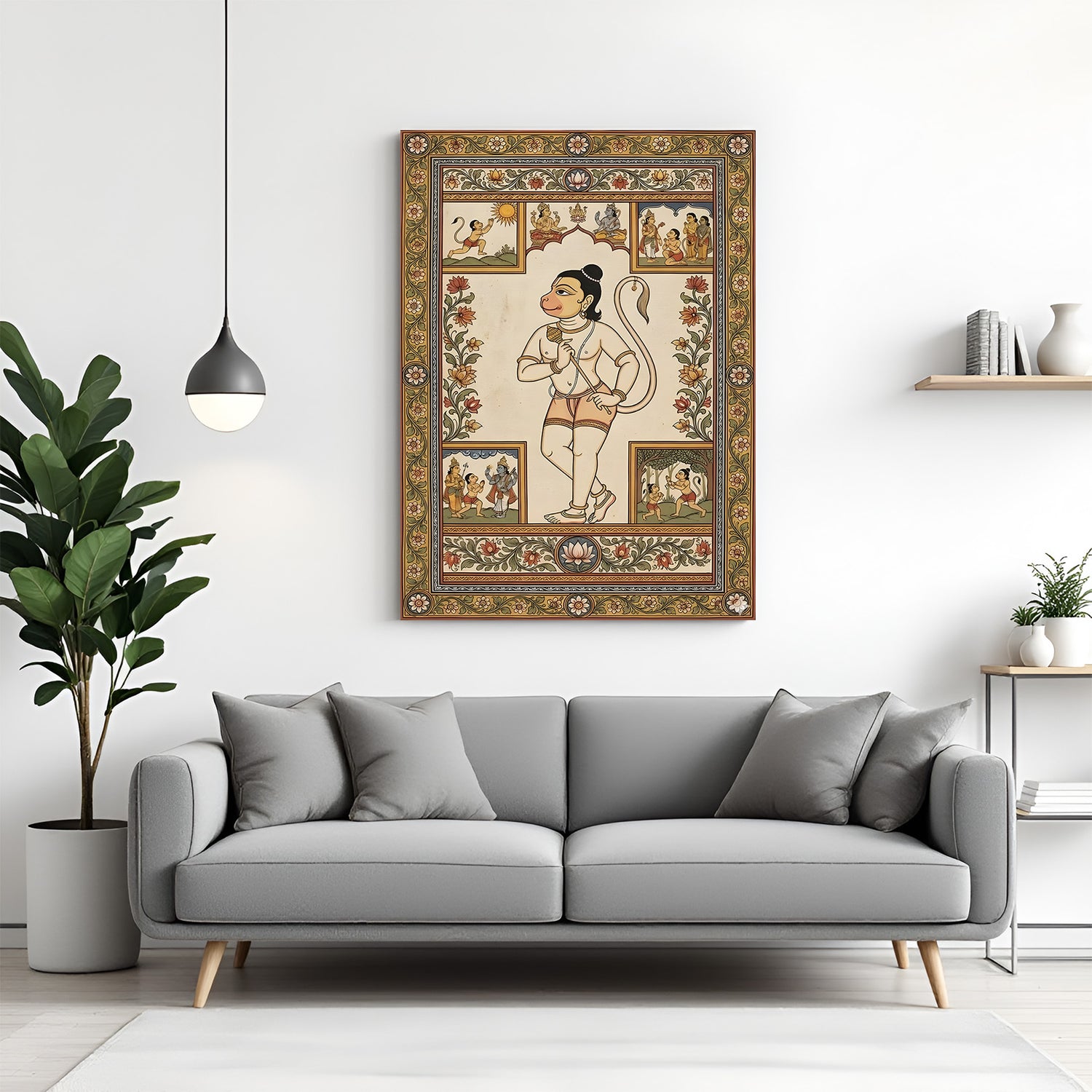
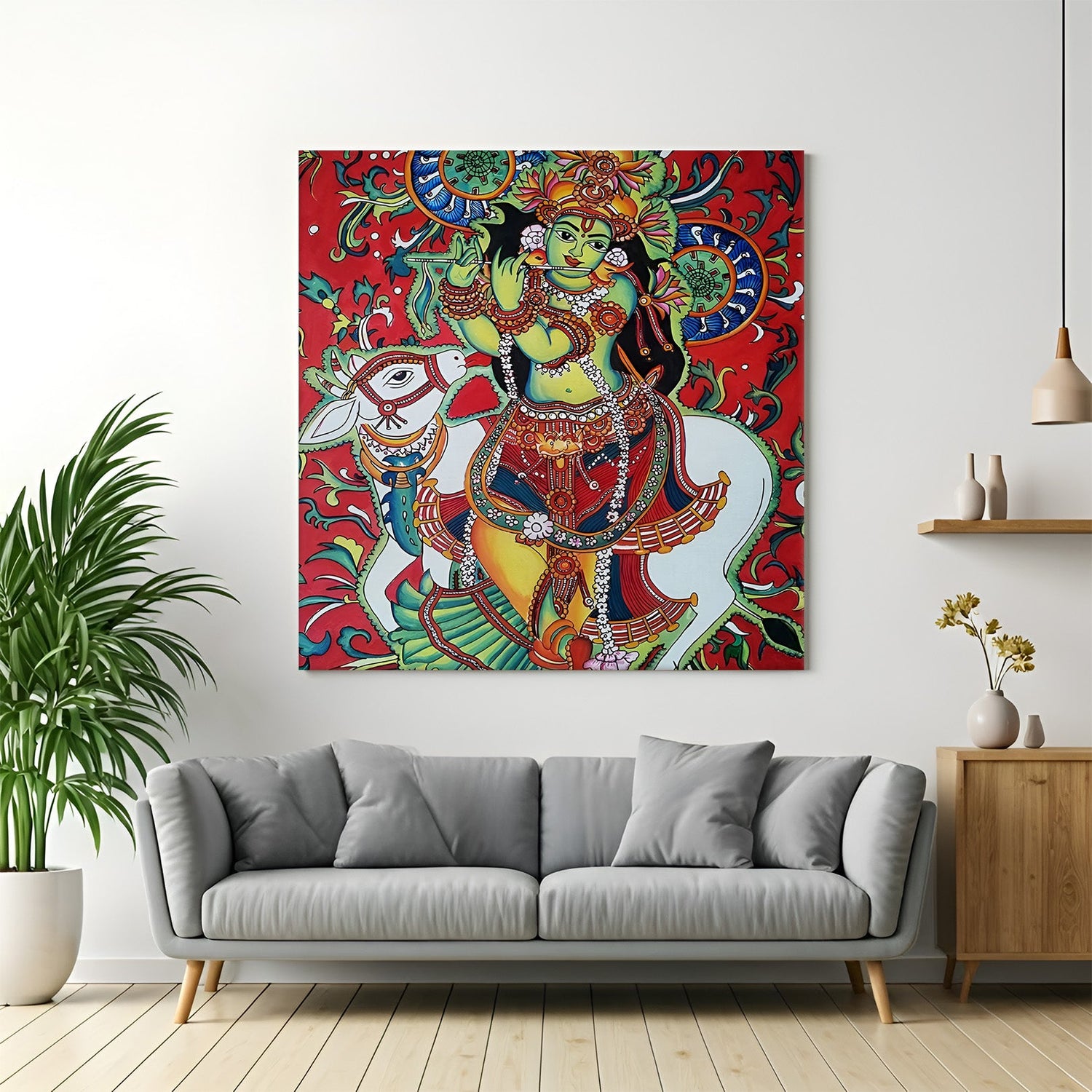
Beyond the pieces currently in our collection, Kerala mural painting traditionally draws from a fairly consistent set of subjects, mostly from the Puranas, the Ramayana, and the Mahabharata. Krishna Leela scenes — Krishna's childhood and youth, including the Raas Leela dance with the gopis — are among the most common. Shiva appears both alone in meditative form and as part of the Shiva-Parvati-Ganesha family grouping. Devi (goddess) imagery, particularly Durga and Bhadrakali, is also a recurring subject in temple mural traditions, reflecting Kerala's strong Shakti worship tradition. Ananthasayanam — Vishnu reclining on the serpent Ananta — is another frequently depicted scene, especially significant given Kerala's association with Padmanabhaswamy Temple. Our current collection focuses on Radha Krishna, Shiv Parvati, and Ganesha, which cover the most commonly requested pieces for home use.
Choosing a Frame or Finish
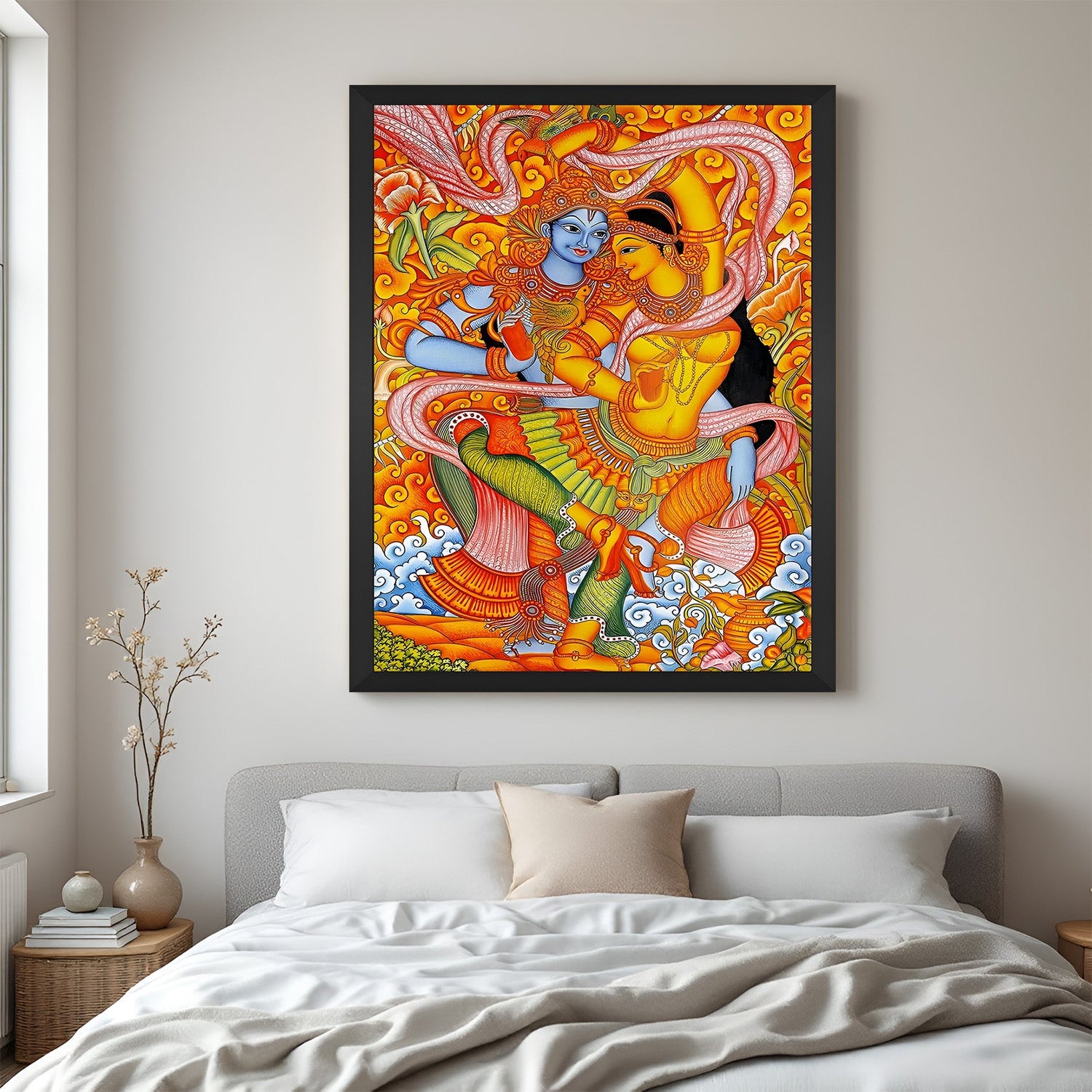
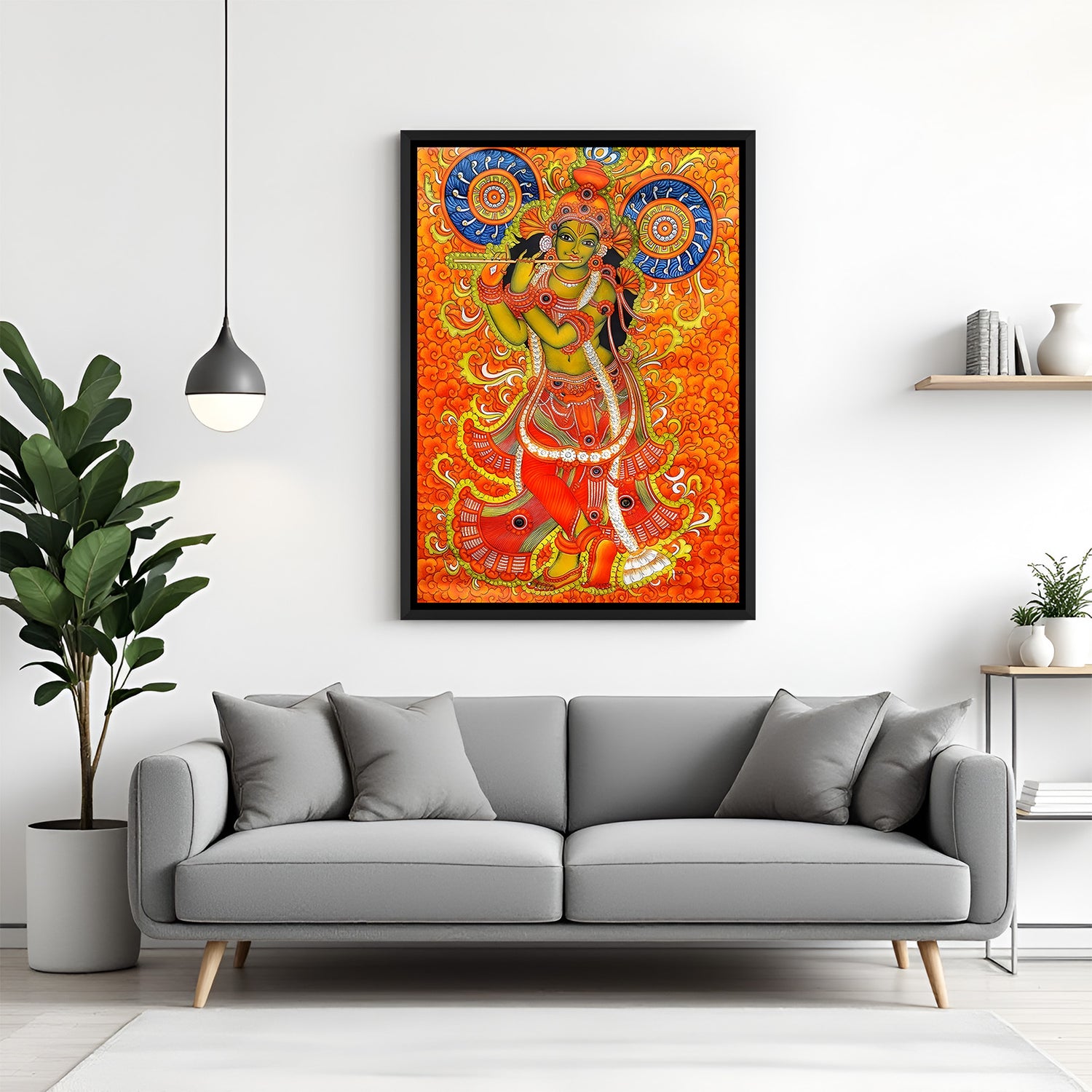
Kerala mural canvases are generally sold in one of three formats, and which one makes sense depends more on where it's going than on personal taste. A canvas wrapped piece is stretched over a wooden frame with no visible border — the cleanest, most modern look, and the one we'd default to for a living room feature wall. A black floater frame adds a thin gap between the canvas and frame edge, which tends to suit darker or more richly colored murals like Shiv Parvati pieces. A golden floater frame leans traditional and works well for devotional pieces headed for a pooja room or altar backdrop, where the gold edge echoes temple gilding rather than competing with it.
The Kerala Mural Pieces We Carry
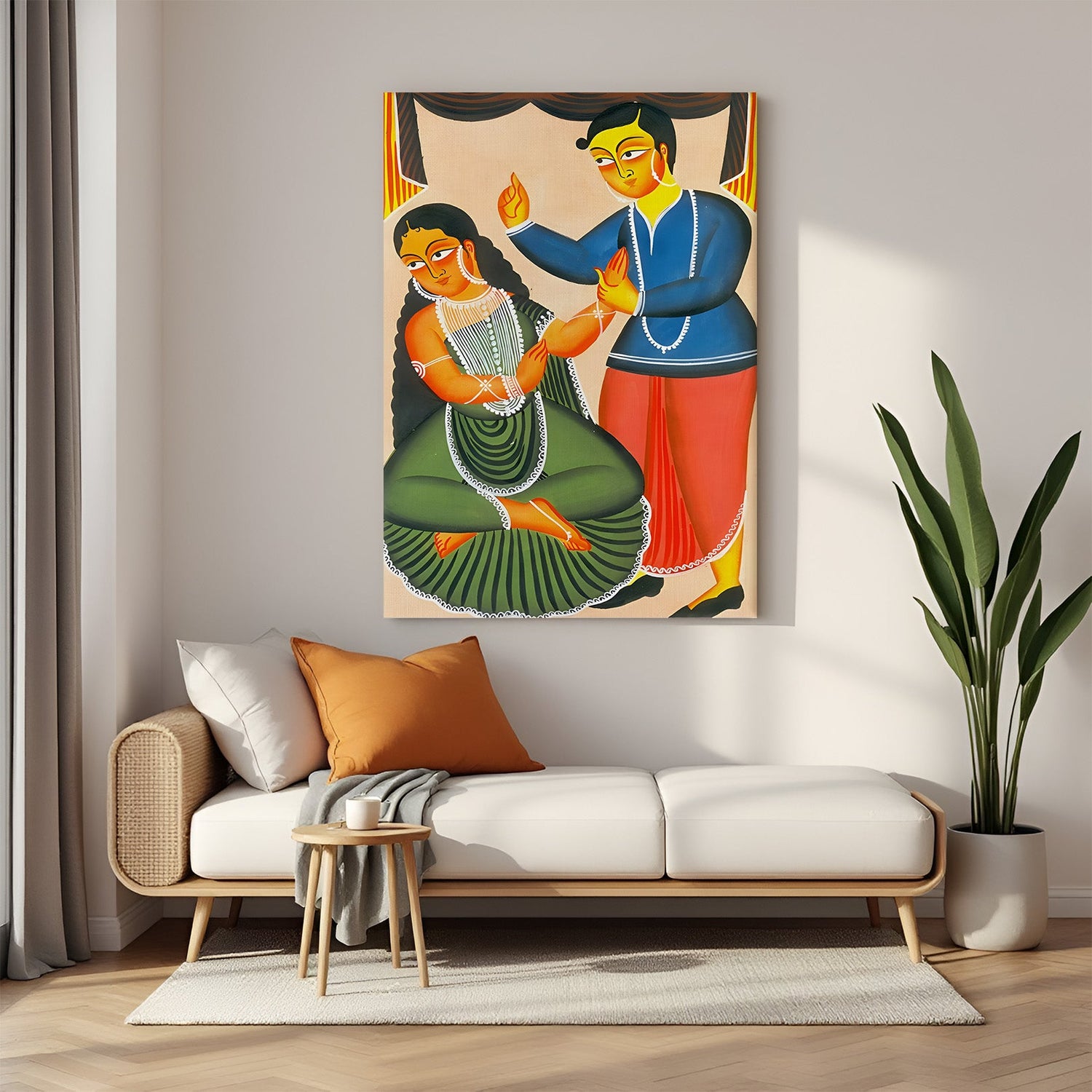
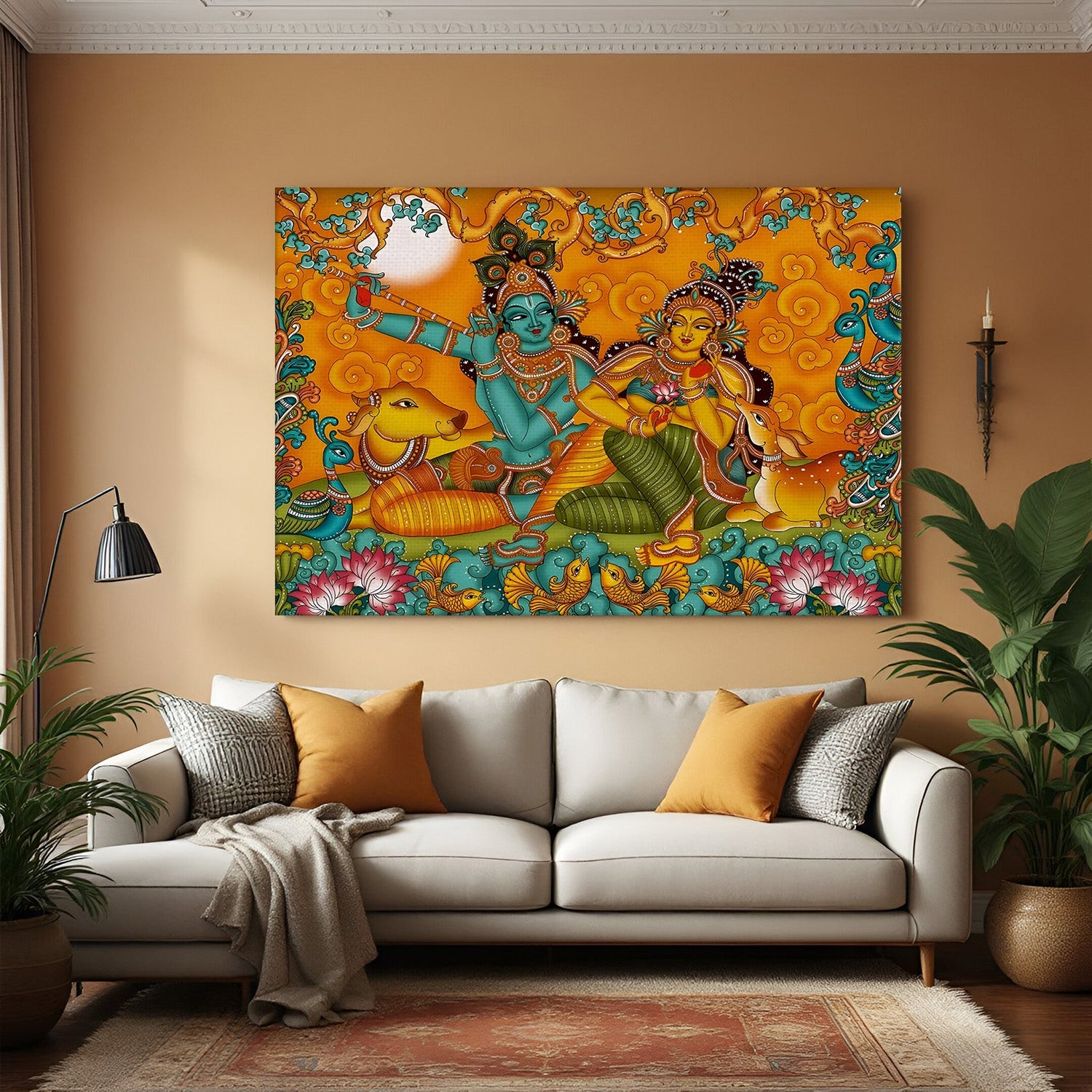
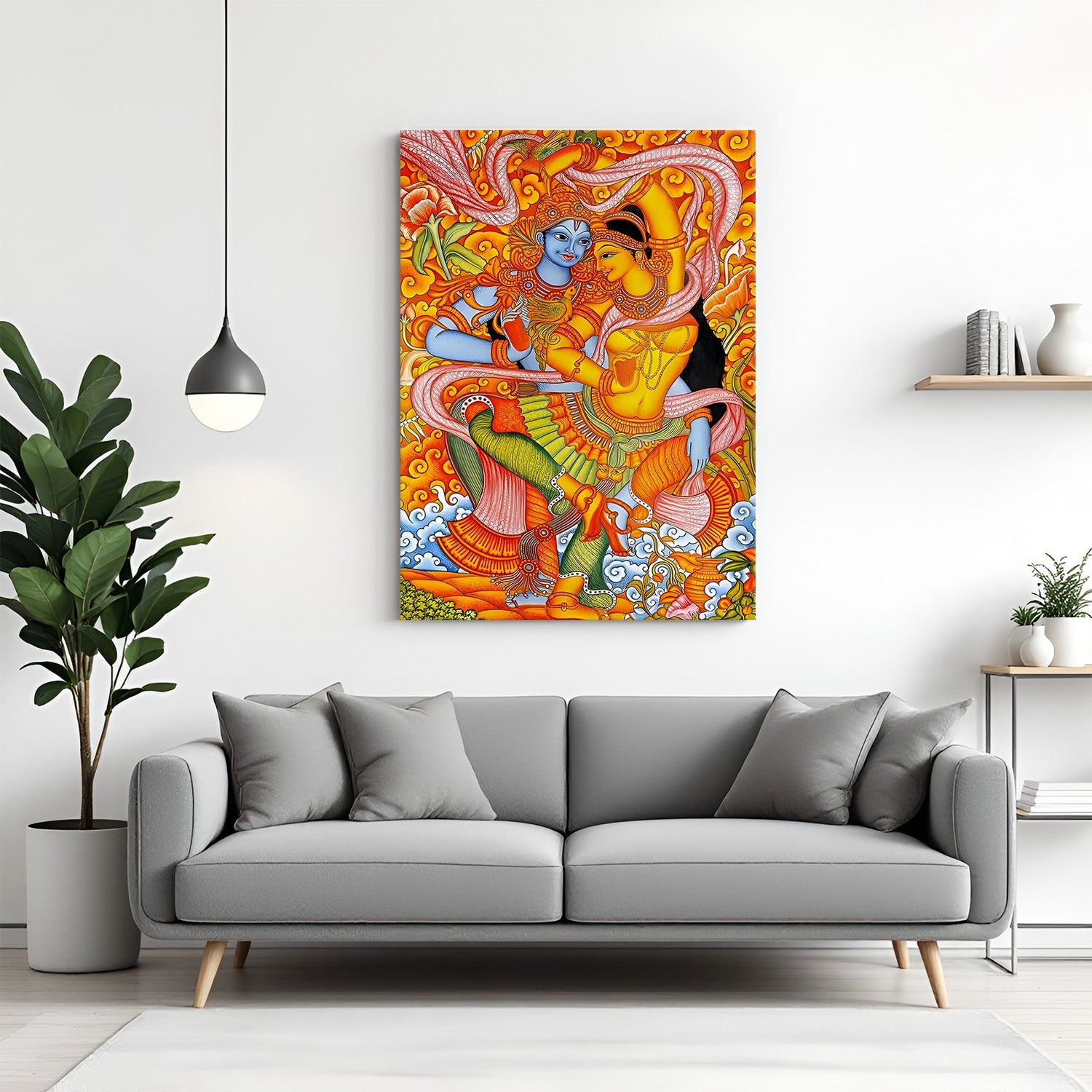
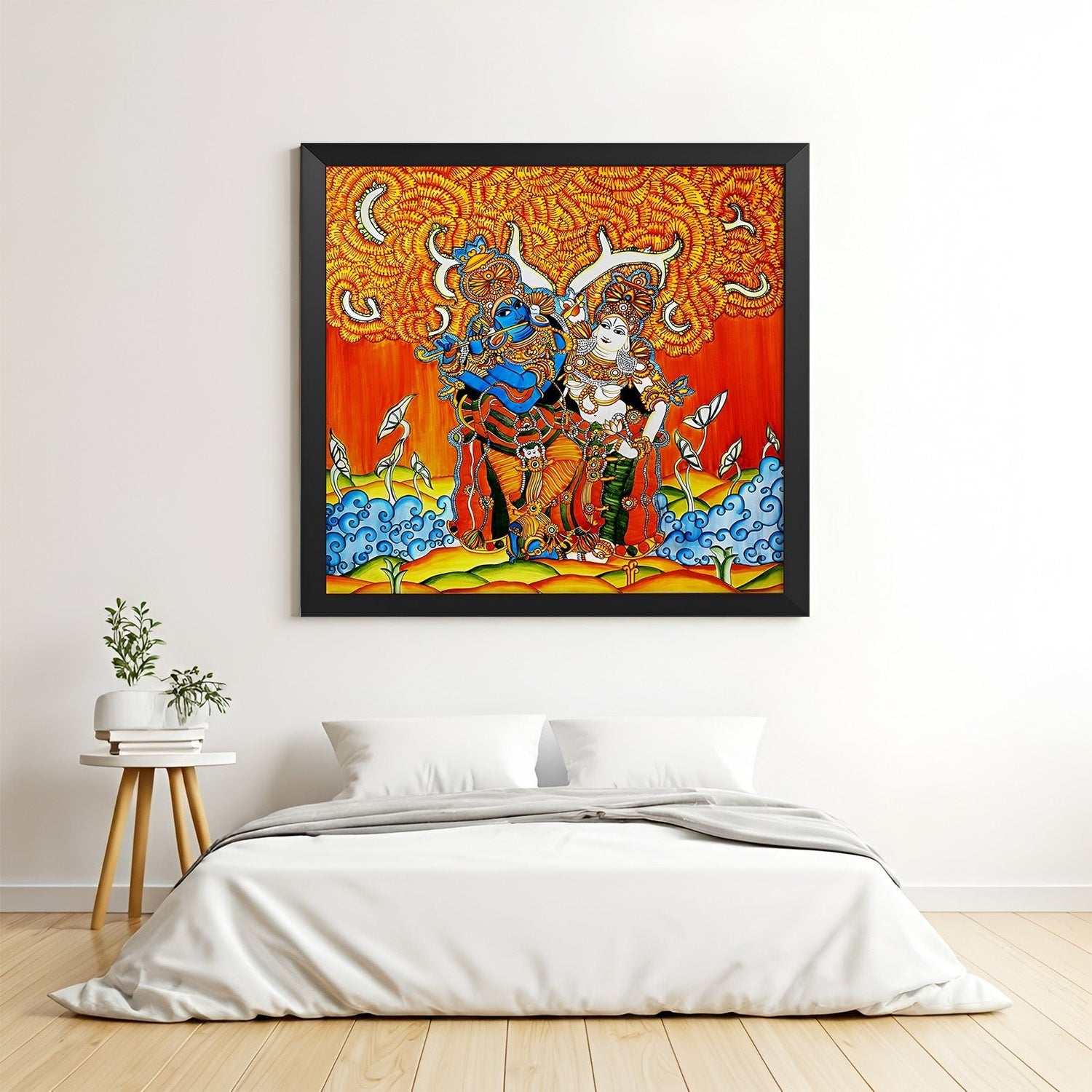
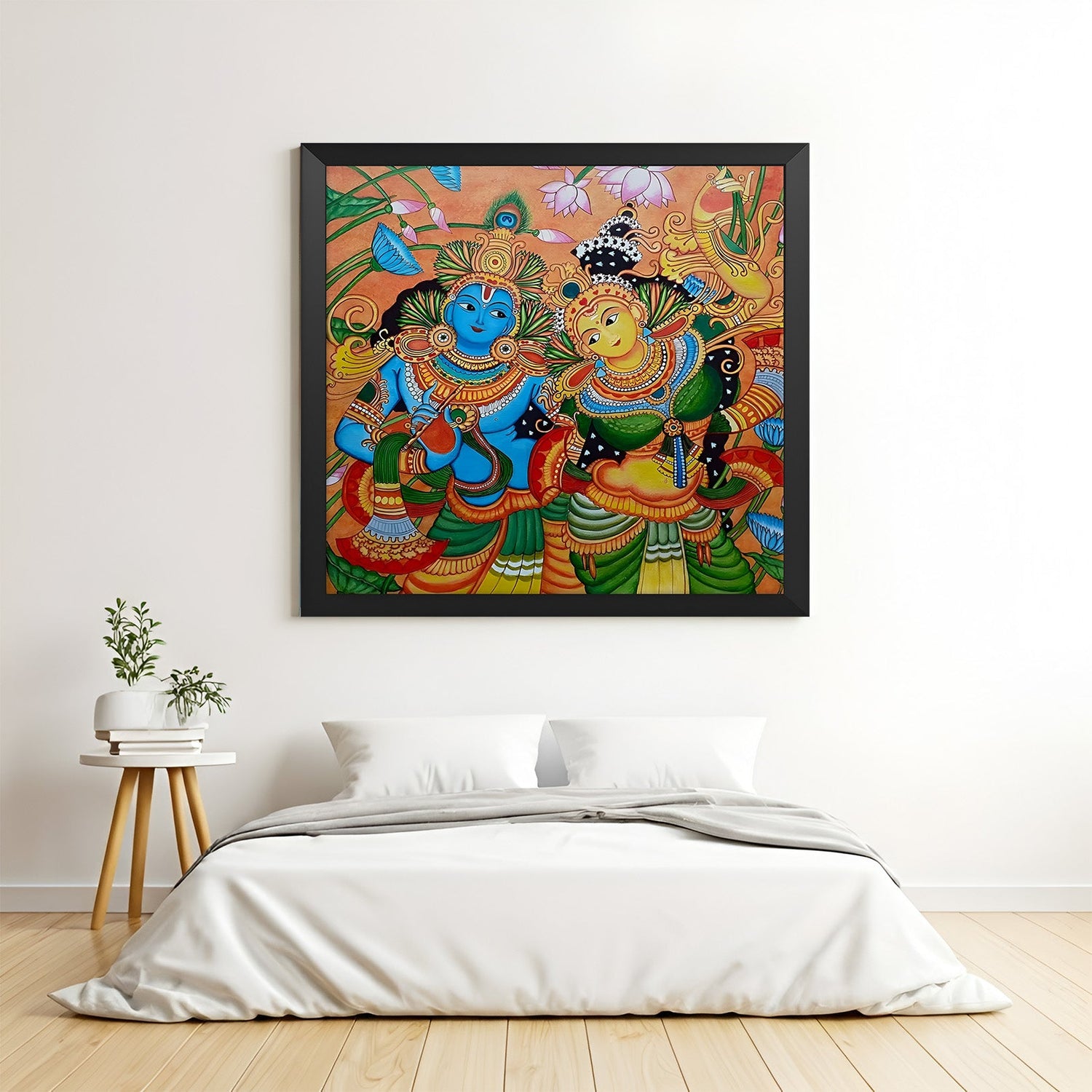
Radha Krishna, in the mural style
This is the piece people ask for most, and it comes in a few different treatments — our 18×24 canvas-wrapped version sits at the entry price point, while the black floater frame edition at 24×36 has more presence for a larger wall, and the 36×36 canvas-wrapped version works as a genuine centerpiece. All three keep the same flat, temple-fresco composition rather than a softer, more modern rendering of the couple.
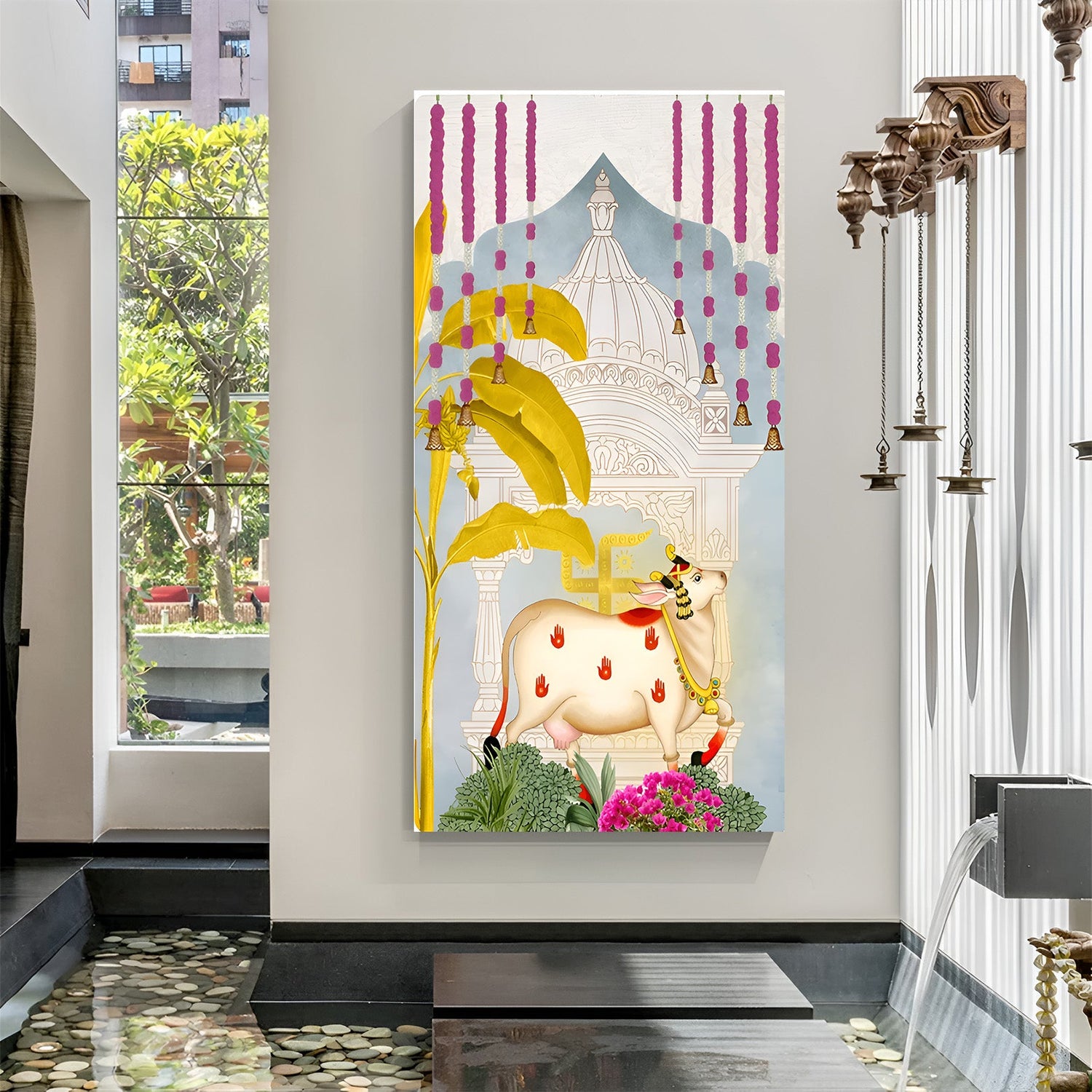
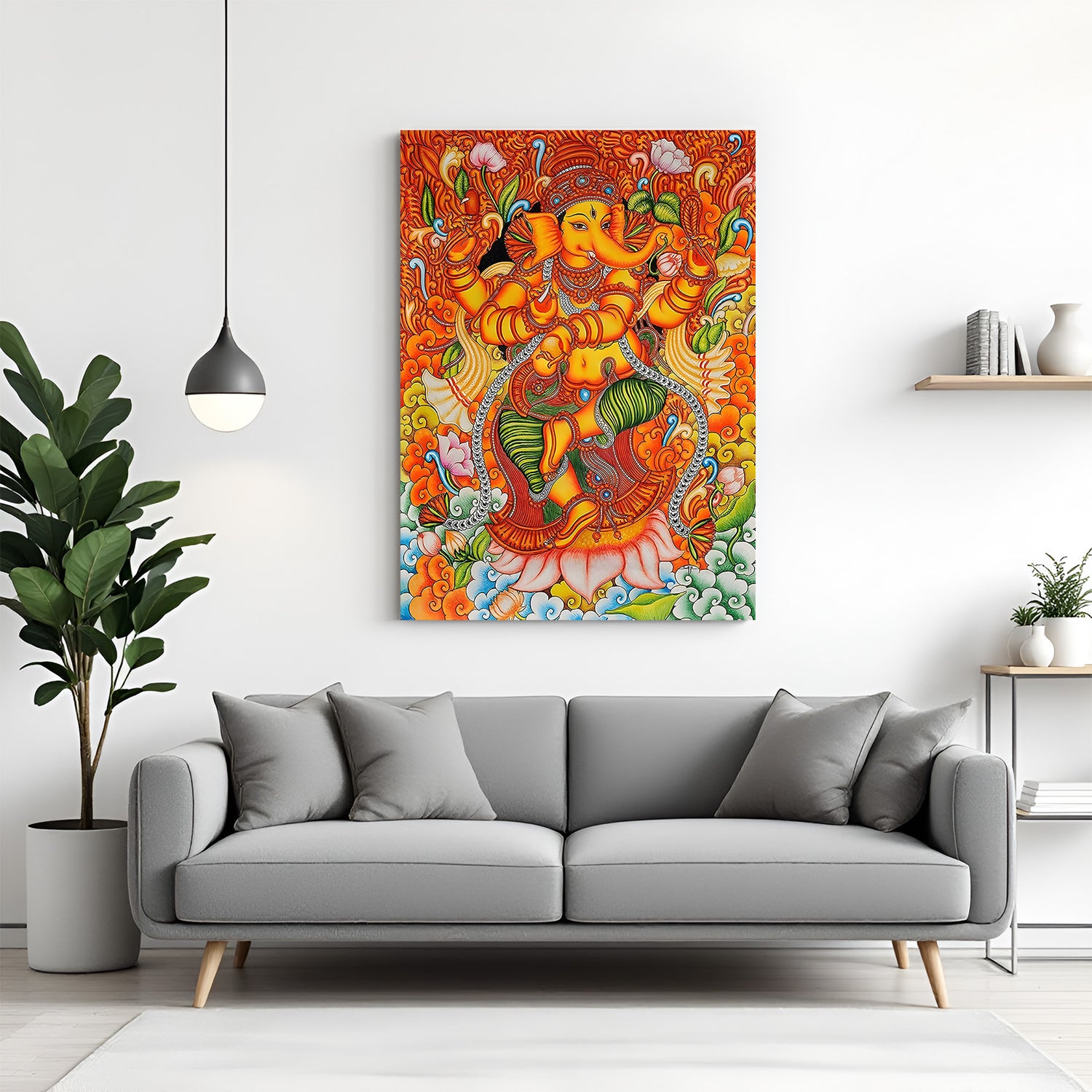
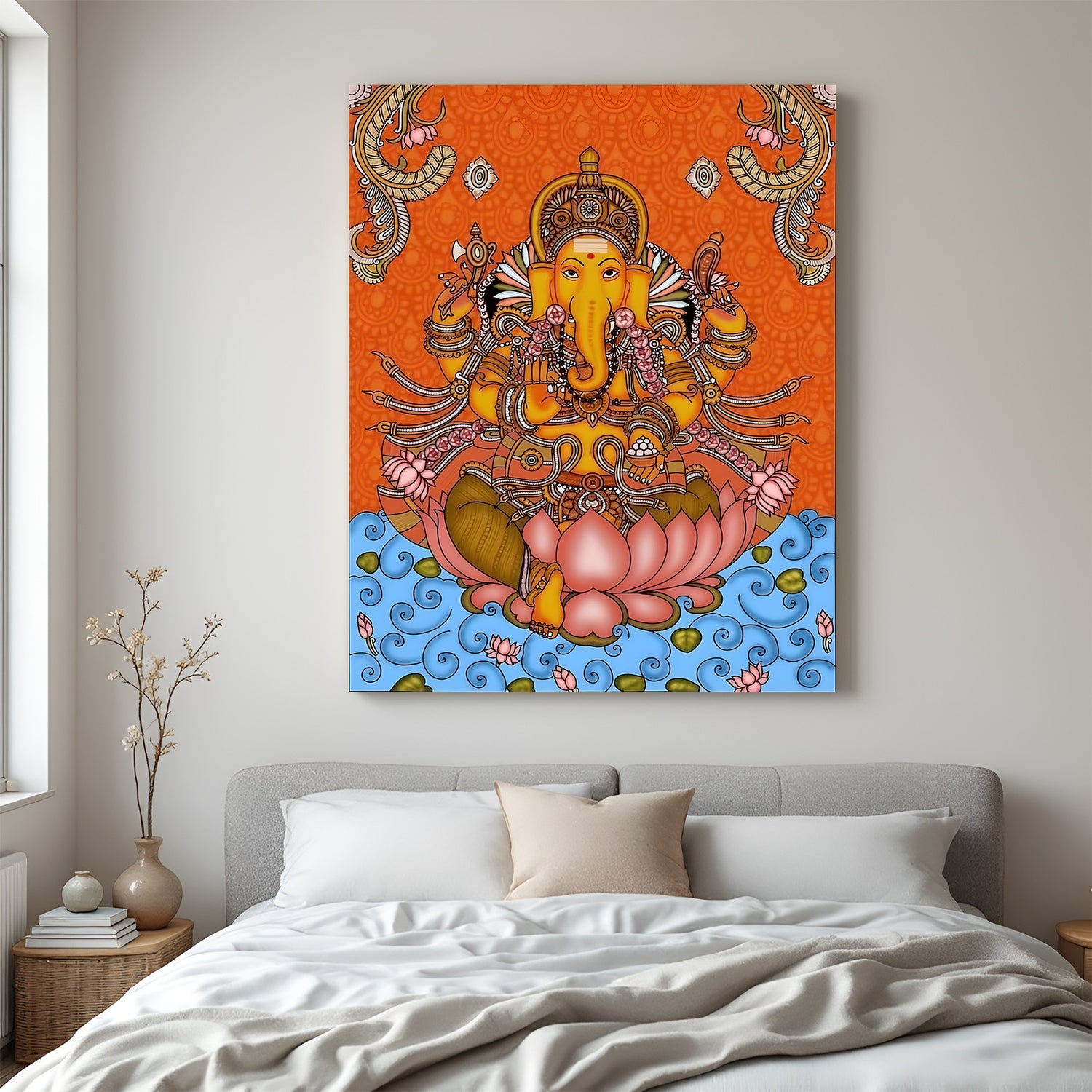
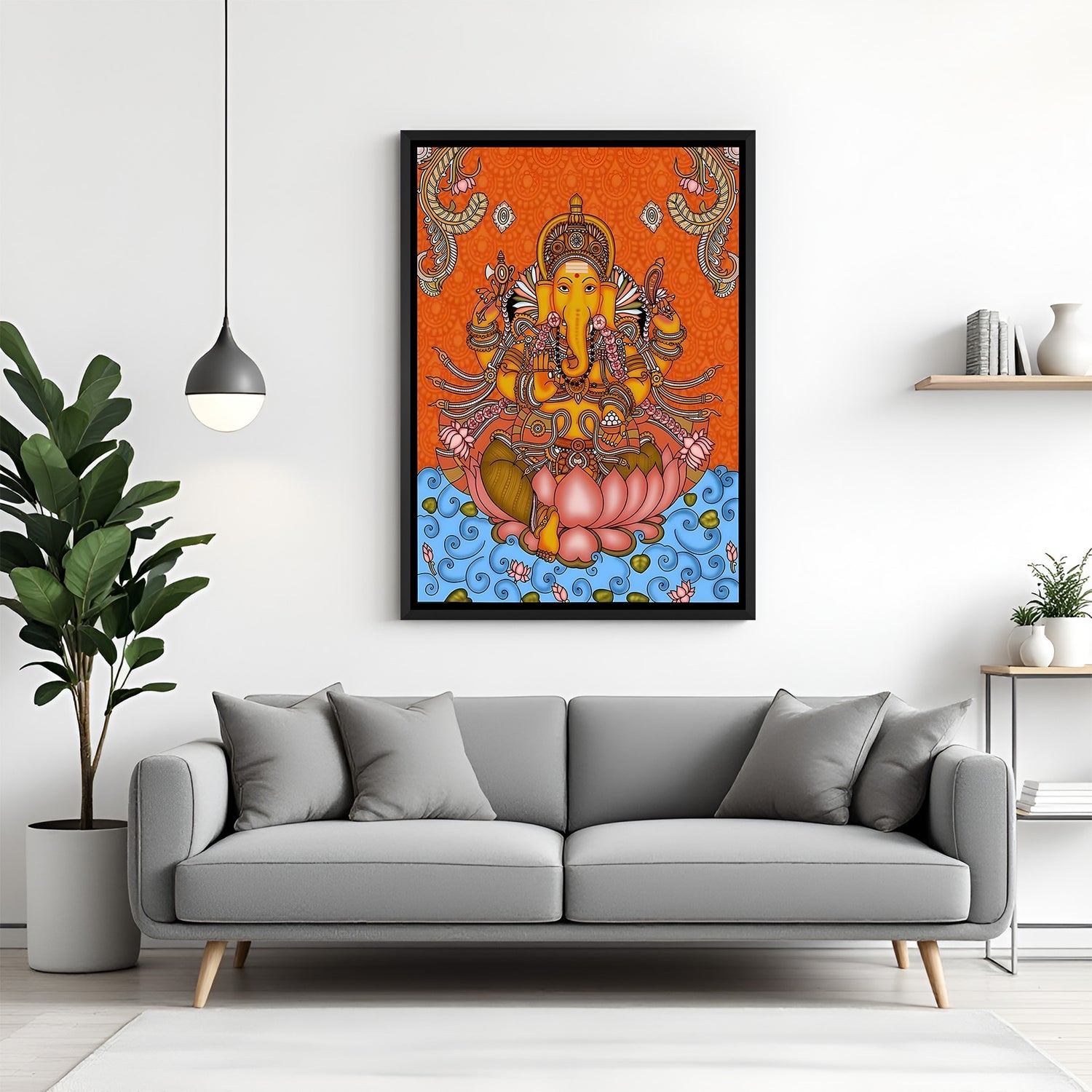
Ganesha, for entrances and pooja spaces
Our Ganesha mural canvas runs larger — 48×48 inches — which suits it to an entrance wall or a main living-room placement rather than a smaller accent spot. Ganesha imagery is one of the more universally auspicious choices across Vastu traditions generally, not specific to Kerala style, which is part of why it pairs so easily with the mural treatment.
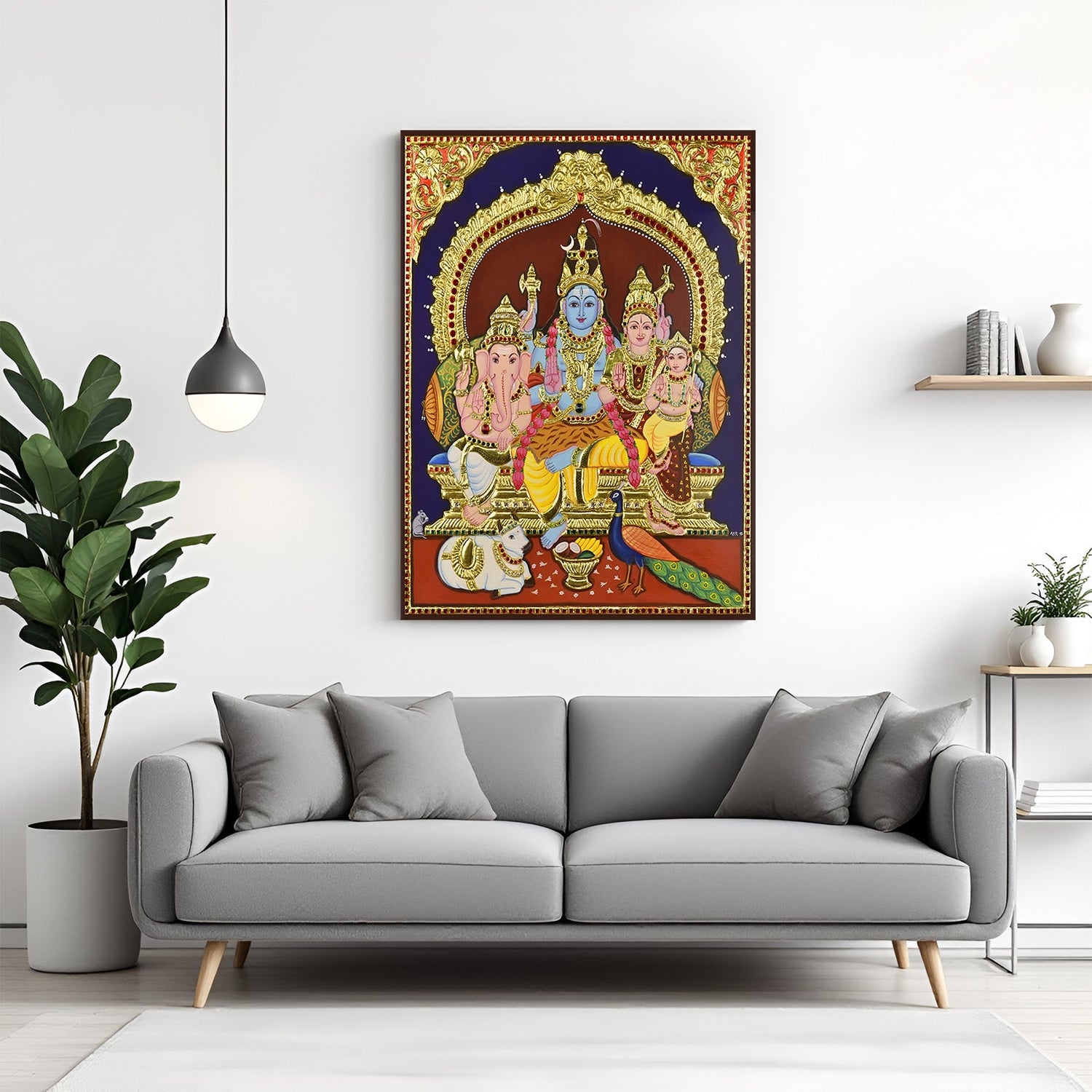
Shiv Parvati, for a quieter register
The Shiv Parvati mural, in a golden floater frame at 36×36, reads calmer than the Radha Krishna pieces — fewer figures, more negative space — and tends to go into meditation corners or bedrooms rather than a busy living room wall.
Where Kerala Mural Art Works Best
For the living room, mural art holds up well as a single large statement piece rather than part of a gallery wall — the flat composition and bold outlines read clearly from across a room in a way busier styles don't. In a pooja room or sacred corner, the devotional subject matter and gold-leaf-adjacent color palette make it a natural fit for an altar backdrop. In a hallway or bedroom, a smaller Radha Krishna or Shiv Parvati piece works as a quieter accent rather than a focal point.
Styling: What to Pair It With
Because the color palette is warm and earthy by nature — ochres, deep reds, gold — Kerala mural art tends to sit well against neutral or muted wall colors rather than competing with bold ones; a cream, warm white, or soft terracotta wall lets the painting stay the focal point. Wooden furniture, brass accents, and rattan or cane textures echo the material world the art form originally came from, which is why it's often paired with traditional or transitional interiors rather than minimalist, cool-toned modern ones. That said, a single mural piece can work as a deliberate contrast in an otherwise contemporary room — the trick is giving it enough plain wall space around it rather than crowding it with other art.
Caring for a Kerala Mural Canvas
Canvas prints in this style hold up well with the same basic care as any canvas artwork: keep it out of direct, prolonged sunlight to avoid color fading over time, dust it gently with a soft, dry cloth rather than anything wet or chemical, and avoid hanging it in a bathroom or kitchen where humidity and grease are a factor. Because the original technique relies on flat, saturated color blocks, fading is more visually noticeable on this style than on softer, blended paintings — so placement away from a west-facing window that gets strong afternoon sun is worth considering if you want the colors to stay vivid.
If Kerala mural isn't quite the style you're after, it sits in the same family as our Madhubani and Tanjore collections — both traditional Indian styles with their own regional technique and palette, worth comparing side by side if you're choosing between them. We've also written more on the meaning and placement of Kerala mural paintings specifically.
FAQ: Buying Kerala Mural Canvas Wall Art
What is Kerala mural painting?
It's a traditional art form from Kerala, South India, originally painted directly onto temple and palace walls in fresco technique, dating back over a thousand years. It's known for flat, two-dimensional figures, strong black outlines, and a limited palette of natural pigments — mainly red and yellow ochre, green, black, and white. On canvas, it keeps that same visual language rather than adapting it into a more contemporary style.
What subjects are traditionally shown in Kerala mural art?
Krishna Leela scenes, Shiva in both solitary and family (Shiv Parivar) form, goddess imagery such as Durga and Bhadrakali, and Vishnu in his Ananthasayanam reclining form are among the most common traditional subjects, largely drawn from the Puranas, Ramayana, and Mahabharata.
Is Kerala mural art good for a living room?
Yes — its bold outlines and flat color blocks make it read clearly as a single large piece, which suits a living room feature wall better than a gallery-wall arrangement of smaller pieces. See our living room collection for sizing options.
Where can I buy Kerala mural paintings online?
Our full range is in the Kerala mural collection, with canvas-wrapped, black floater, and golden floater frame options depending on the piece and where it's going.
What's the difference between Kerala mural, Madhubani, and Tanjore painting?
All three are traditional Indian styles but look quite different: Kerala mural uses flat figures and fresco-style outlines drawn from temple wall painting; Madhubani, from Bihar, uses intricate line work and pattern-filled backgrounds; Tanjore, from Tamil Nadu, is known for raised, gold-leaf relief work and semi-precious stone inlay. Worth browsing all three if you're not sure which fits your space.
What sizes and frame options are available for Kerala mural canvas art?
Sizes in our collection range from 18×24 inches up to 48×48 inches, in canvas-wrapped, black floater, or golden floater frame finishes — canvas-wrapped for a clean modern look, floater frames for a more defined, traditional presentation.
How do I take care of a Kerala mural canvas painting?
Avoid direct, prolonged sunlight, since the flat, saturated colors can fade visibly over time; dust with a soft dry cloth rather than anything wet; and keep it away from high-humidity spaces like bathrooms or kitchens.
What wall colors and decor pair well with Kerala mural art?
Warm neutrals — cream, warm white, soft terracotta — tend to let the painting's earthy, ochre-and-gold palette stand out. Wooden furniture and brass accents echo the material world the art form comes from, though a single piece can also work as a deliberate contrast in a more contemporary room if it's given enough plain wall space around it.
Is Cipher Spaces a good place to buy Kerala mural wall art?
Alternatives to Kerala Mural Wall Art
Prices for Kerala Mural Canvas Wall Art