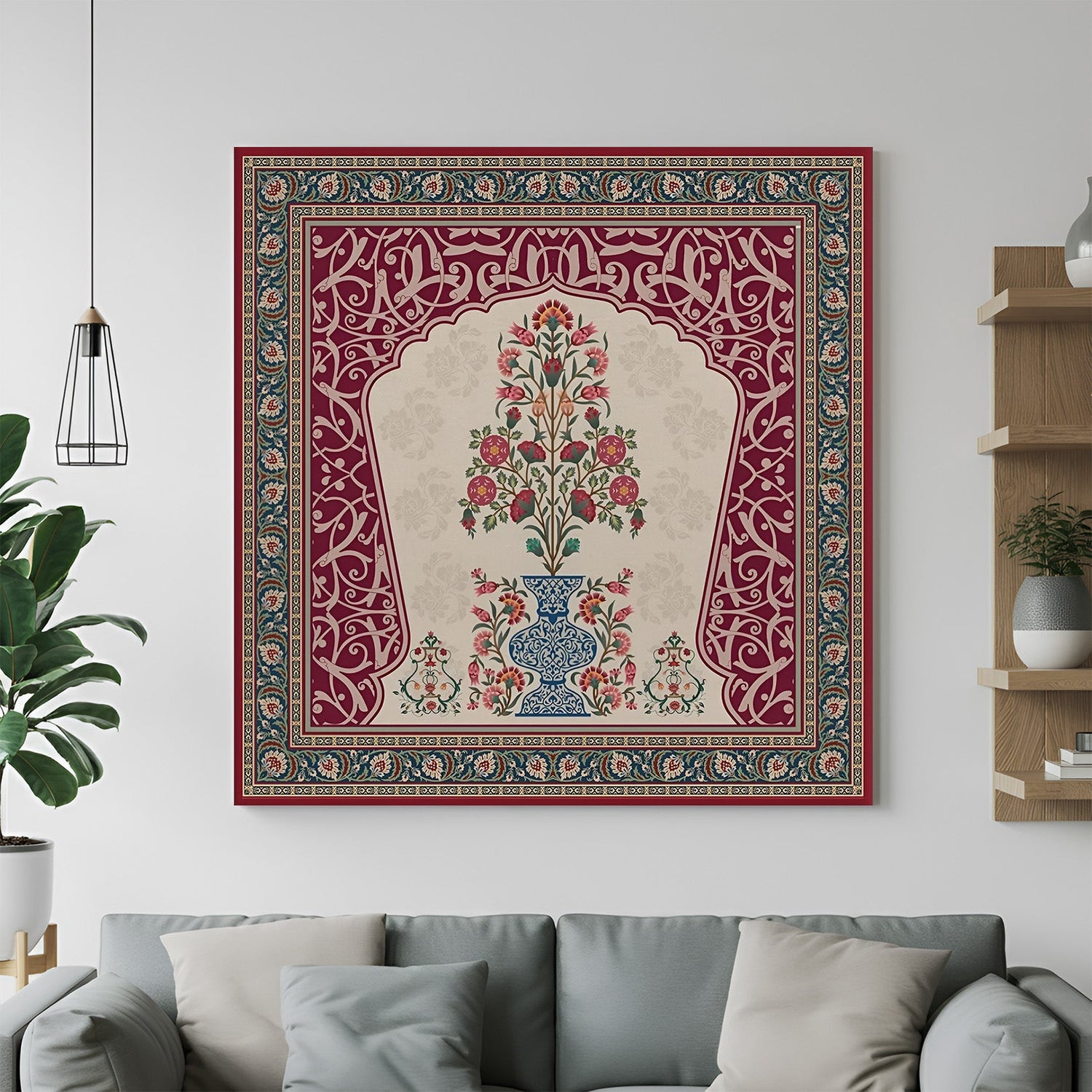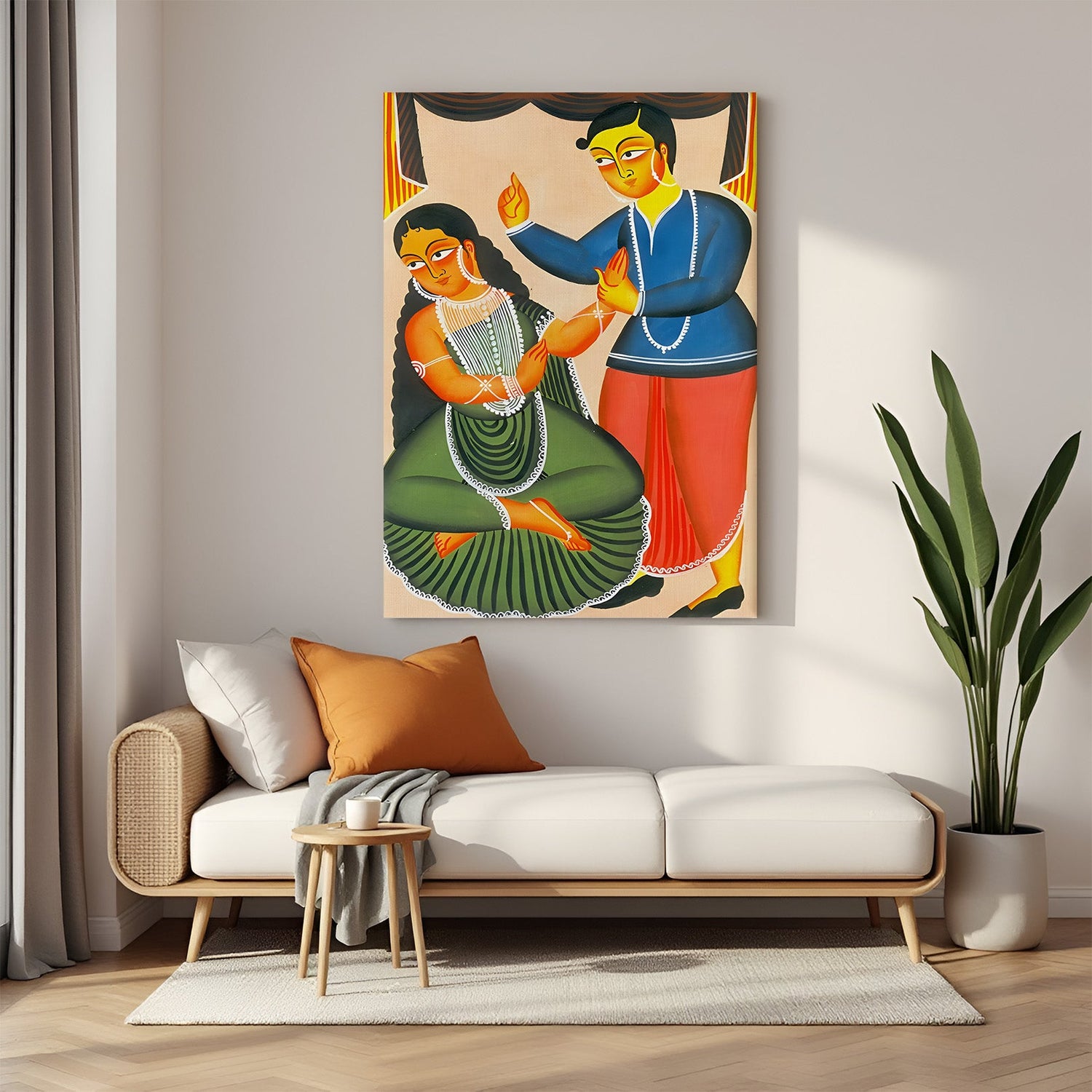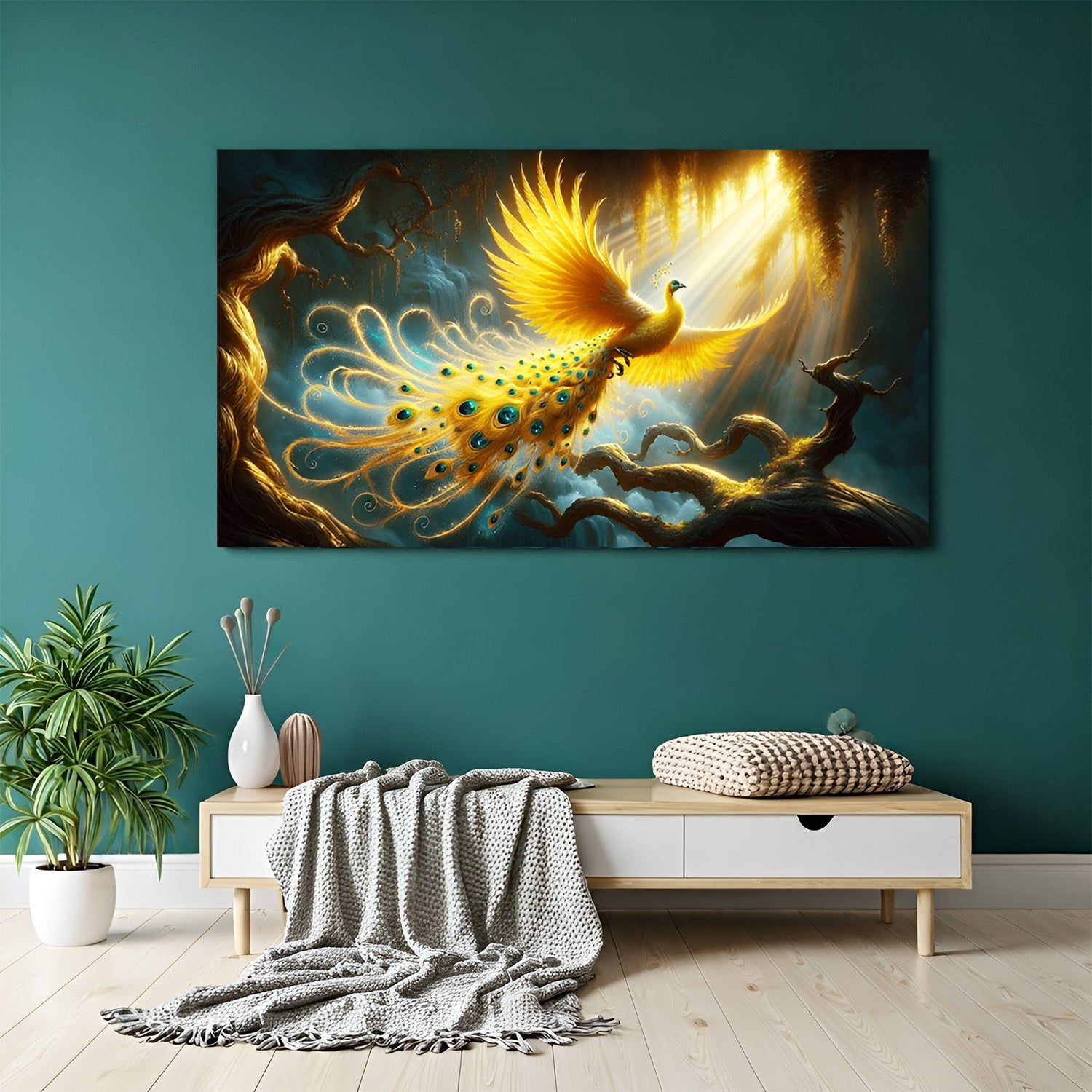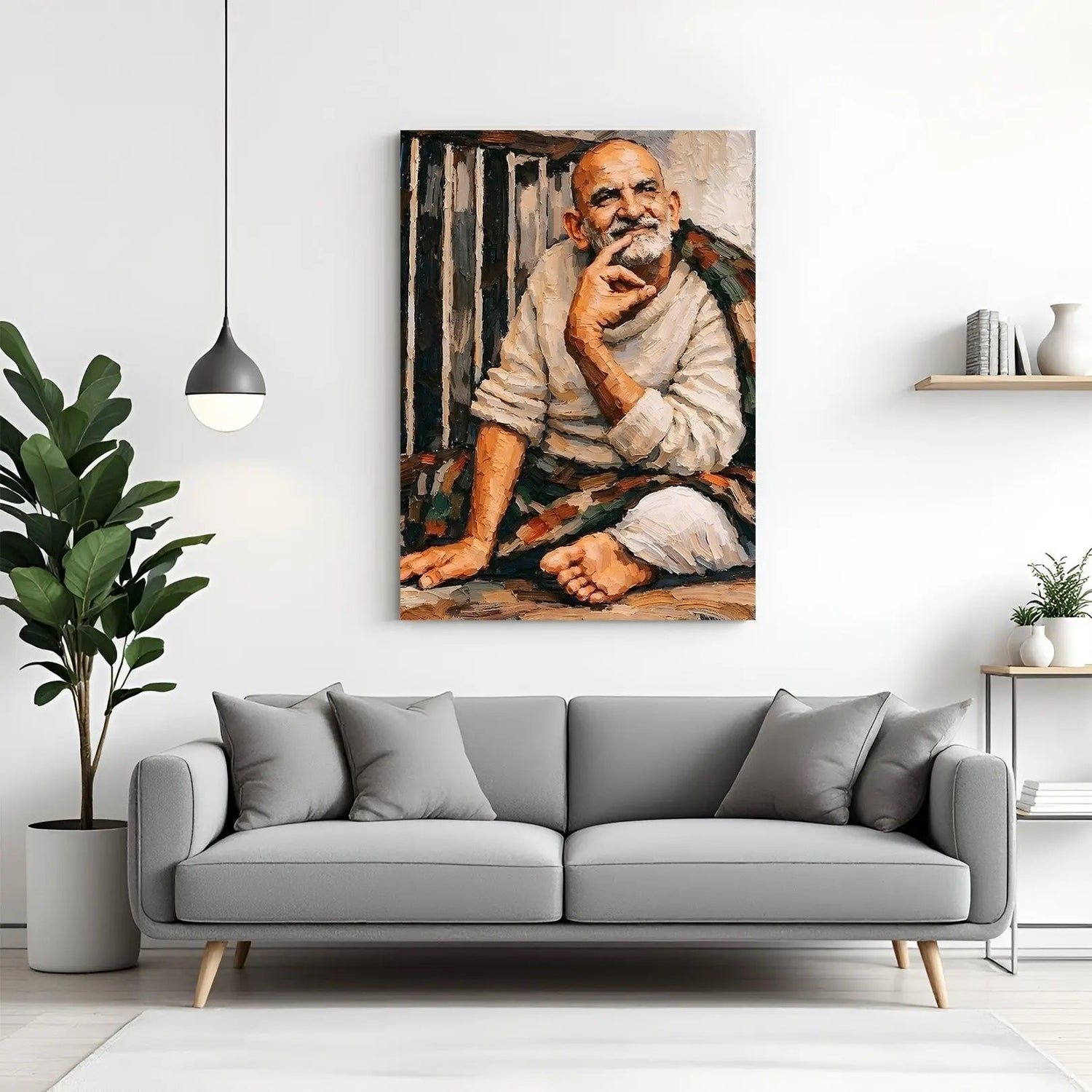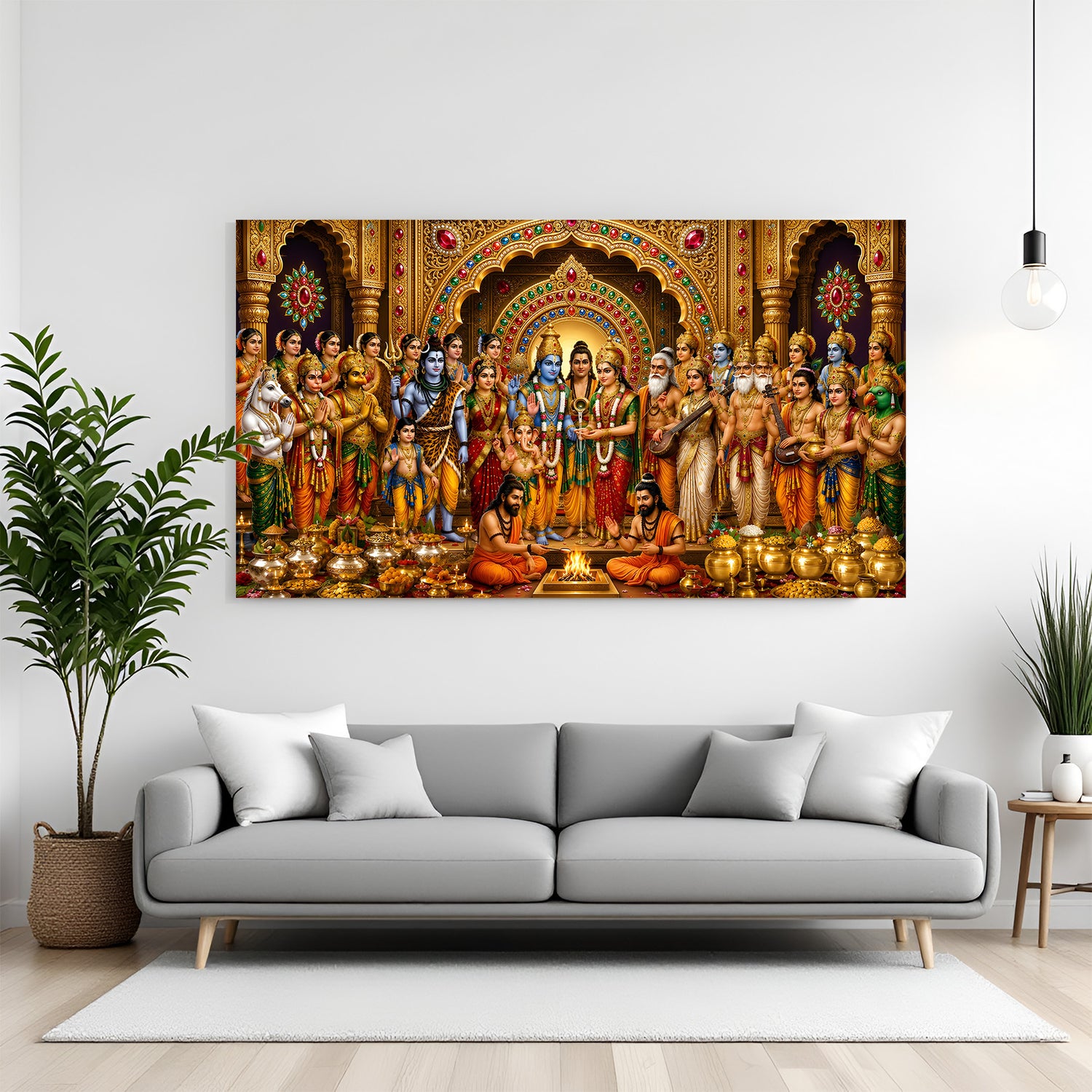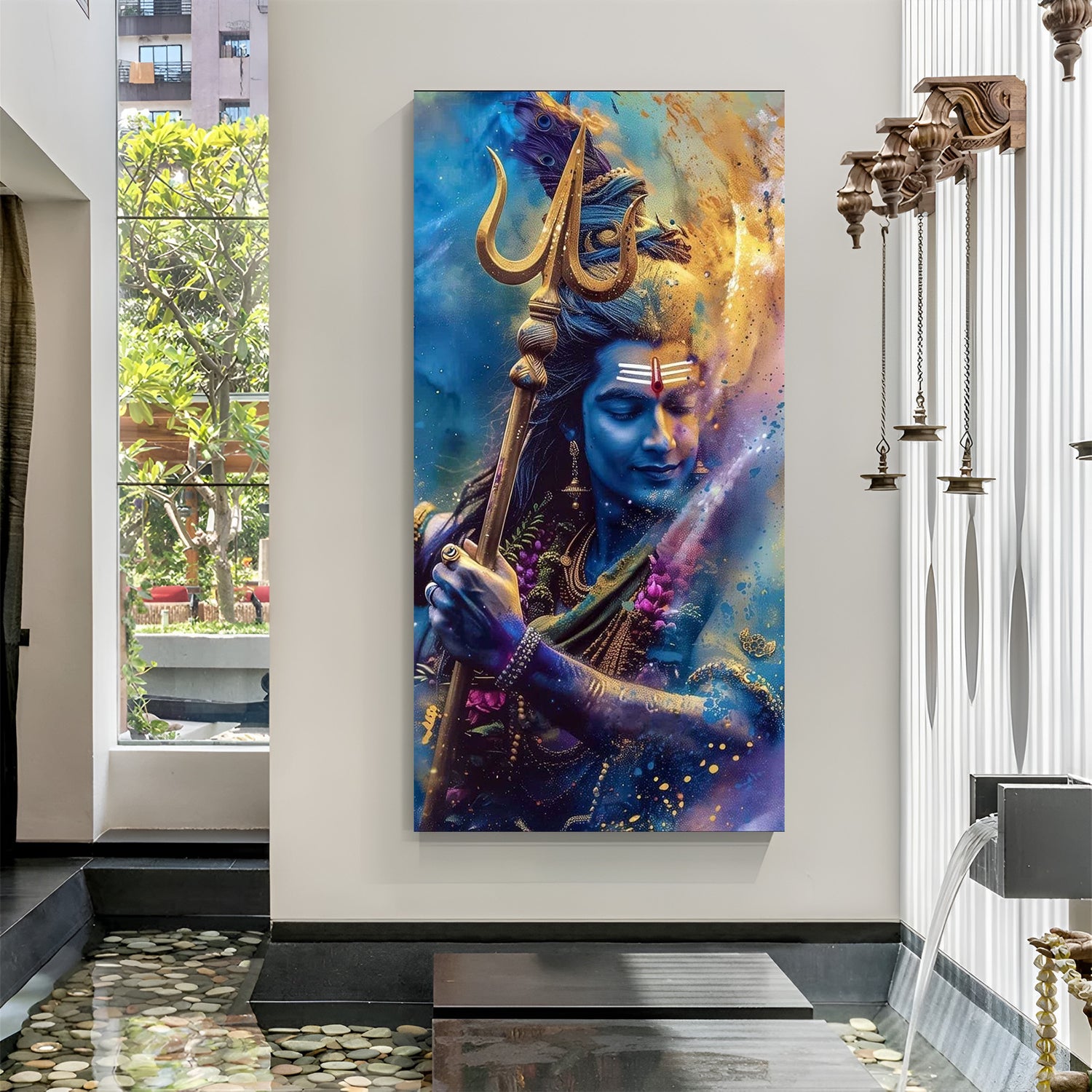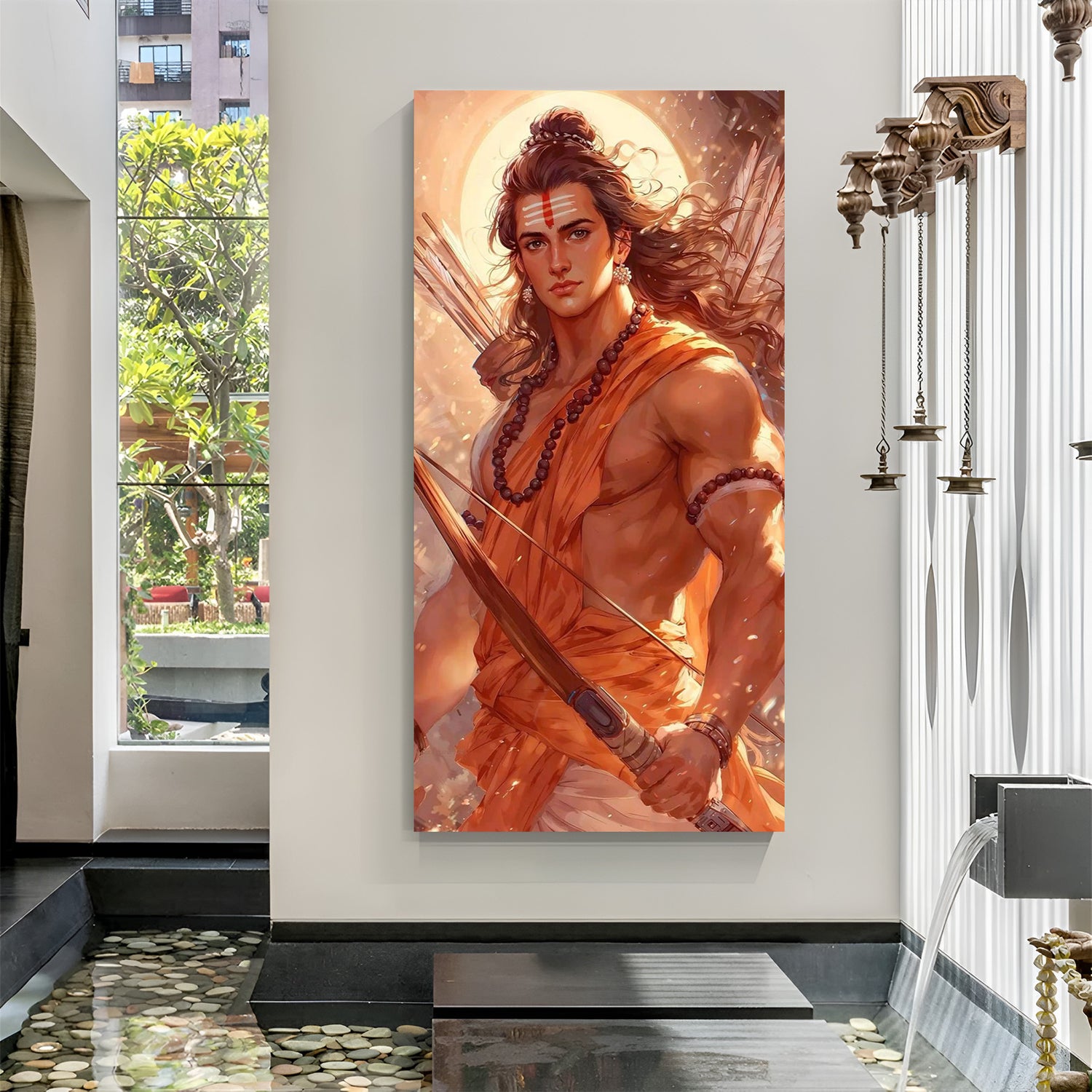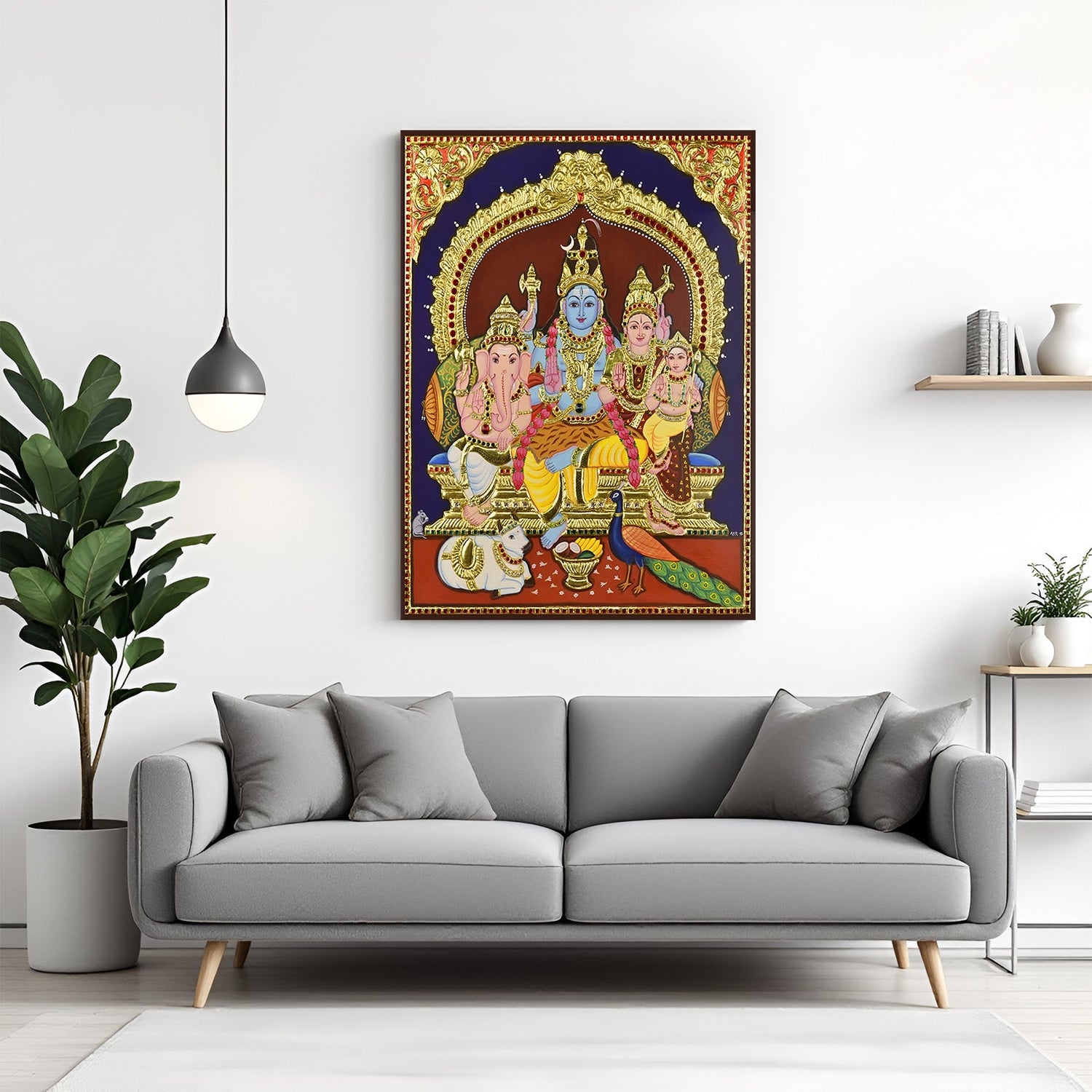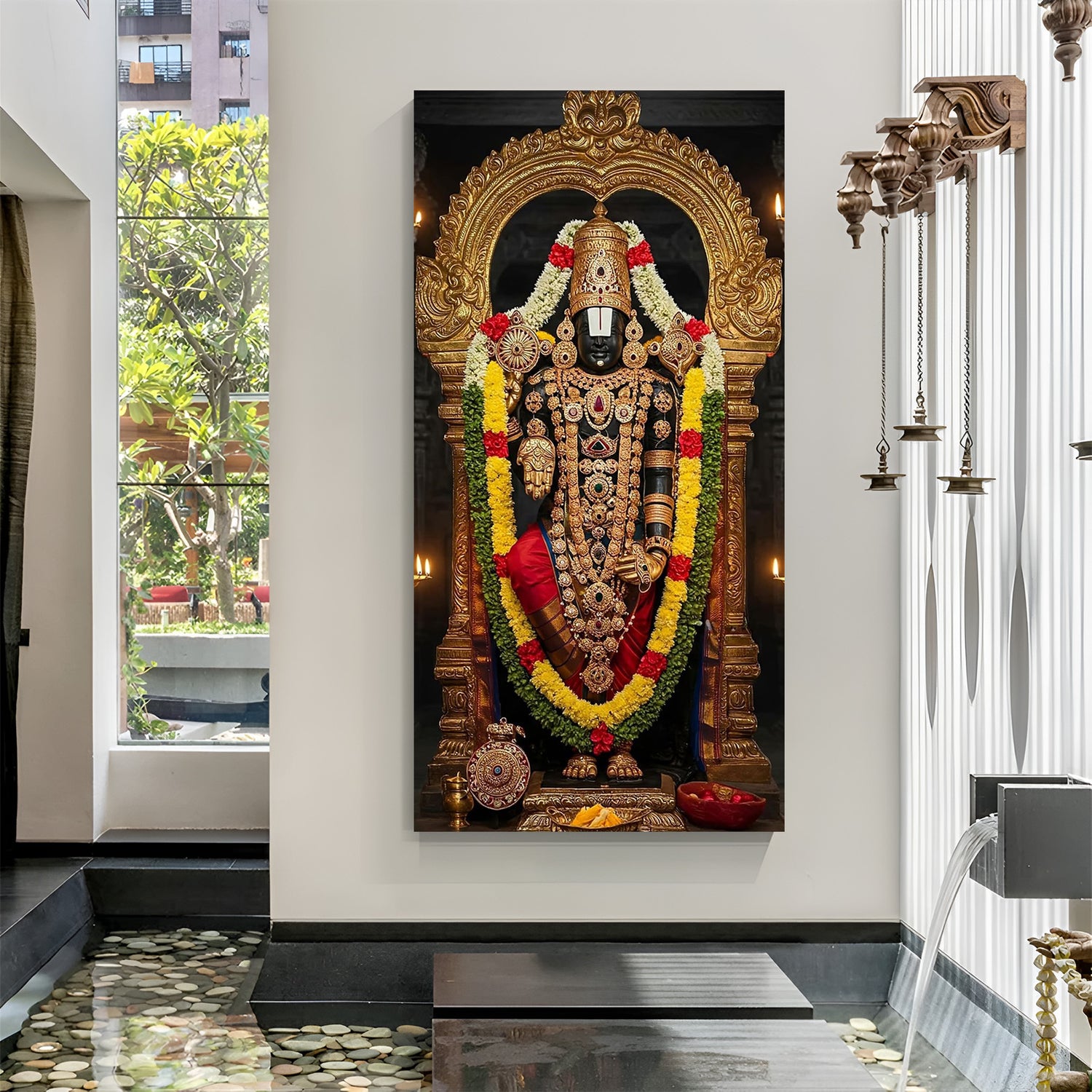
Buy Pichwai Paintings & Canvas Wall Art
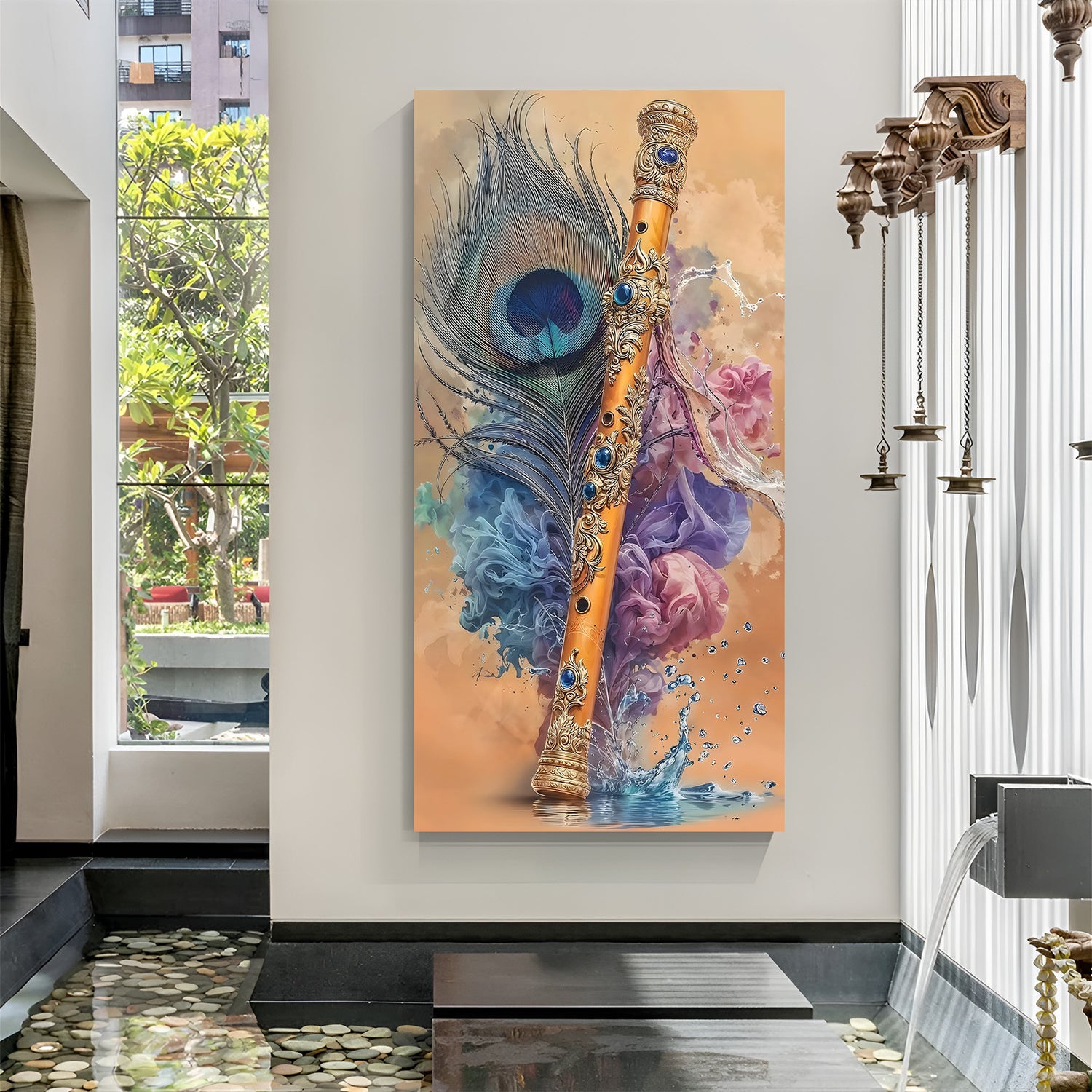
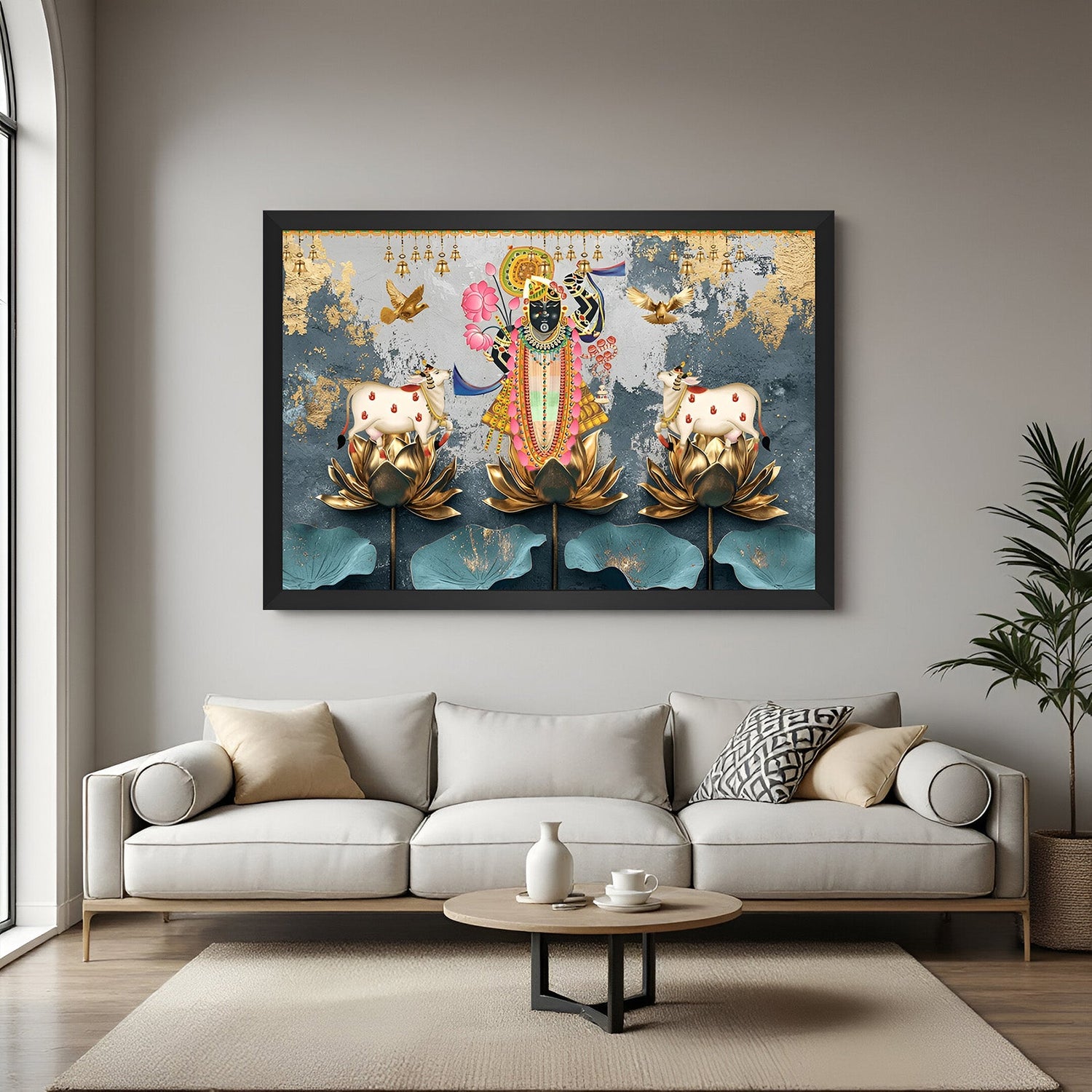
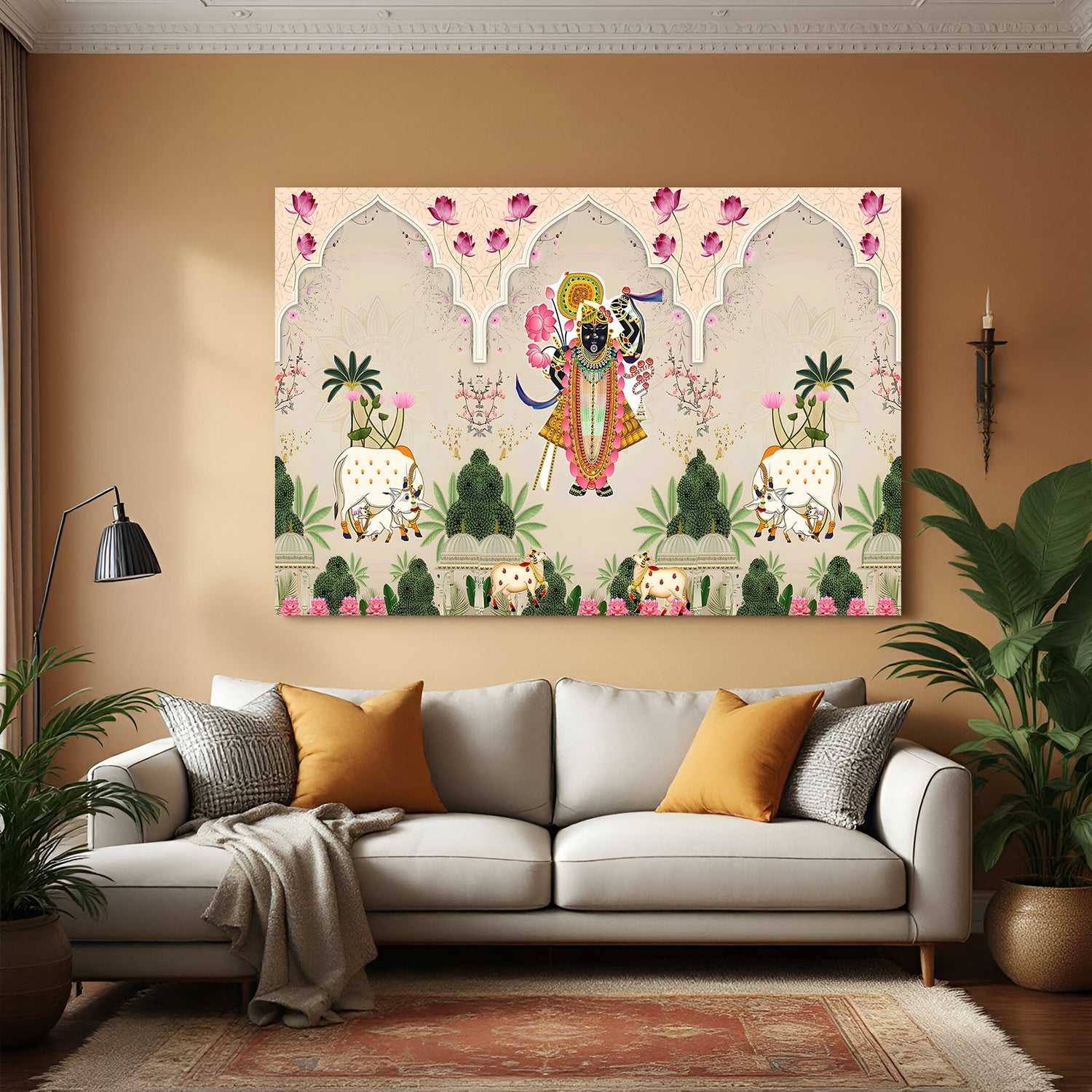
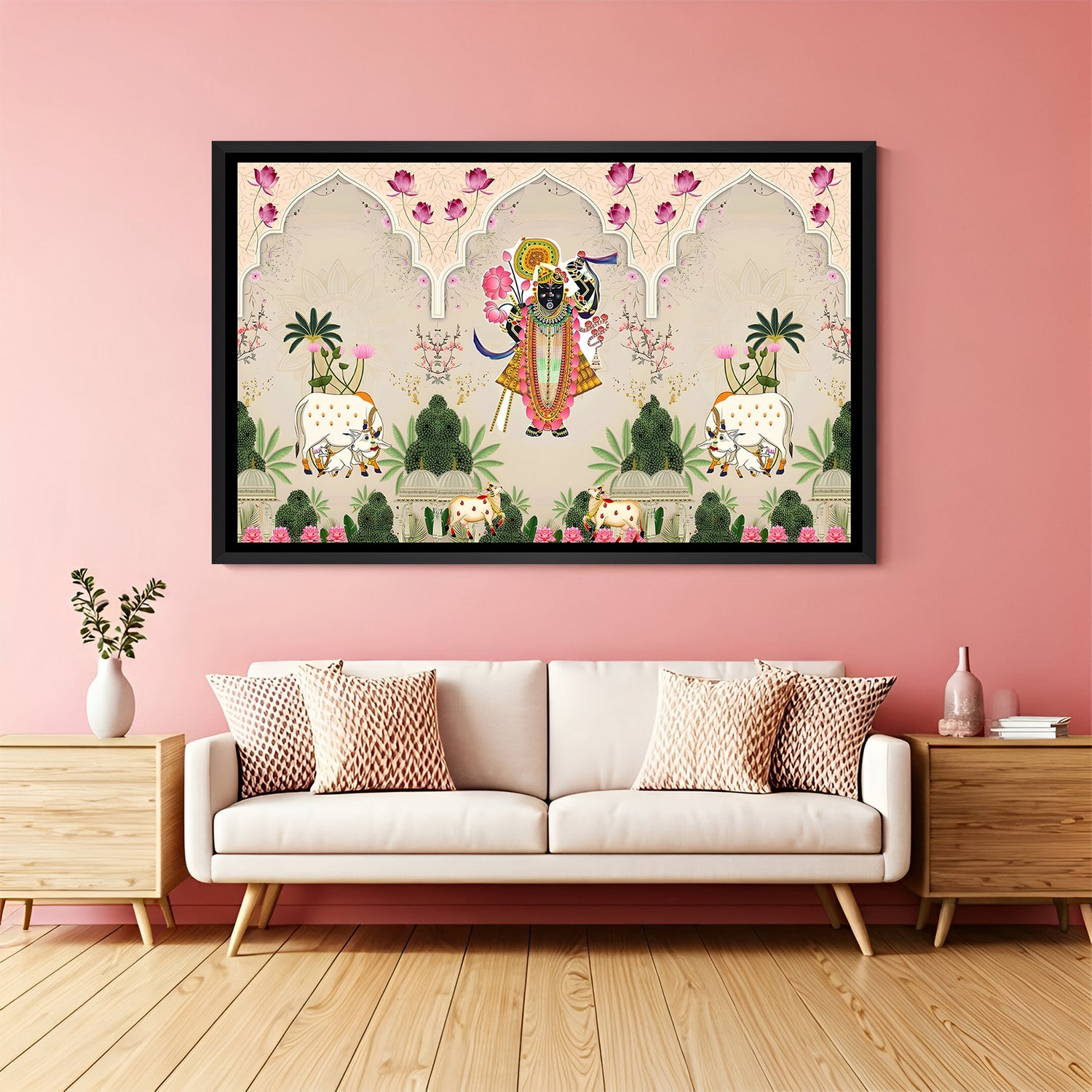
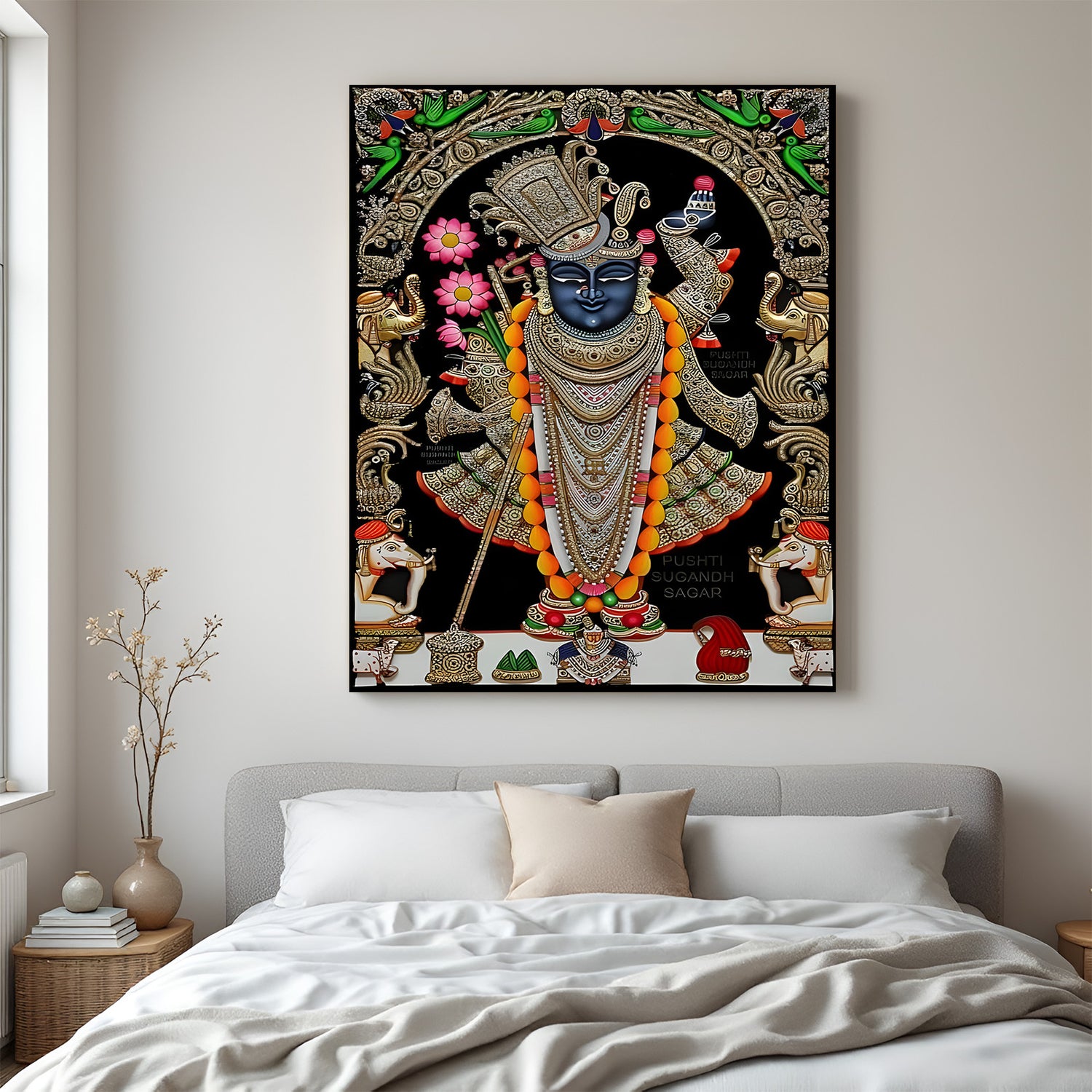
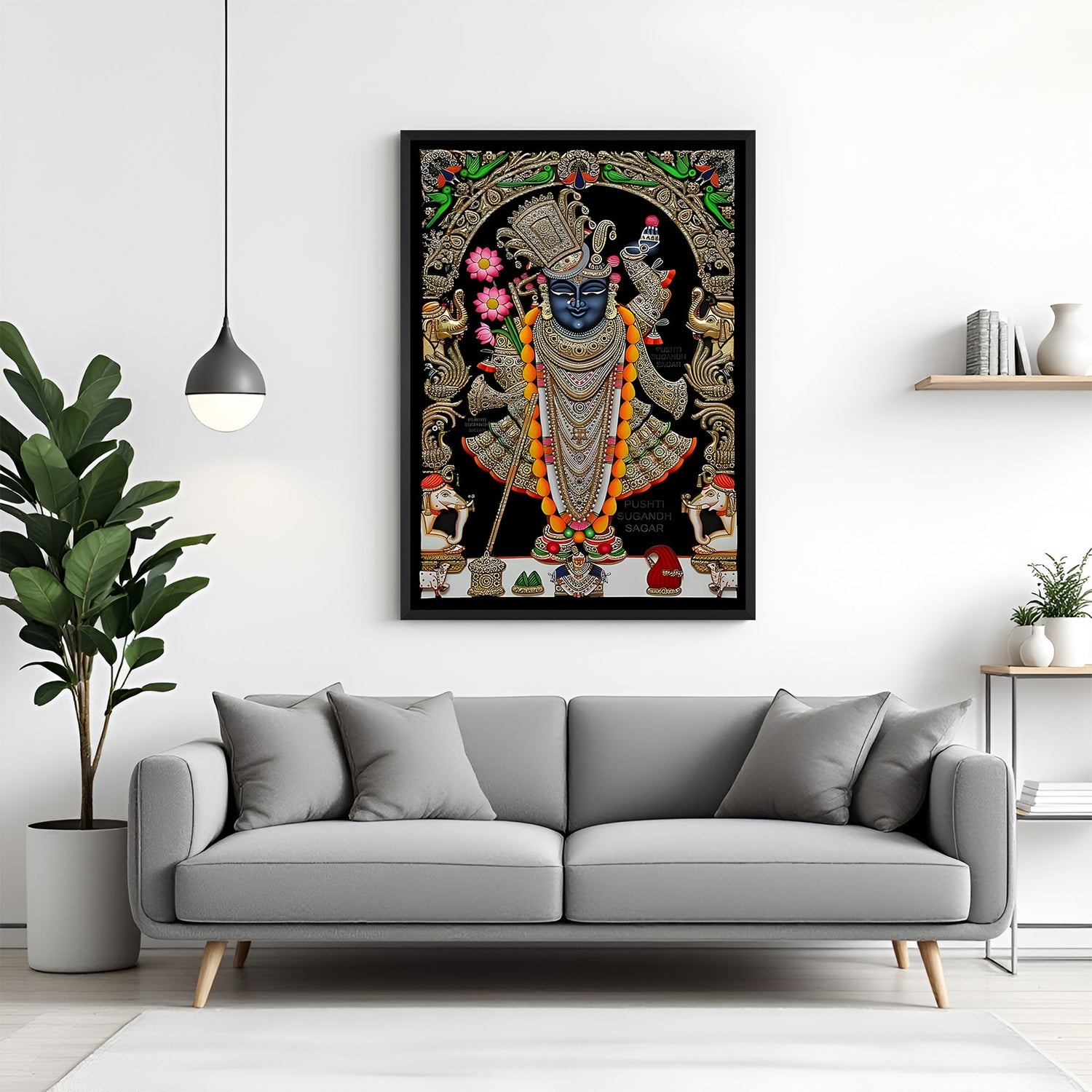
Pichwai wall art is known for its rich Indian visual character, devotional subjects and highly decorative compositions. Shrinathji, lotus ponds, sacred cows, Krishna-related imagery and ornate floral details are among the subjects most closely associated with the style.
Traditional Pichwai developed around the worship of Shrinathji in Nathdwara, Rajasthan. Today, Pichwai-inspired artwork is also used as traditional Indian wall art in living rooms, pooja spaces, dining areas and contemporary homes.
The products in this collection are canvas wall art prints unless an individual listing specifically states otherwise. They should not be confused with original hand-painted cloth Pichwai created using traditional methods.
If you want to learn more about the history, origins and symbolism of the art form before choosing a design, see our complete guide to Pichwai art.
Popular Types of Pichwai Paintings
Pichwai-inspired artwork can vary considerably depending on the central subject and decorative motifs used in the composition.
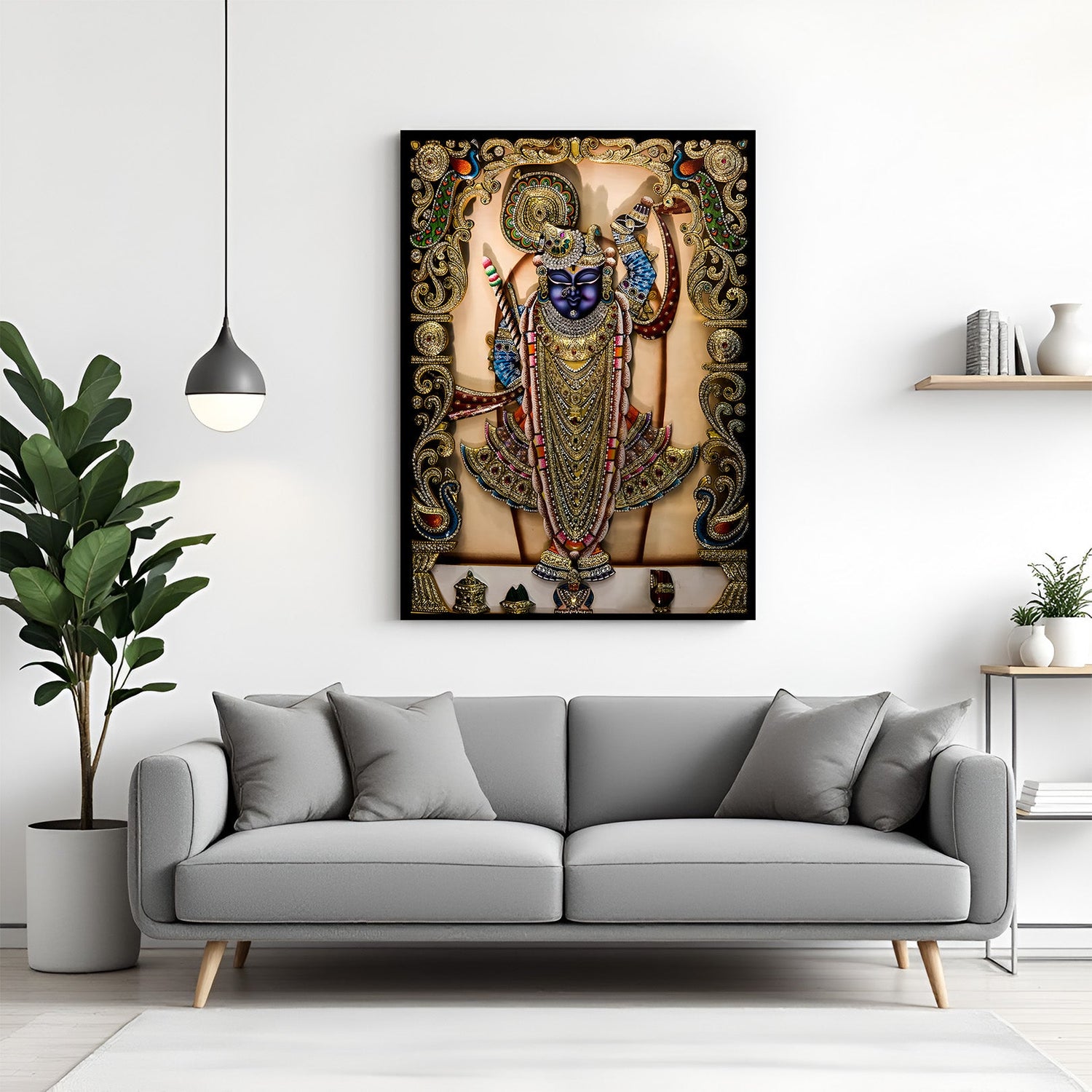
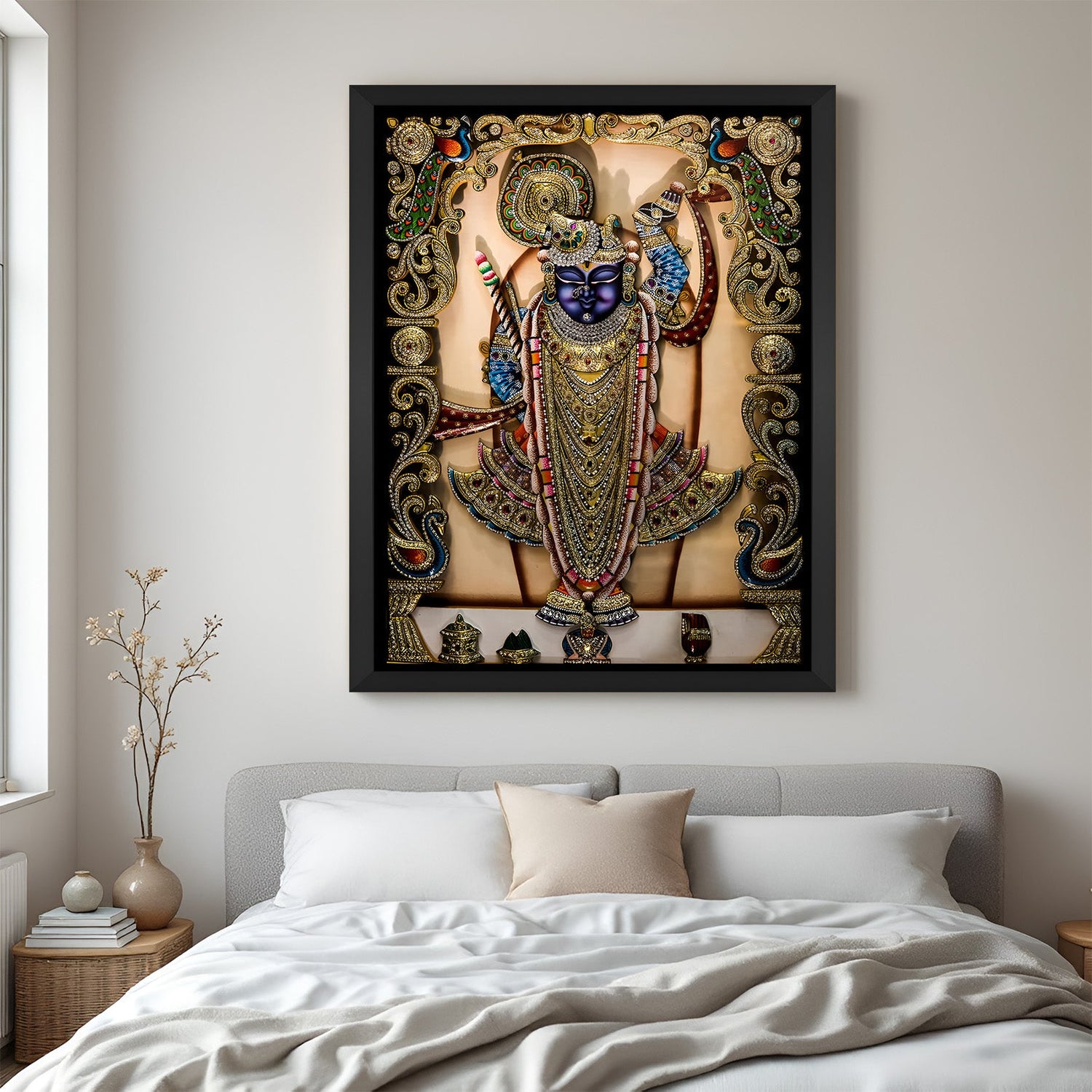
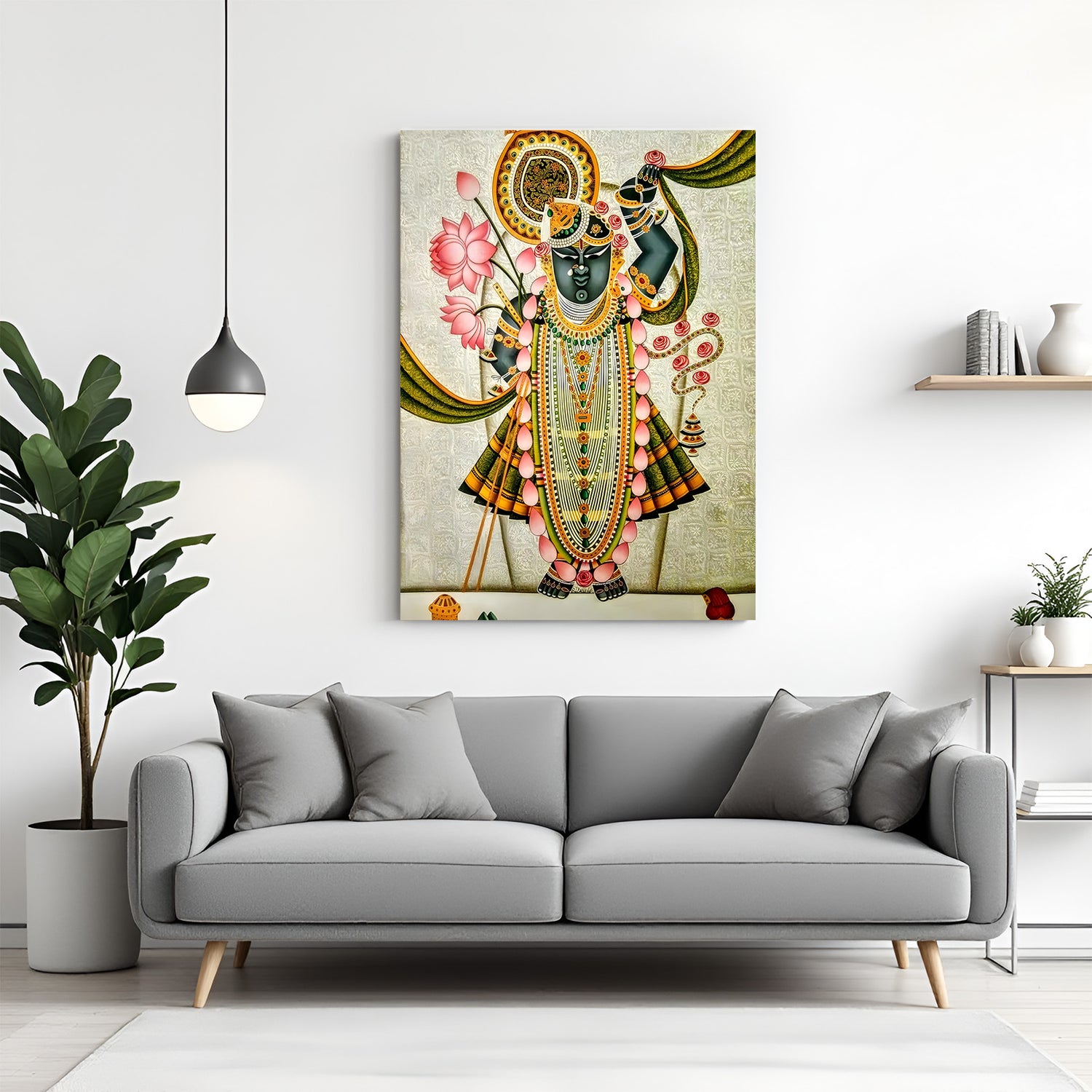
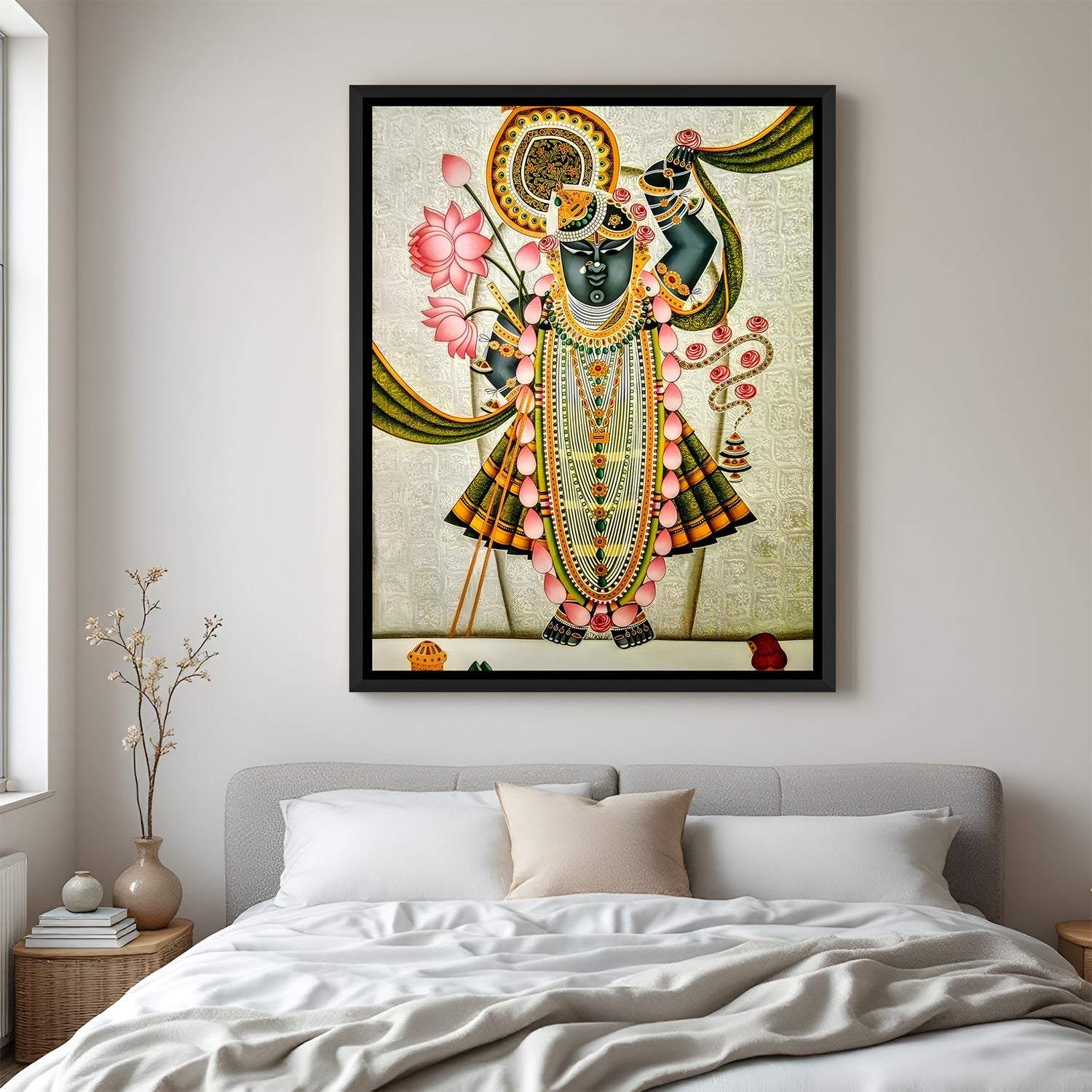
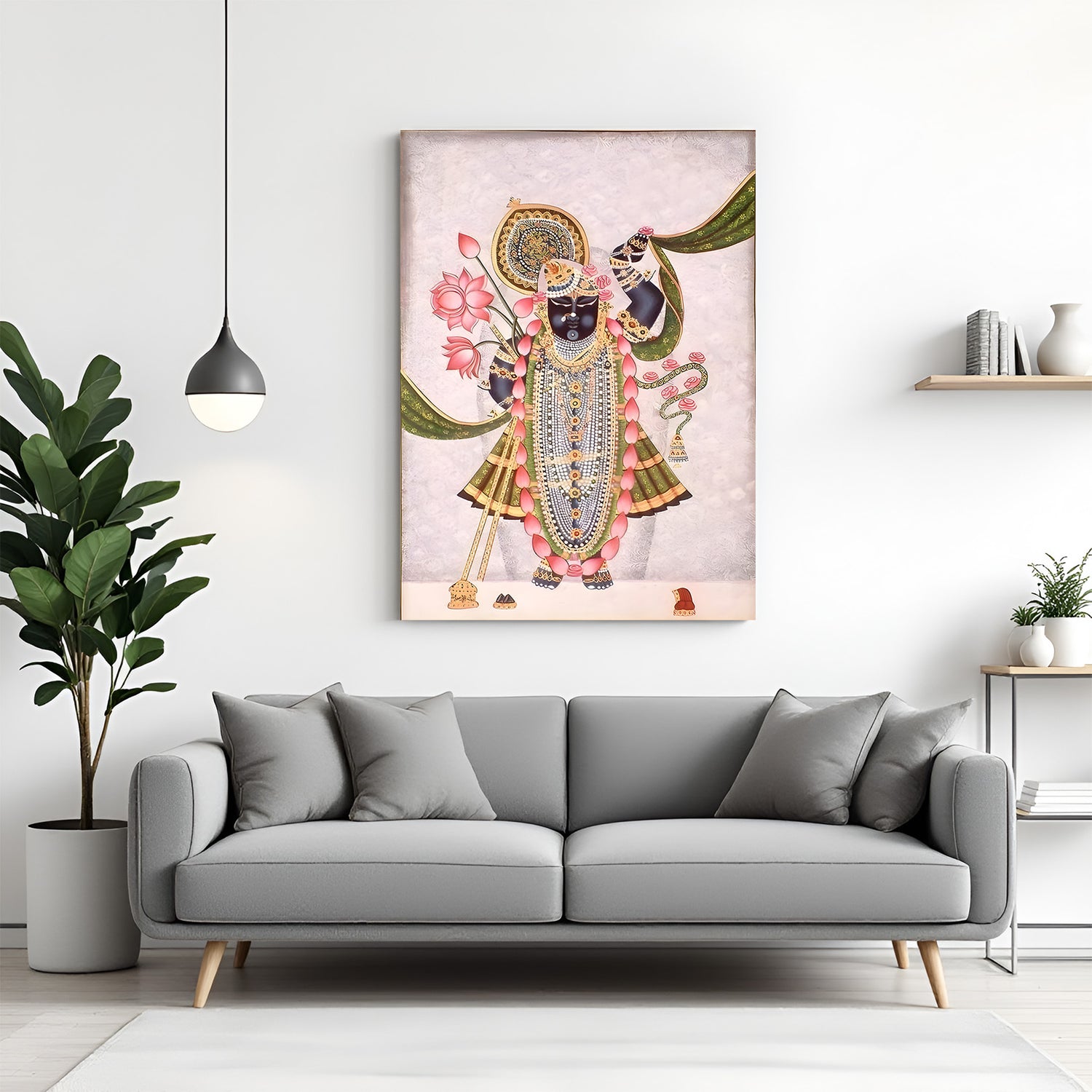
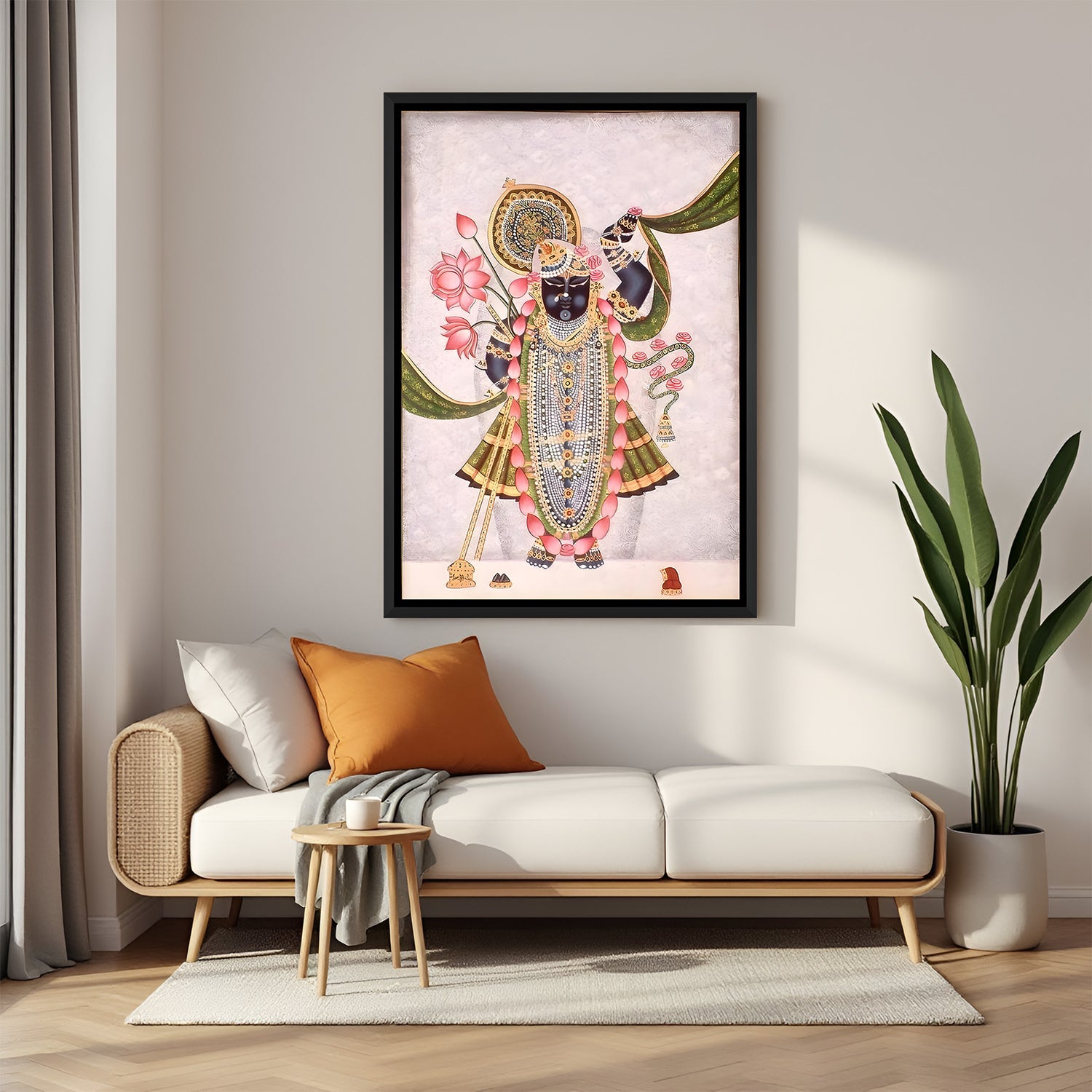
Shrinathji Pichwai Paintings
Shrinathji is the central devotional figure associated with traditional Pichwai art. He is worshipped as a form of Lord Krishna and commonly appears surrounded by lotus flowers, cows, trees, gopis and elaborate decorative settings.
Shrinathji compositions are especially suitable when the devotional meaning of the artwork matters as much as its visual impact.
Explore more designs in our Shrinathji Wall Art collection.
Lotus Pichwai Paintings
Lotus flowers and lotus ponds are among the most recognisable visual elements used in contemporary Pichwai-inspired wall art.
Lotus-heavy compositions can create a softer and more decorative appearance than densely populated narrative scenes, making them particularly easy to use in living rooms and formal interiors.
They can work well in homes where you want a clearly Indian traditional aesthetic without choosing an extremely complex devotional composition.
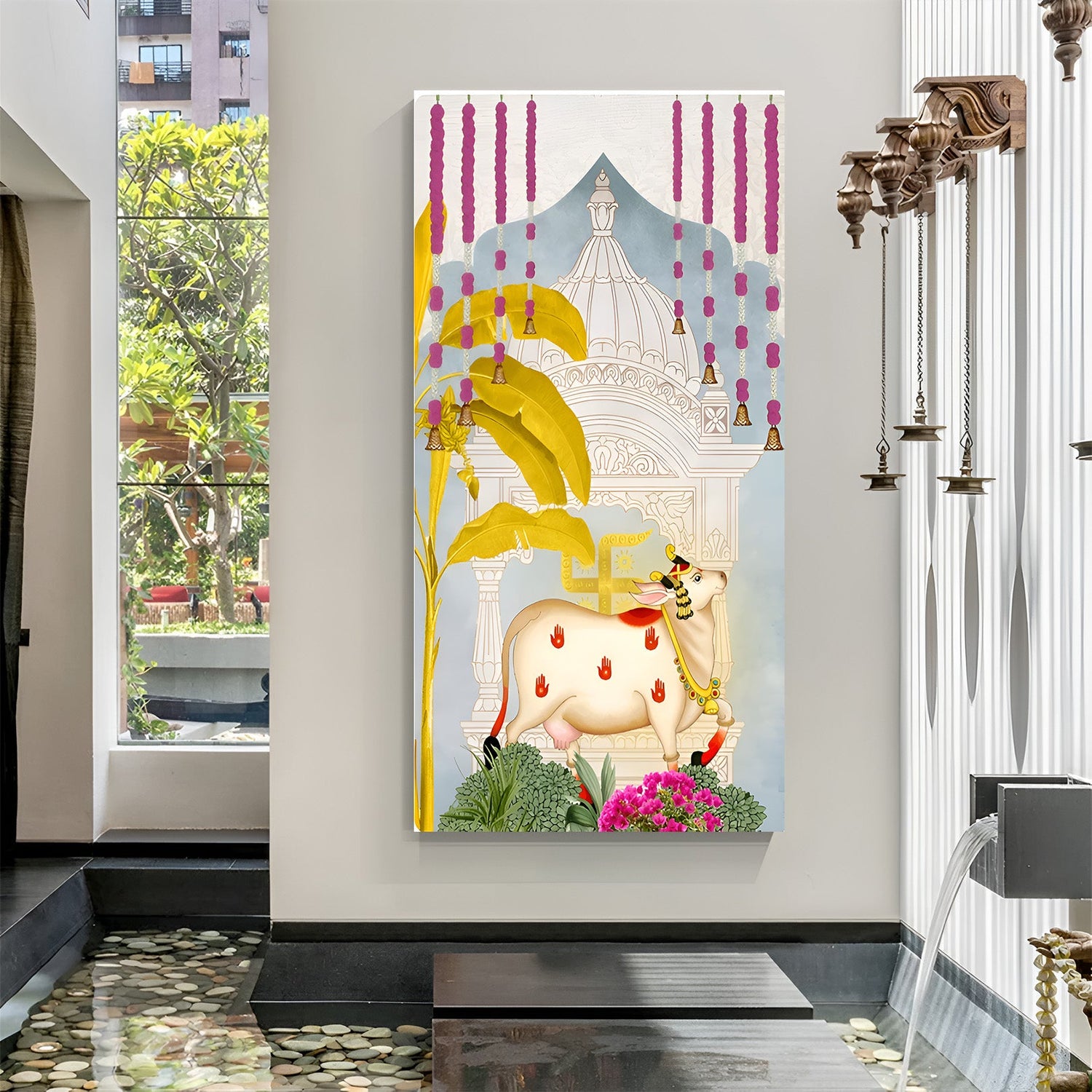
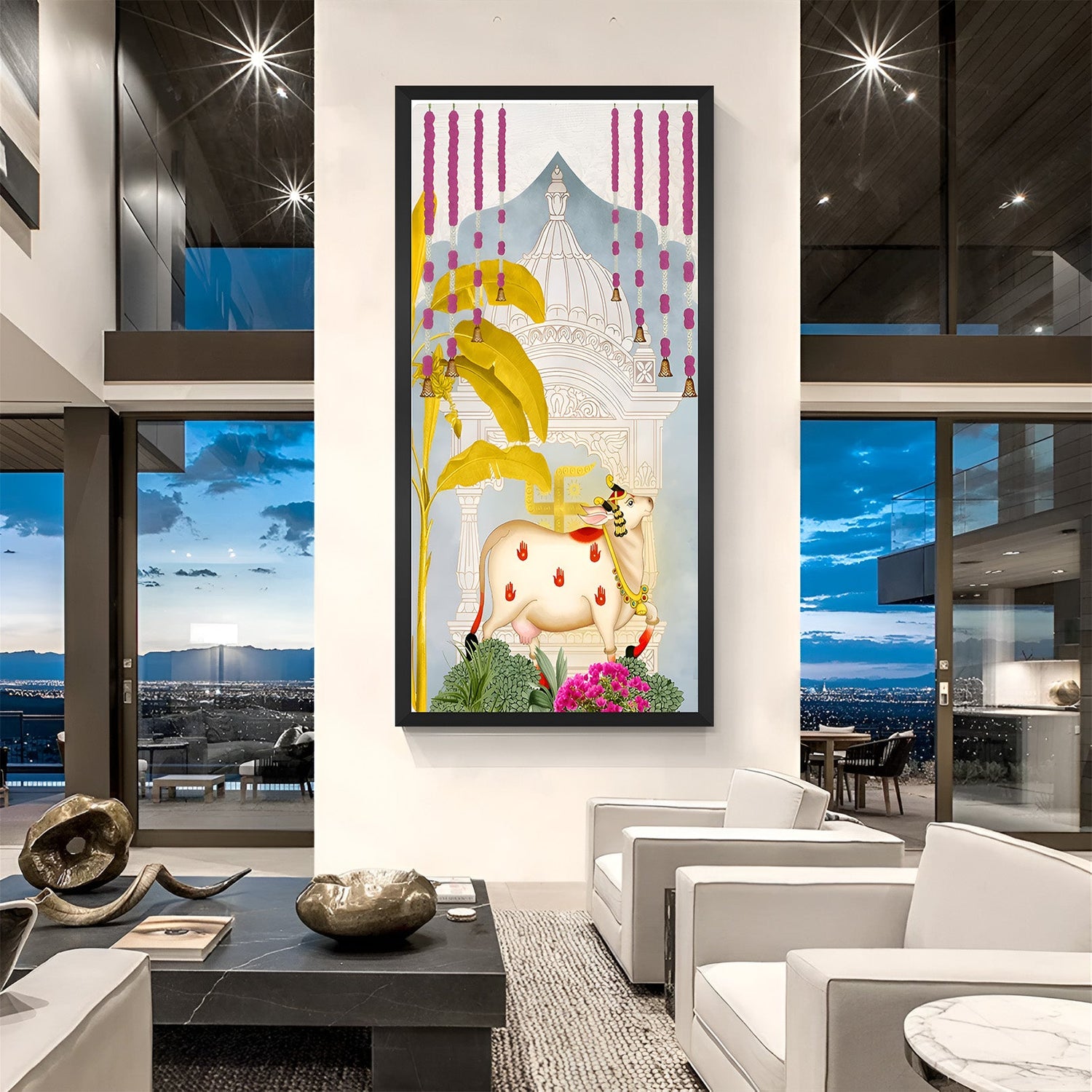
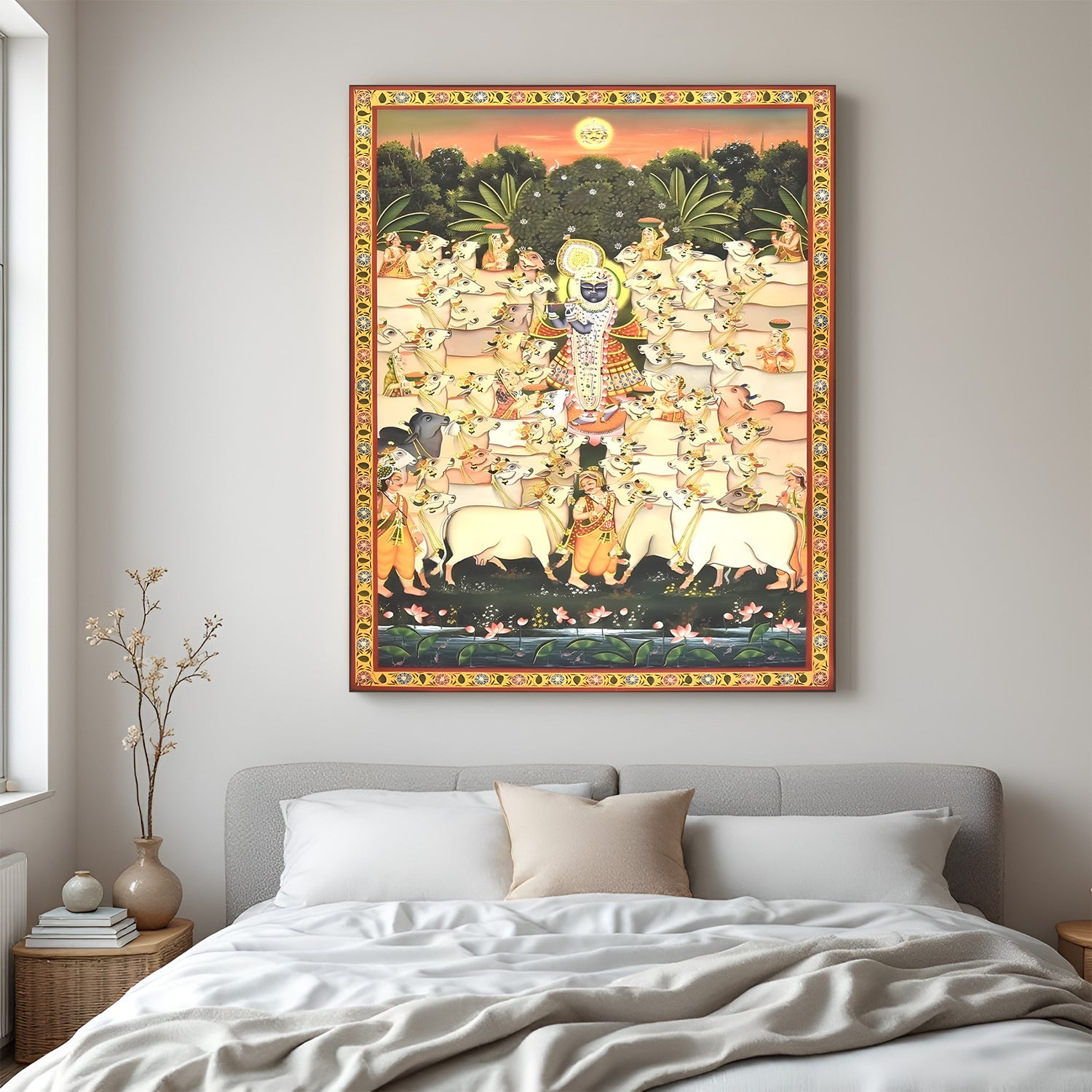
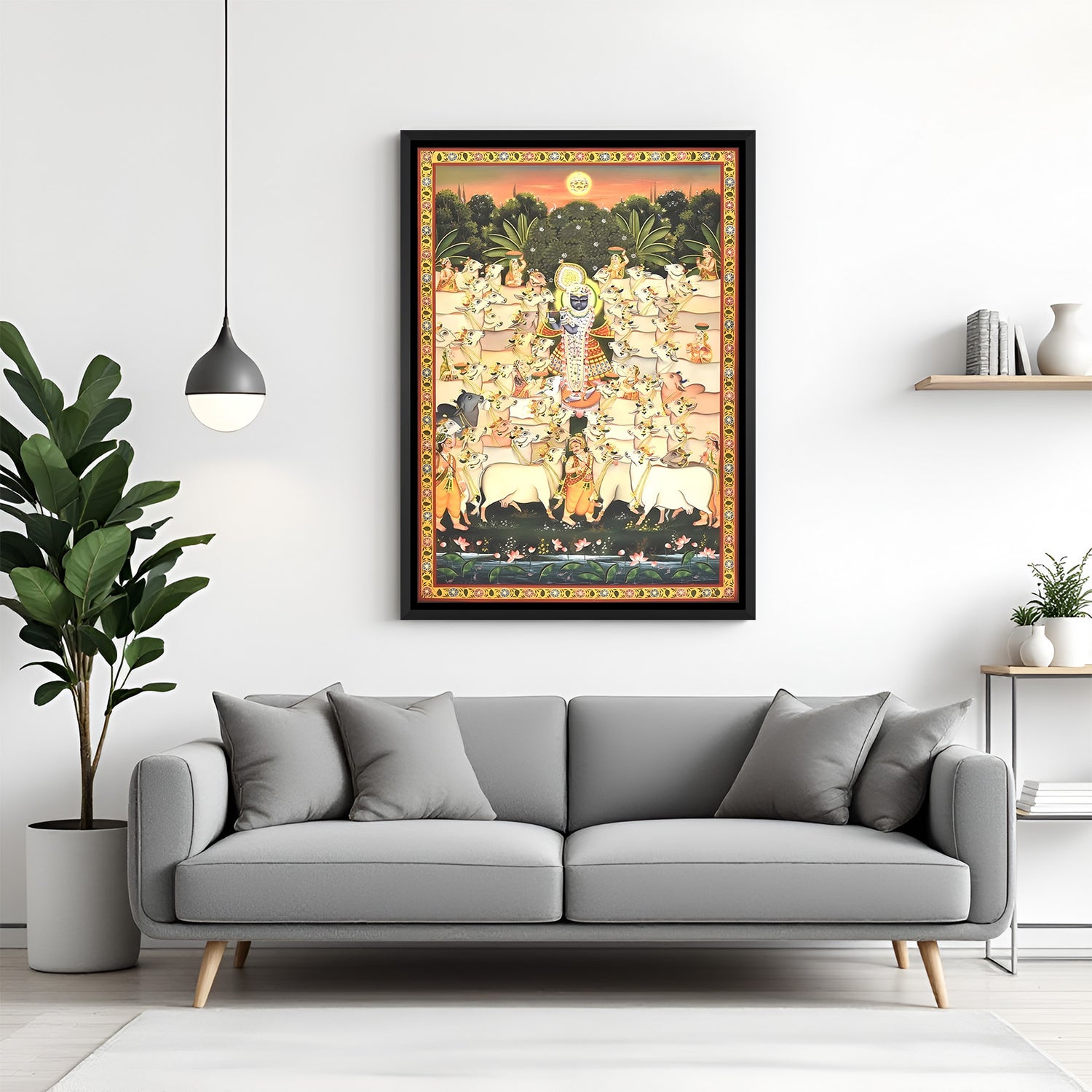
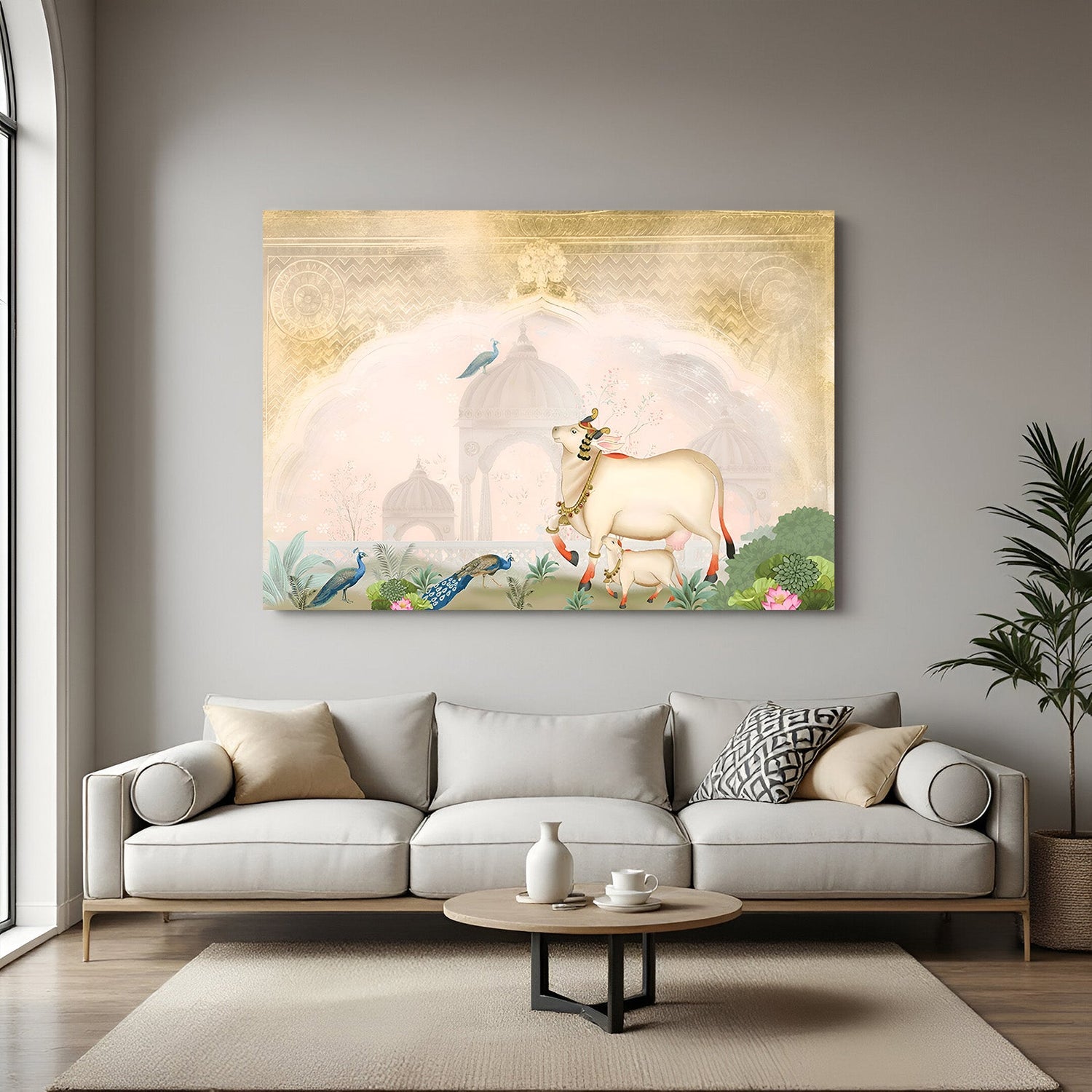
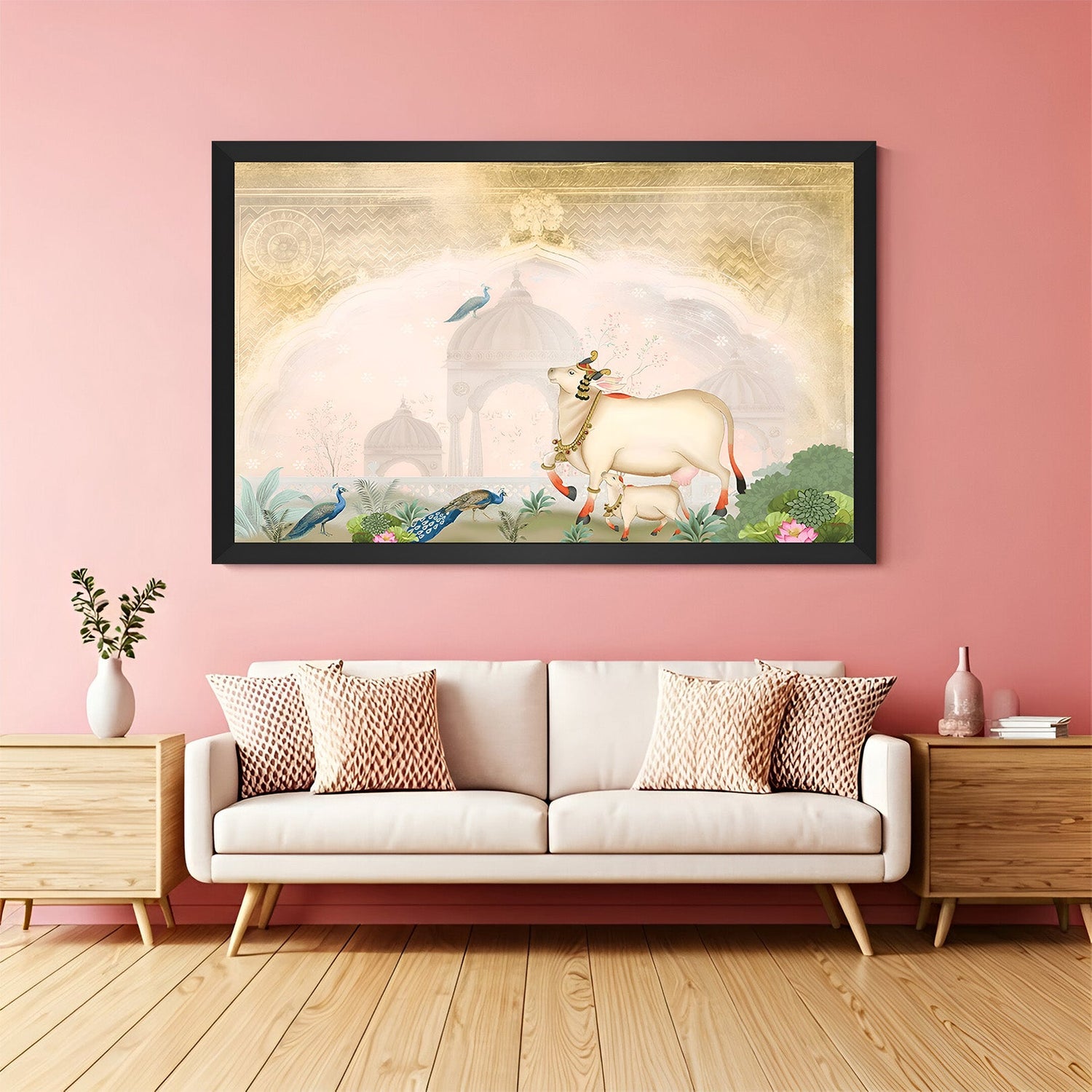
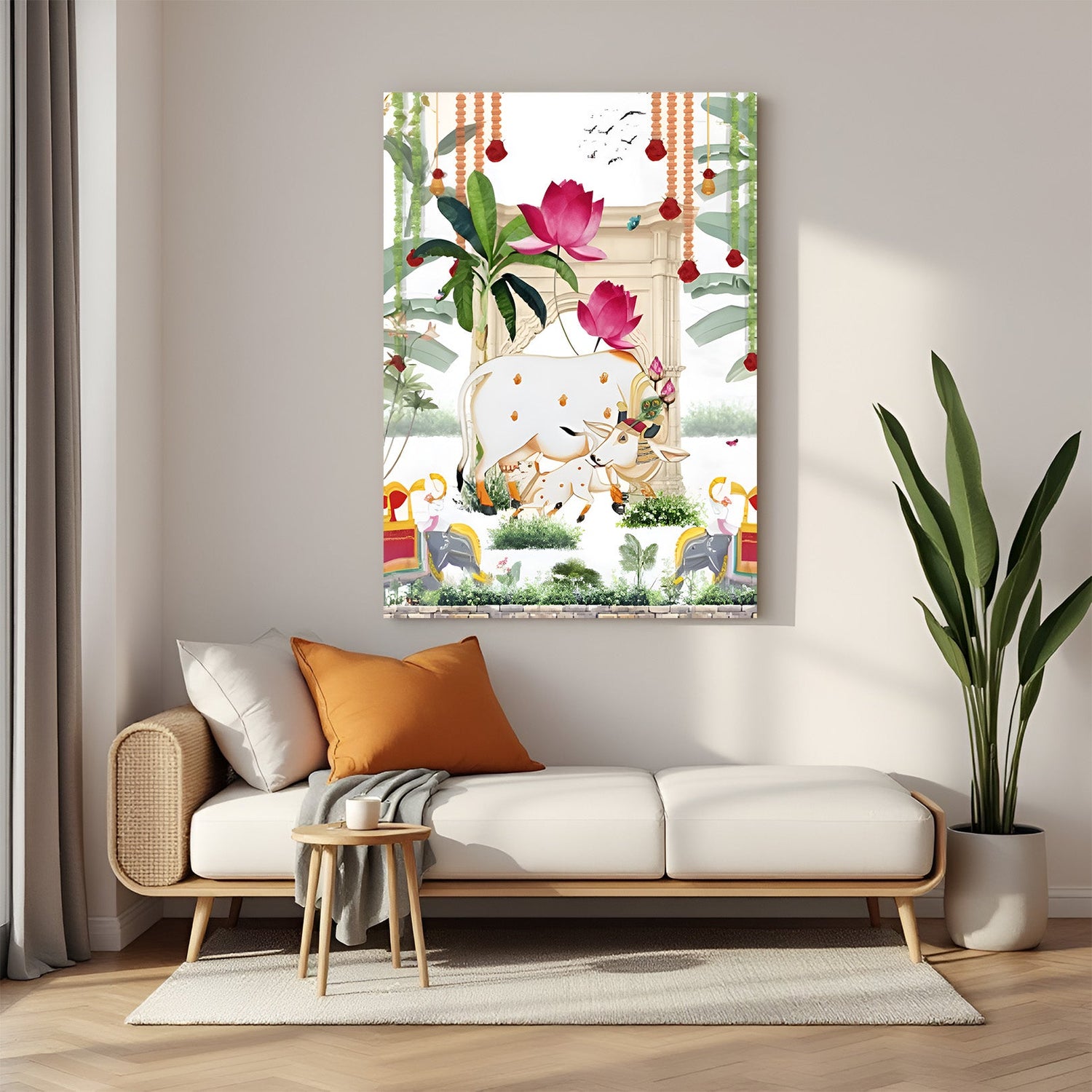
Pichwai Cow Paintings
Cows appear frequently in Pichwai because of their close association with Krishna's pastoral identity.
Pichwai cow artwork may feature:
- single decorated cows
- cow-and-calf compositions
- herds of cows
- cows surrounded by lotus flowers
- Shrinathji or Krishna with cows
Not every cow shown in Pichwai artwork represents Kamdhenu. For the meaning of sacred cow imagery, cow-and-calf symbolism and placement guidance, read our Pichwai Cow Painting guide.
Kamdhenu in Pichwai-Inspired Art
Some contemporary artworks depict Kamdhenu using Pichwai-inspired colours, lotus motifs, decorative borders and traditional Indian ornamentation.
This combines Kamdhenu's individual mythological symbolism with a Pichwai-style visual treatment. It does not mean Kamdhenu and every Pichwai cow are the same subject.
If Kamdhenu herself is what you want, browse our dedicated Kamdhenu Cow Painting & Wall Art collection.
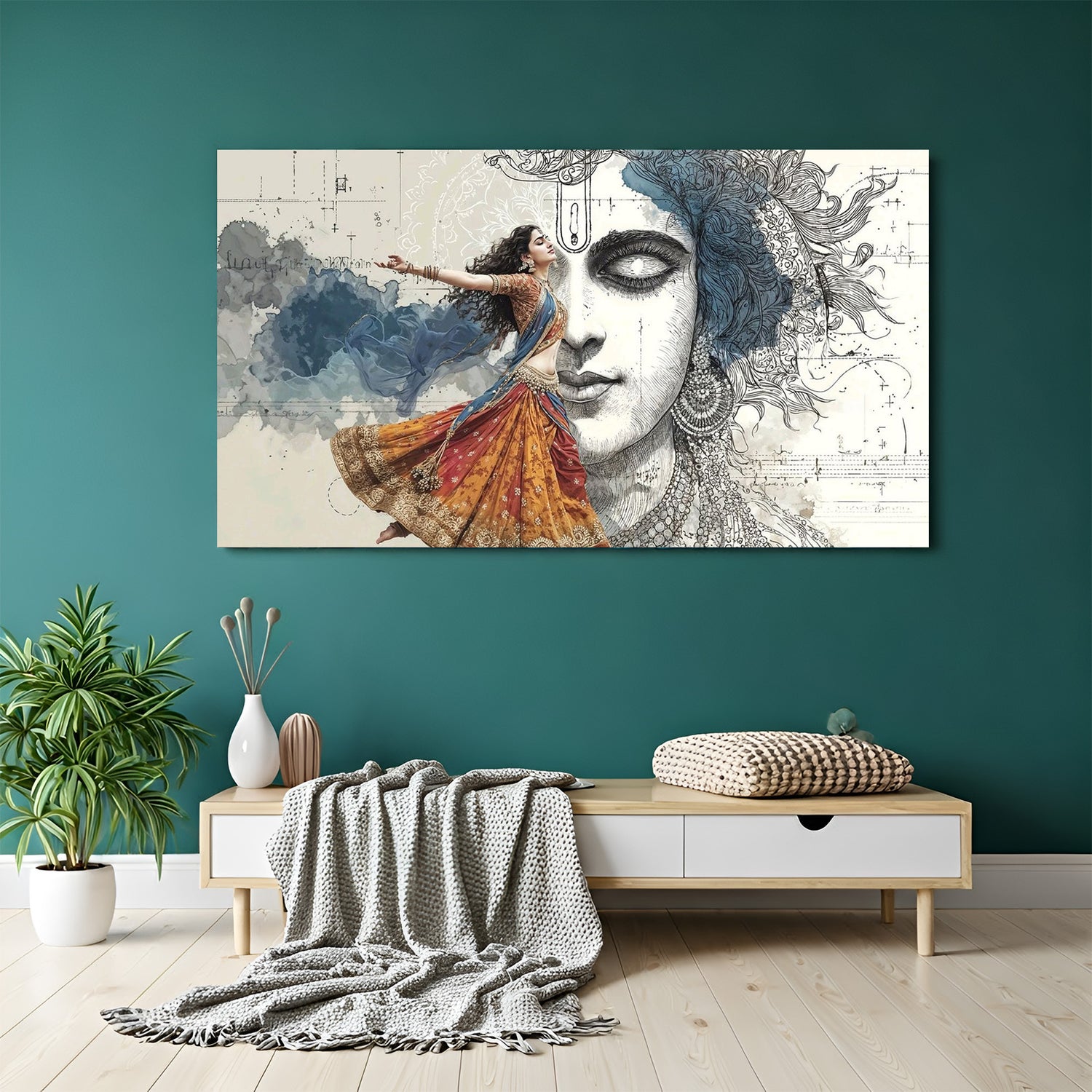
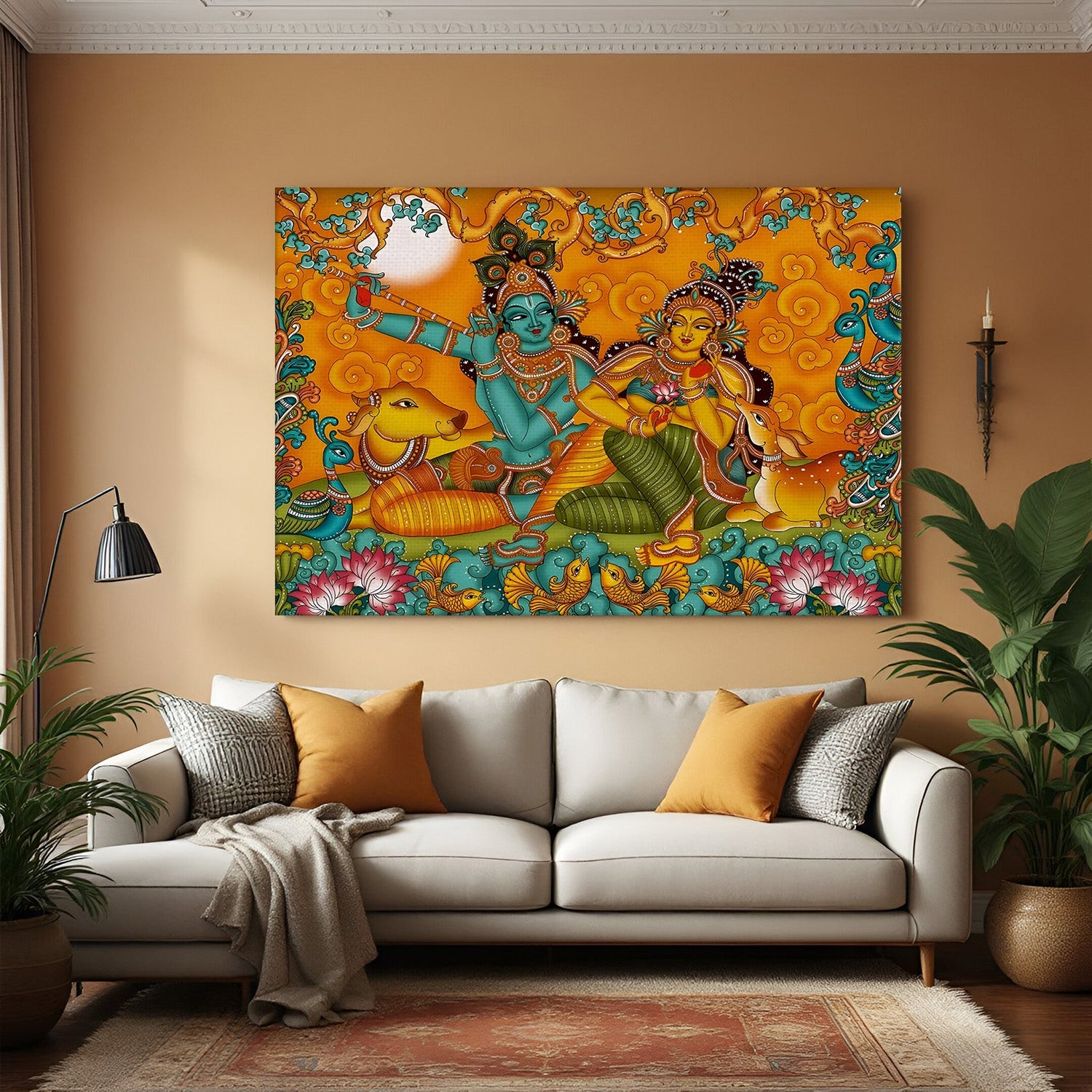
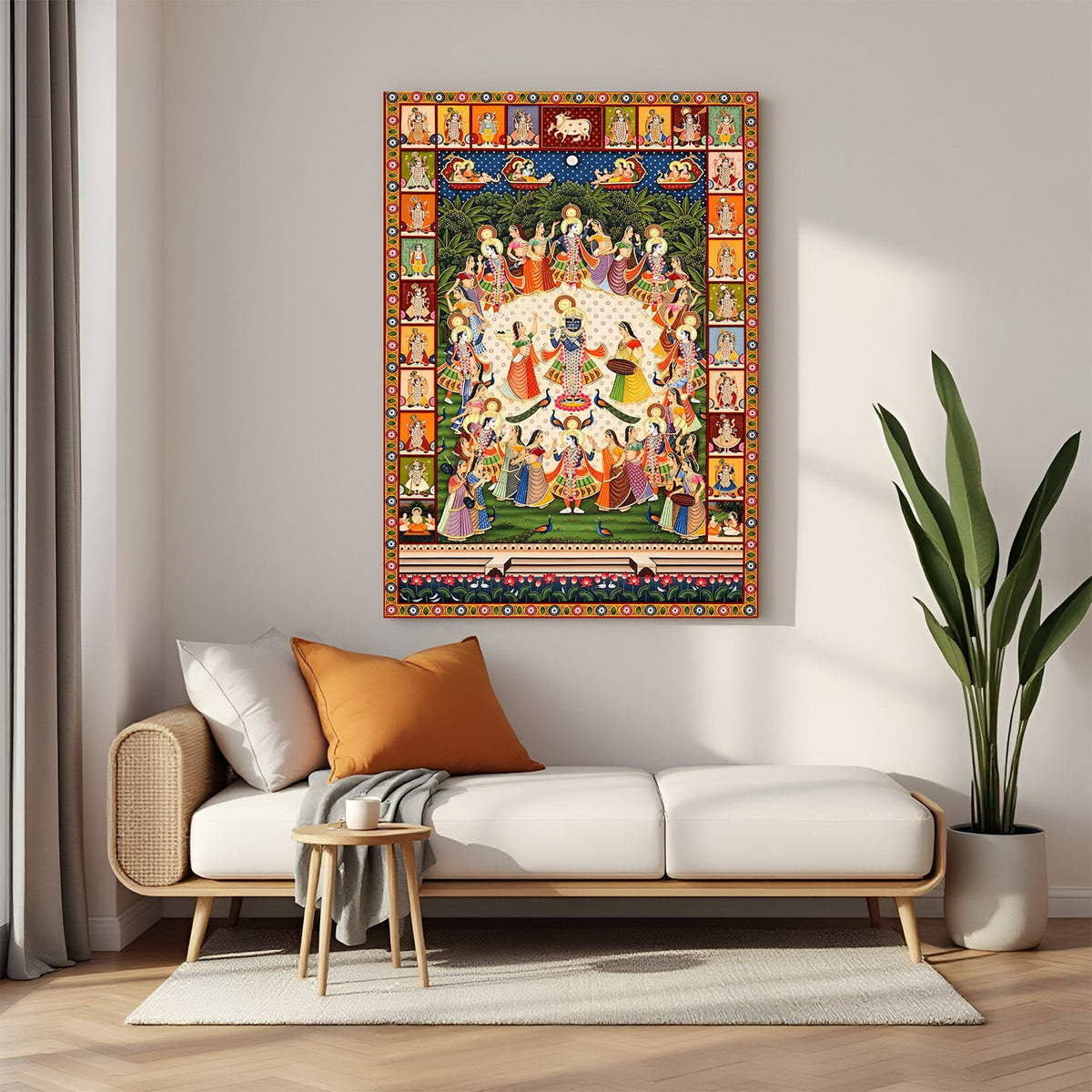
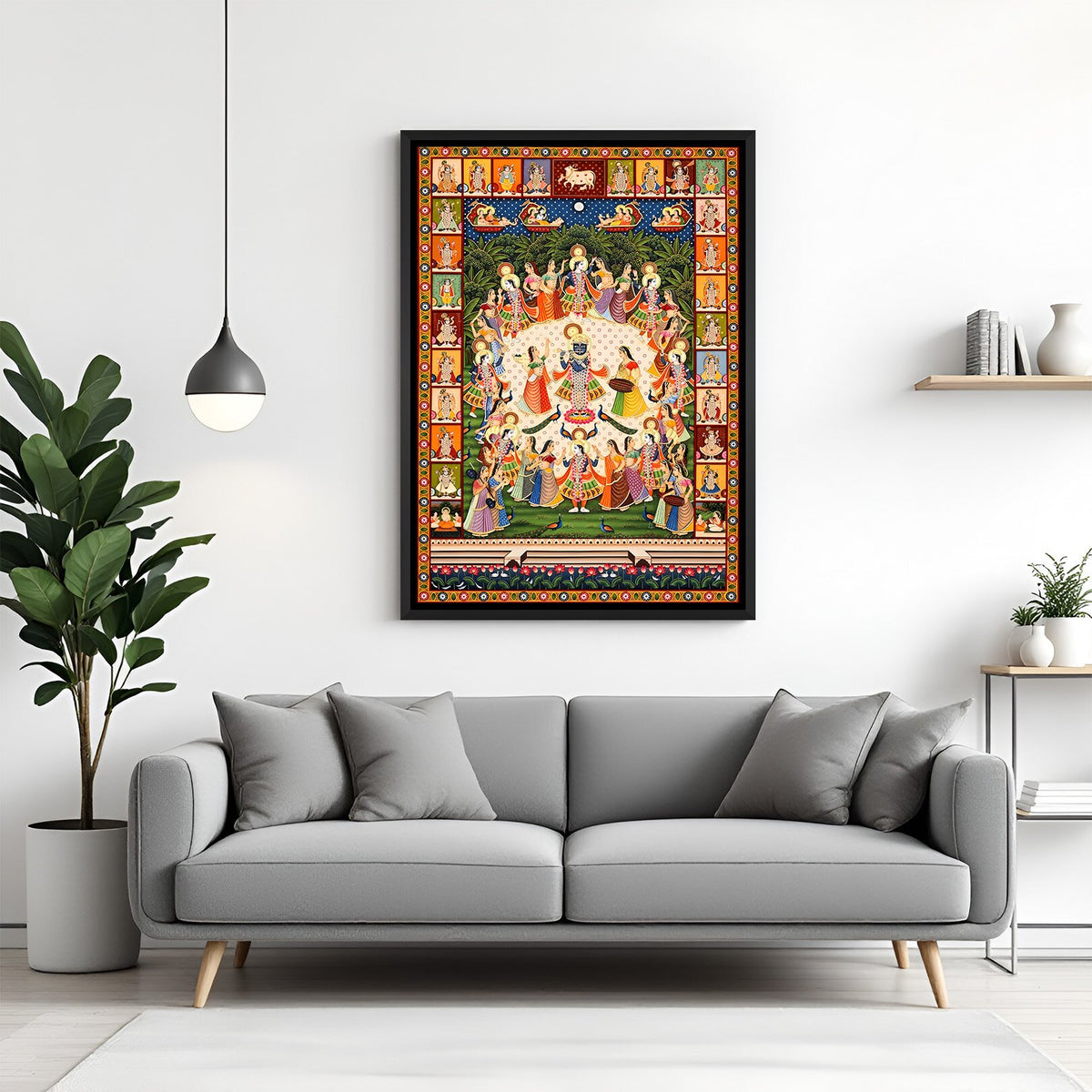
Radha Krishna & Raas Leela Pichwai
Krishna-related narrative compositions can introduce more figures, movement and storytelling into the artwork.
Raas Leela and Radha Krishna-inspired designs are often visually richer than a simple lotus or cow composition, which makes them particularly effective as statement pieces on larger walls.
Pichwai Painting for the Living Room
A Pichwai painting for the living room can work especially well when the artwork has enough wall space to be appreciated properly.
Detailed Pichwai compositions naturally attract attention, so they are often best used as a focal point rather than surrounded by several competing decorative pieces.
For a large wall above a sofa or console, choose a composition with enough width and visual detail to hold the space. A small canvas on a broad living-room wall may look disconnected even if the artwork itself is attractive.
For modern living rooms, cream, green, pink, blue, black or gold-detailed compositions can help bridge traditional Indian imagery with contemporary furniture and finishes.
If you are comparing Pichwai with other styles for the same room, browse our Living Room Wall Art collection.
Pichwai Art for Pooja & Devotional Spaces
Pichwai artwork with a clear Shrinathji or Krishna devotional focus can also be suitable for pooja rooms, prayer corners and meditation spaces.
For these areas, choose a composition that fits naturally within the available wall space and can be displayed respectfully.
Highly detailed Shrinathji paintings may suit larger devotional walls, while simpler lotus, cow or Krishna compositions can work where the available space is more limited.
Traditional and Vastu-oriented placement preferences vary between households, so room suitability and devotional practice should come before treating one direction as universally mandatory.
Traditional Pichwai vs Modern Pichwai Canvas Art
Traditional Pichwai and modern Pichwai-inspired canvas prints should not be treated as exactly the same type of artwork.
Traditional Pichwai
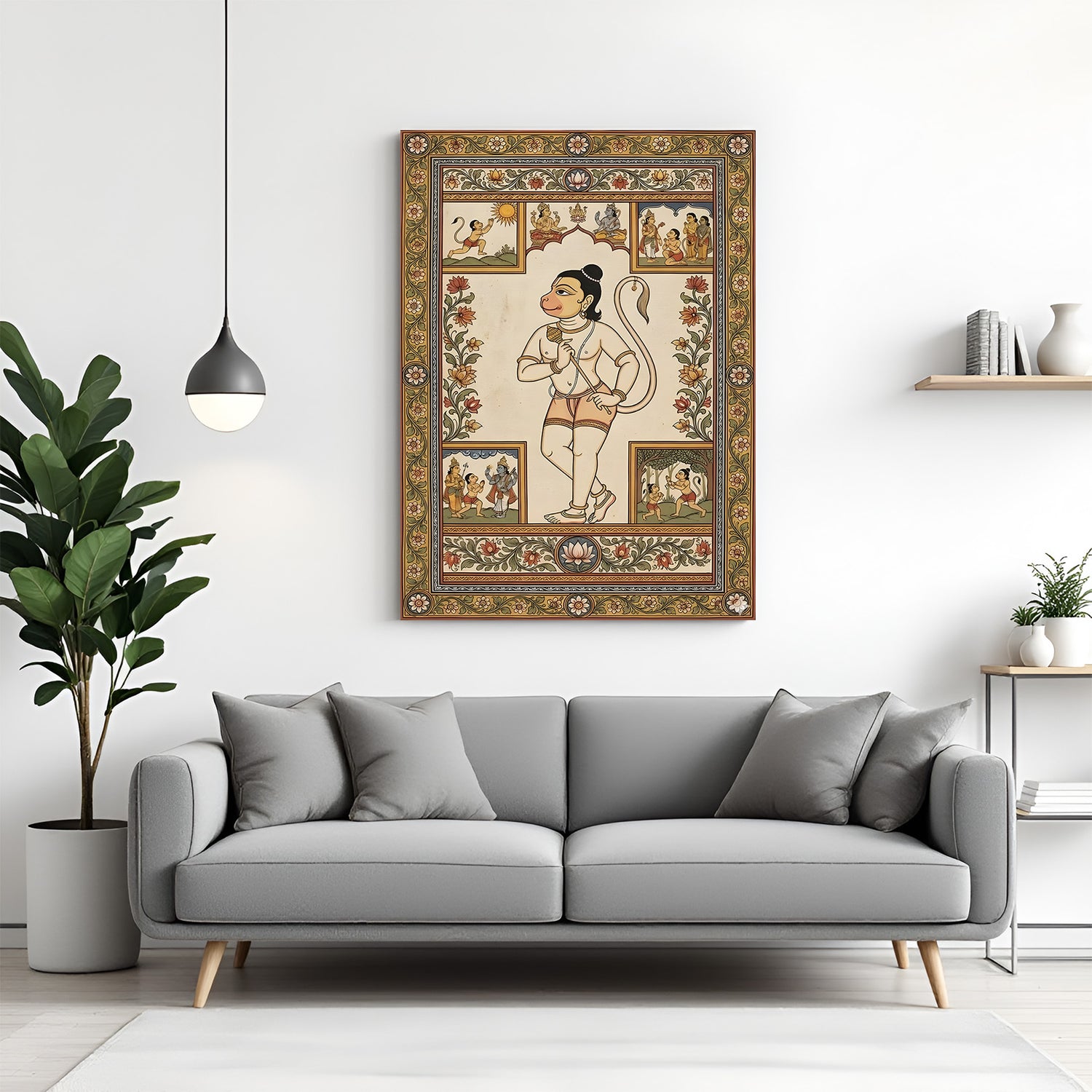
Historically, Pichwai paintings were created as devotional cloth backdrops associated with Shrinathji worship in Nathdwara. Traditional works could change according to festivals, seasons and devotional settings.
Modern Pichwai-Inspired Canvas Art
Contemporary wall art often adapts the visual language of Pichwai — including Shrinathji, lotus flowers, sacred cows and decorative borders — into printed canvas formats designed for modern interiors.
This makes the traditional visual style accessible in different sizes and framing formats while remaining distinct from an original hand-painted Pichwai.
For a deeper explanation of traditional Pichwai, its history and major motifs, read What Is Pichwai Art? Meaning, History, Motifs & Home Decor.
How to Choose a Pichwai Painting for Your Home
The best Pichwai artwork depends on both the subject that appeals to you and the room where it will be displayed.
-
For devotional significance: consider Shrinathji or Krishna-focused compositions.
-
For a decorative living-room focal point: lotus-heavy, cow, Raas Leela or richly detailed compositions can work particularly well.
-
For a contemporary Indian interior: choose a composition with a restrained palette or simpler background.
-
For traditional interiors: ornate florals, cows, lotus motifs and gold-toned detailing can complement carved wood and Indian decorative elements.
-
For family-oriented symbolism: cow-and-calf imagery may be especially meaningful.
-
For a smaller wall: choose a composition with a clear central subject rather than an extremely dense narrative scene.
Always consider the proportions of the wall and nearby furniture before selecting a size. The right scale is just as important as the subject itself.
Pichwai Canvas Painting: Sizes & Frame Styles
A Pichwai canvas painting can look very different depending on its size and frame treatment.
Canvas-Wrapped
A canvas-wrapped finish keeps the presentation simple and allows the artwork itself to remain the main visual focus.
Black Floater Frame
A black floater frame adds clean contrast and can make colourful or highly decorative Pichwai artwork feel more contemporary.
Gold Floater Frame
A gold floater frame naturally complements warm tones, ornamental detailing and devotional compositions, making it particularly suitable for many Pichwai-inspired designs.
Cipher Spaces wall art is produced on 380 GSM canvas, with available sizes and framing options varying by individual design. GSM describes the weight of the canvas material; the final appearance also depends on factors such as printing, stretching and framing.
Pichwai Cow vs Kamdhenu: What Is the Difference?
A Pichwai cow and Kamdhenu are not automatically the same subject.
Pichwai cow imagery is commonly connected with Krishna, Shrinathji and pastoral devotional scenes. Kamdhenu, by contrast, is a specific divine cow in Hindu mythology traditionally associated with nourishment, abundance and wish-fulfilling symbolism.
Modern wall art can combine the two by portraying Kamdhenu in a Pichwai-inspired aesthetic, but it is more accurate to distinguish the subject from the artistic style.
For deeper guidance, use our Pichwai Cow Painting guide or browse the Kamdhenu Cow Wall Art collection.
Explore Pichwai by Subject
If you already know which Pichwai subject interests you most, these pages can help you narrow your choice:
Frequently Asked Questions
What is a Pichwai painting?
Pichwai is a devotional painting tradition associated with Nathdwara in Rajasthan and the worship of Shrinathji, a form of Lord Krishna. Traditional Pichwai was created as cloth artwork used behind the deity, while modern Pichwai-inspired canvas art adapts its subjects and visual motifs for contemporary interiors.
Are Cipher Spaces Pichwai paintings hand-painted?
The products in this collection are canvas wall art prints unless an individual product listing specifically states otherwise. They should not be presented as original or traditionally hand-painted Pichwai when they are printed canvas adaptations.
Which Pichwai painting is best for a living room?
Choose according to wall size and interior style. Lotus, cow, Krishna and Raas Leela compositions can work particularly well on larger living-room walls, while simpler or more restrained designs may suit contemporary interiors and smaller spaces.
Can Pichwai paintings be placed in a pooja room?
Yes. Shrinathji, Krishna and other clearly devotional Pichwai compositions can be suitable for pooja rooms or prayer areas when displayed respectfully and proportionately to the available wall.
Is every Pichwai cow a Kamdhenu?
No. Cows frequently appear in Pichwai because of their association with Krishna's pastoral identity. Kamdhenu is a specific divine cow from Hindu mythology. Some contemporary artworks depict Kamdhenu in a Pichwai-inspired style, but the terms are not interchangeable.
What are common subjects in Pichwai wall art?
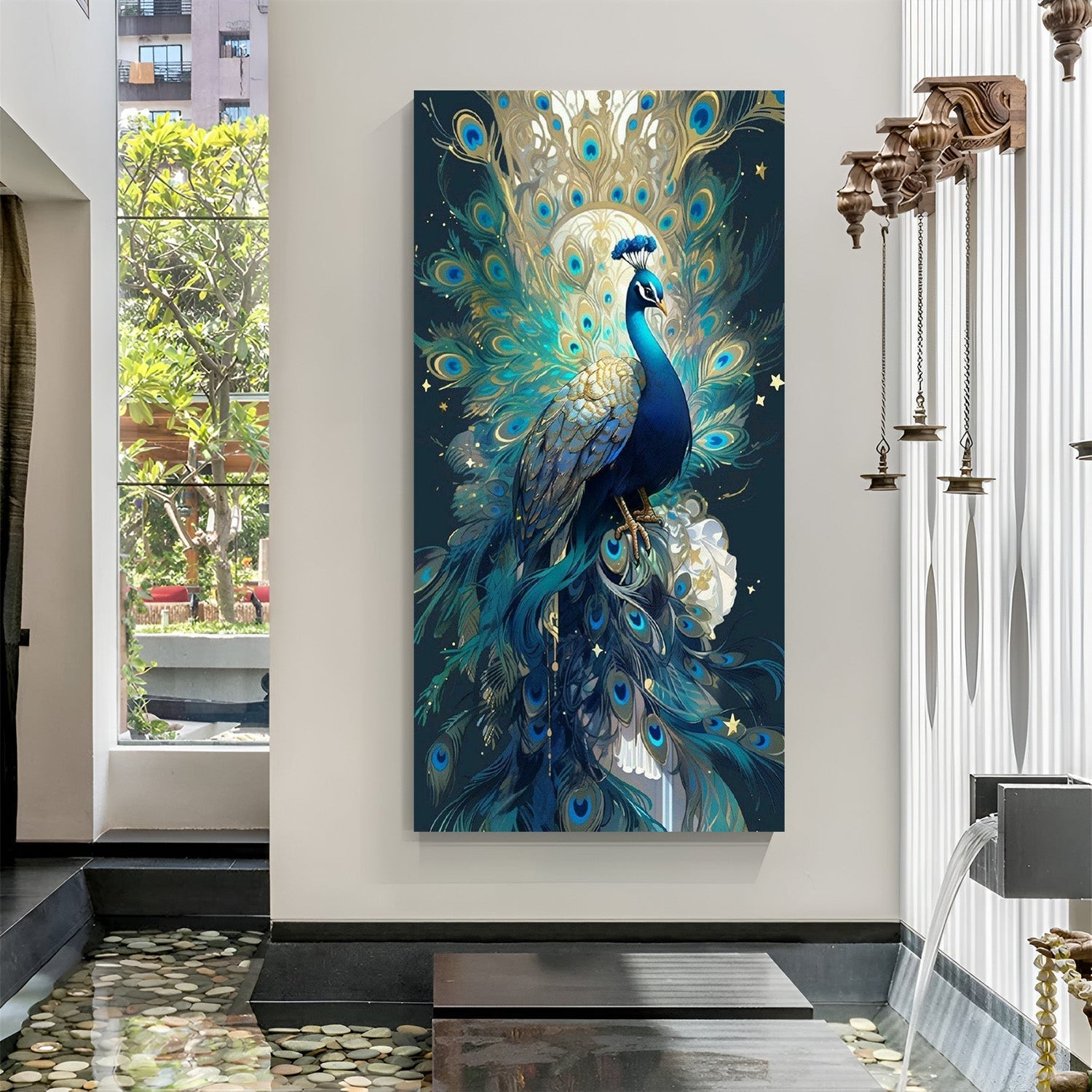
Common subjects include Shrinathji, lotus flowers, sacred cows, Krishna-related scenes, Raas Leela, peacocks, trees and other decorative or devotional motifs associated with the visual tradition.
What frame works best for Pichwai canvas art?
Canvas-wrapped artwork gives a cleaner presentation, black floater frames can make traditional imagery feel more contemporary, and gold floater frames often complement ornate and devotional Pichwai compositions particularly well.
Is Pichwai art suitable for a modern home?
Yes. Pichwai-inspired artwork can work in modern interiors when the composition, colour palette and framing suit the surrounding furniture. Simpler lotus, cow or restrained Shrinathji designs can integrate especially well with contemporary Indian decor.
Where can I learn more about the meaning of Pichwai art?
For its origins, history, Shrinathji connection, motifs and traditional context, read our complete Pichwai Art guide.