
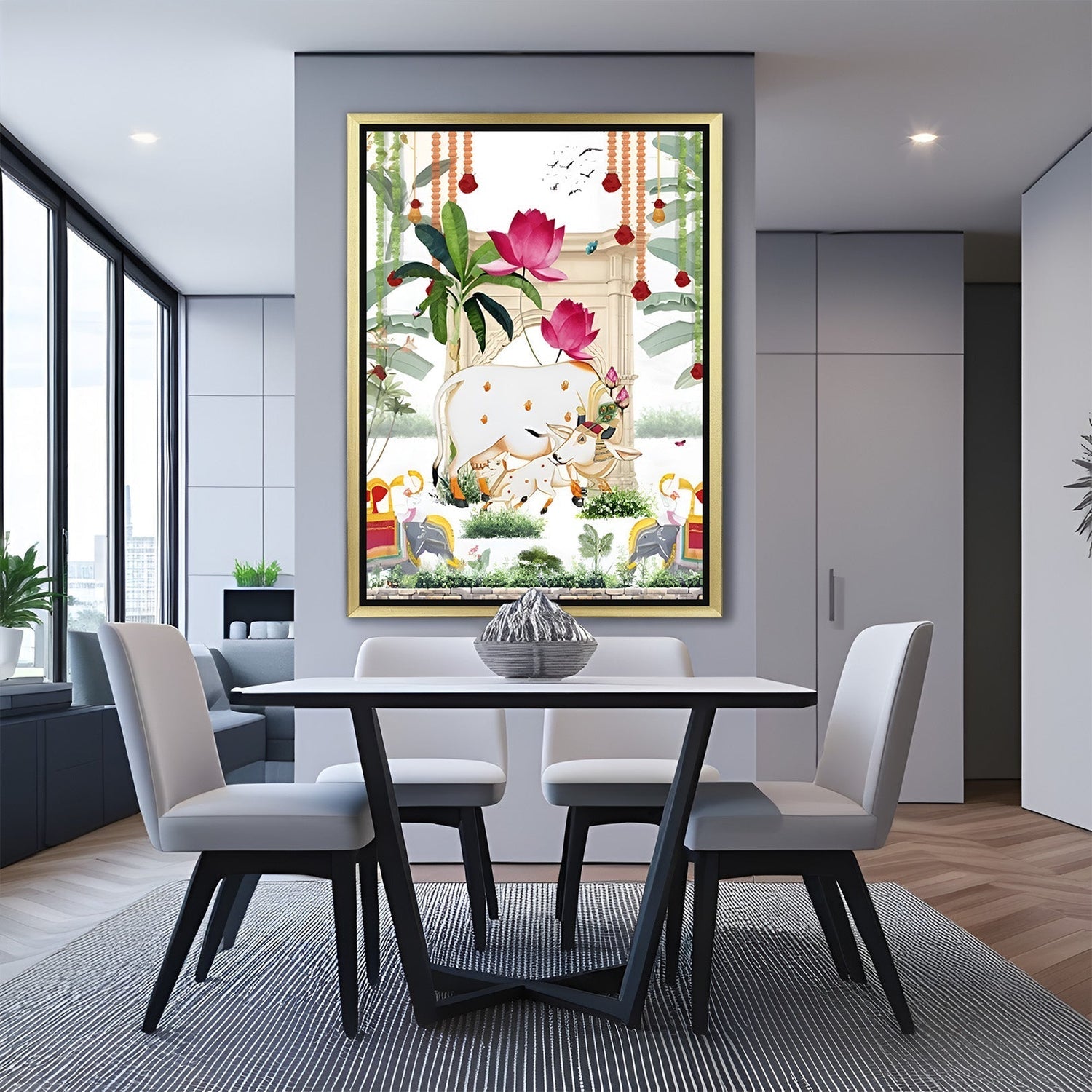
In the serene realm of traditional Indian art, few styles capture the essence of devotion and divine beauty as profoundly as Pichwai art. Emerging from the sacred town of Nathdwara, Rajasthan, over 400 years ago, these intricate paintings were originally created to adorn the walls of the Shrinathji Temple, depicting the life and leelas (divine pastimes) of Lord Krishna. Among the most cherished and powerful motifs in this art form is the sacred cow, a symbol of ultimate purity, nourishment, and divine grace. More than just a decorative element, Pichwai Cow Art, especially depictions of the celestial Kamdhenu, is a spiritual investment, believed to channel divine blessings, peace, and abundance into any space it inhabits.

To Hang It on Your Walls Click Here
The Sacred Roots: Understanding Pichwai Art
Before delving into the symbolism of the cow, it's essential to understand the soil from which this art grows. The word "Pichwai" (or Pichhwai) originates from the Sanskrit words "pichh" meaning "back" and "wai" meaning "hanging." These were large cloth hangings placed behind the idol of Shrinathji (a 7-year-old form of Lord Krishna) to celebrate different seasons, festivals, and times of the day.
Key Characteristics of Pichwai Paintings:
- Intricate Detailing: Every leaf, every feather, and every piece of jewelry is rendered with breathtaking precision.
- Vibrant Color Palette: Artists use natural, mineral, and vegetable-based pigments to create rich hues of red, yellow, blue, and green.
- Gold Leaf Work: The use of real gold leaf (or now, gold tinsel) adds a divine luminescence, symbolizing the celestial realm.
- Narrative Storytelling: Each Pichwai tells a story, most commonly of Krishna's childhood in Vrindavan, his love for Radha, and his role as a compassionate protector.
Kamdhenu and the Sacred Cow: The Heart of Divine Abundance
In the spiritual landscape of India, the cow is revered as "Gau Mata" (Mother Cow), a symbol of selfless giving, providing milk, sustenance, and prosperity. In Pichwai art, this symbolism is elevated to its divine apex with the portrayal of Kamdhenu.
Who is Kamdhenu?
Kamdhenu, also known as Surabhi, is the celestial, wish-fulfilling cow born from the churning of the cosmic ocean, Samudra Manthan. She is considered the mother of all cows and the fulfiller of all desires. In artistic representations, she is often depicted as a beautiful, gentle white cow, but she is also shown in a composite form with:
- The head of a woman: Symbolizing intelligence and compassion.
- The body of a cow: Representing nourishment and the earth.
- Peacock's tail: Embodying beauty and grace.
- Wings of a bird: Signifying freedom and divine nature.
The Symbolism in Pichwai Cow Art
When you bring a Pichwai painting of a cow or Kamdhenu into your home, you are inviting a multi-layered symbol of blessings:
- Unlimited Prosperity and Wealth: Kamdhenu is the ultimate provider. She is believed to grant all material and spiritual wishes, making her a powerful symbol for attracting wealth and affluence. Pichwai art for wealth is often centered around this theme.
- Nurturing and Motherly Love: As Gau Mata, the cow represents the nurturing aspect of the divine. It reminds us of patience, selfless love, and the abundance that the Earth provides.
- Purity and Peace: The gentle demeanor of the cow in these paintings brings a calming, serene energy to a room. It helps in purifying the atmosphere and promoting mental peace and harmony within the family.
- Dharma and Righteousness: In Vedic traditions, the cow is a symbol of Dharma (righteous living). Its presence is a reminder to live a life of truth, non-violence, and compassion.
- Connection to Lord Krishna: For devotees, the cow is inseparable from Krishna, who was himself a cowherd (Govinda). A Pichwai cow often evokes the idyllic, blissful environment of Vrindavan, connecting your home to that divine consciousness.

Why Pichwai Cow Art is the Perfect Element for Modern Home Decor
In today's fast-paced world, creating a sanctuary of peace at home is more important than ever. Pichwai Cow Art seamlessly bridges the gap between ancient spirituality and contemporary aesthetics.
Elevating Your Interior Design
- A Statement Piece: A large, detailed Pichwai cow painting serves as a magnificent focal point in a living room, prayer room, or office.
- Bohemian and Ethnic Charm: The rich textures and folk-art style align perfectly with boho-chic, eclectic, and global-inspired decor themes.
- A Pop of Spiritual Color: The vibrant palette can break the monotony of modern minimalist spaces, adding warmth and soulful energy.
- Versatile Art Forms: Today, you can find this art not just as traditional cloth paintings, but also as Pichwai art canvases, framed prints, and even metal wall art, making it adaptable to various interior design budgets and styles.
Creating a Sanctum of Positive Energy
Beyond aesthetics, this is where the true power of Pichwai Cow Art lies. It is a form of spiritual home decor that actively contributes to the well-being of the inhabitants.
- Vastu and Feng Shui Enhancement: Placing a symbol of abundance and peace like Kamdhenu in the North (the direction of Kubera, the god of wealth) or the Northeast (Ishanya, the direction of divinity) is considered highly auspicious in Vastu Shastra.
- A Focus for Meditation: The serene image of the cow provides a perfect point of focus for meditation, helping to calm the mind and connect with a higher consciousness.
- A Daily Spiritual Anchor: It serves as a beautiful, constant reminder to practice gratitude, compassion, and generosity in daily life.
How to Choose and Place Your Pichwai Cow Art
- Intention is Key: Decide what you want to invite. A Kamdhenu Pichwai painting is ideal for attracting overall abundance, while a scene of Krishna with cows might be chosen for fostering love and devotion.
- Consider the Space: A large, detailed piece deserves a prominent wall with minimal clutter. A smaller canvas can beautify a reading nook or bedroom.
- Prioritize Quality and Authenticity: Look for pieces that honor the traditional style. While mass-produced prints are available, a handcrafted or high-quality art print from Rajasthan will carry a more authentic energy.
- Complementary Decor: Place your Pichwai art on a clean wall. You can accentuate it with soft, warm lighting, a simple wooden stand below it, or fresh flowers to enhance its sacred vibe.

Frequently Asked Questions
What is the difference between Pichwai art and other Indian folk art like Madhubani?
While both are beautiful Indian folk arts, their origins and themes differ. Pichwai originates from Nathdwara, Rajasthan, and is exclusively dedicated to Lord Krishna, characterized by intricate detailing and a lush, narrative style. Madhubani (or Mithila) art comes from the Mithila region of Bihar and features more abstract, two-dimensional forms depicting gods, goddesses, and nature scenes, often with symbolic geometric patterns.
Where is the best place to hang a Pichwai cow painting in my house?
For maximizing its divine blessings, the ideal place is your home temple, prayer room, or meditation space. From a Vastu perspective, the North (wealth zone) or Northeast (spiritual zone) walls are highly auspicious. The living room is also excellent, as it infuses the entire home with positive energy.
Can I use Pichwai art in a modern, minimalist apartment?
Absolutely! The key is curation. A single, well-framed Pichwai art canvas with a minimalist border can become a stunning statement piece against a neutral wall. It creates a beautiful contrast between the old and the new, adding soul and depth to a modern space.
Is Pichwai cow art only for Hindus or devotees of Krishna?
Not at all. While its roots are deeply spiritual in Hinduism, the universal themes of peace, abundance, compassion, and a connection to nature resonate across cultures. Anyone drawn to its beauty and serene energy can use it as spiritual home decor to create a more harmonious living environment.
How can I ensure I'm buying an authentic Pichwai painting?
Authentic, hand-painted Pichwai art from Nathdwara can be expensive. Look for reputable galleries, specialized Indian art dealers, or trusted online platforms that work directly with artists. Check for details like the fineness of the brushwork, the quality of the colors, and the artist's provenance. For most home decor purposes, high-quality giclée prints on canvas are a beautiful and accessible alternative.
Conclusion: More Than Just Decor, A Living Blessing
Choosing Pichwai Cow Art for your home is an act of inviting the divine. It is a conscious step towards surrounding yourself with symbols that speak of abundance, peace, and unconditional love. The gentle gaze of Kamdhenu in a Pichwai painting is not just pigment on cloth; it is a timeless echo of blessings, a piece of Vrindavan's eternal bliss, ready to transform your house into a sacred, prosperous, and peaceful home.