
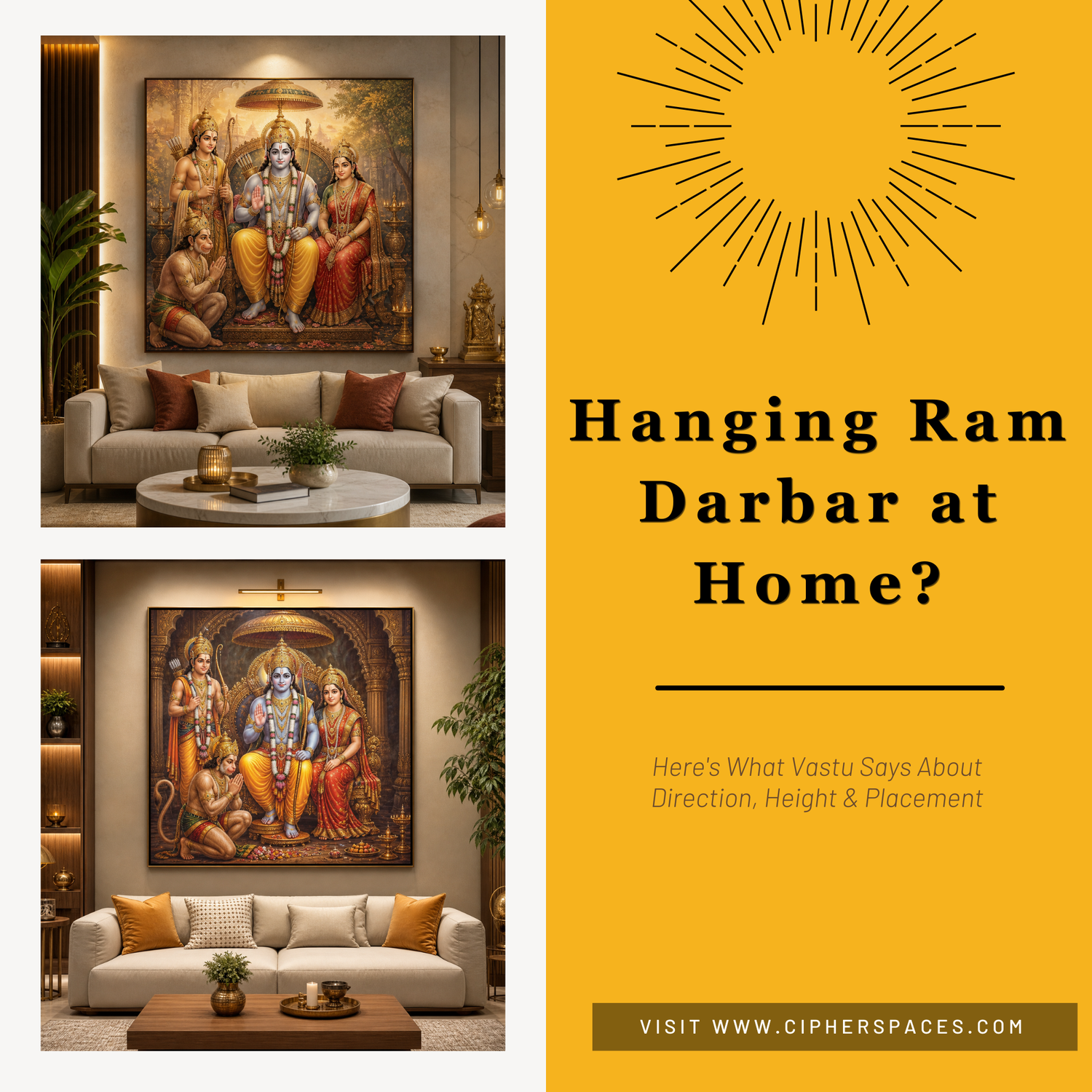
Few images carry the spiritual weight of a Ram Darbar. The sight of Lord Ram seated on his throne, flanked by Mata Sita, Lakshman, and Hanuman, brings a sense of divine order and protection into any home. But in Vastu Shastra, intention alone is not enough - placement matters just as much as devotion. Hang the painting in the wrong direction or in the wrong room, and you may unintentionally create energetic imbalance rather than harmony.
This guide breaks down everything you need to know about Ram Darbar wall art Vastu - from the correct direction and height to room-wise advice and common mistakes that most people make without realising.
What Is Ram Darbar and Why Does It Hold Such Significance?
Ram Darbar refers to the divine court of Lord Ram - a sacred composition that depicts the entire royal family together. Lord Ram sits at the centre, often on a throne or in a regal posture. Sita Mata is seated beside him, representing grace and devotion. Lakshman stands to the side as a symbol of duty and loyalty. And Hanuman Ji kneels at Lord Ram's feet in eternal surrender and service.
In Hinduism, this image is not just decorative - it is considered a mangalkar (auspicious) representation of dharma, love, family values, and divine protection. Displaying a Ram Darbar at home is believed to invite blessings of peace, marital harmony, family unity, and spiritual strength.
When placed according to Vastu principles, the Ram Darbar painting is said to align the home's energy with positive cosmic forces - making every corner of your living space feel grounded, protected, and spiritually elevated.
Vastu Rules for Ram Darbar Painting: The Core Principles
The Best Direction for Ram Darbar Wall Art
According to Vastu Shastra, the North-East (Ishan Kona) is the most sacred direction in any home. It is associated with divine energy, clarity of mind, and spiritual growth. Placing a Ram Darbar painting on the North-East wall of your puja room or living area is considered highly auspicious.
The East wall is also an excellent choice. East is the direction of the rising sun and is traditionally linked with new beginnings, positivity, and Surya Dev's blessings. A Ram Darbar painting facing West (placed on the East wall so the deity faces the family as they pray from the West) is ideal for morning worship routines.
The North wall is the third acceptable option - this direction is governed by Kuber, the lord of wealth, and placing divine imagery here is said to attract prosperity along with blessings.
Directions to Avoid for Ram Darbar Placement
- South wall: The South is associated with Yama (the lord of death) in Vastu. Placing sacred deity images on the South wall is generally considered inauspicious and is best avoided.
- West wall: While not as problematic as the South, the West direction is not ideal for deity paintings in a puja space.
- Directly opposite the entrance: While some Vastu experts suggest placing deity images facing the main door so the deity "welcomes" visitors, the Ram Darbar, being a full royal court setting, is better suited in a dedicated puja space rather than near the entrance.
Height and Positioning
The painting should ideally be placed at eye level or slightly above - never below the waist or too close to the floor. The general recommendation is to hang Ram Darbar art between 4.5 to 6 feet from the floor, so the central figure of Lord Ram is roughly at eye level when you stand in front of it.
Ensure the artwork is hung straight and secure. A tilted or loosely hung painting is considered symbolically disrespectful in many Indian households, and practically, it creates visual imbalance in the room.
Room-Wise Ram Darbar Vastu Placement Guide
Puja Room (Mandir)
The puja room is the most natural and recommended space for Ram Darbar wall art. Here, the painting can be placed on the North-East or East wall, positioned so that the family faces East or North while praying. The deity should ideally "face" the worshipper - so if you are standing to the West, the painting should be on the East wall facing you.
In a puja room, ensure the Ram Darbar painting is not placed directly next to or above other deity images that may create visual hierarchy confusion. Lord Ram's court is complete in itself - give it a dedicated wall space or the most prominent position in the mandir.
Avoid placing the painting directly above the diya or incense sticks where smoke and soot can accumulate and discolour the canvas over time. Maintain some distance to keep the artwork clean and vibrant.
If you're looking for Vastu-friendly divine canvas wall art that pairs beautifully with a Ram Darbar piece, consider complementary spiritual artworks that maintain the sacred energy of the space.
Living Room
Many families choose to display Ram Darbar in the living room as a centrepiece of faith and aesthetic beauty. The living room is the space where family gathers, guests are welcomed, and energy is most active - making a protective, auspicious image here deeply meaningful.
For Ram Darbar vastu in the living room, the North or North-East wall is the best option. The painting should be placed at a comfortable viewing height, in a clean, clutter-free area of the wall. Avoid hanging it behind a sofa where it cannot be seen clearly, or in a corner where the artwork gets overlooked.
Importantly, the Ram Darbar image should not be placed directly facing the television or in the same sightline as entertainment devices. This mixing of sacred and recreational energy is generally discouraged in Vastu.
Bedroom
This is where most people make a mistake. While it feels devotional to have a Ram Darbar image in the bedroom, traditional Vastu advises against placing deity paintings - especially complete darbar scenes - in bedrooms. The energy of the bedroom is considered private and associated with rest and intimacy, which is not an appropriate setting for a royal divine court.
If you strongly wish to have a divine presence in your bedroom, consider a smaller, simpler spiritual art piece rather than a full Ram Darbar composition. For bedroom wall art ideas that maintain positive energy without Vastu conflicts, explore bedroom wall art options that are serene and uplifting without being deity-centric.
Kitchen
The kitchen is not an ideal space for Ram Darbar art from a Vastu standpoint. Cooking involves fire, leftover food, and general household activity that is considered energetically incompatible with deity placement. A small Ganesha or Lakshmi motif near the entrance of the kitchen is more traditionally appropriate.
Office or Study Room
A Ram Darbar painting can be placed in a home office or study room, particularly if the space doubles as a meditation or prayer area. In this setting, place it on the North or East wall to invite clarity, focus, and divine guidance during work or study. Ensure it is in your line of sight and not behind you while you sit at your desk.
Do's and Don'ts for Ram Darbar Wall Art Vastu
Do's
- Place the painting on the North-East or East wall for maximum positive energy.
- Hang it at eye level or slightly above - Lord Ram's face should be comfortably visible.
- Keep the surrounding area clean, clutter-free, and well-lit. Natural or warm lighting enhances the spiritual ambience.
- Choose a canvas or print that is vivid, undamaged, and clearly detailed. The depiction should show all four figures - Ram, Sita, Lakshman, and Hanuman - clearly and completely.
- Use fresh flowers or a small diya nearby in the puja room to enhance the sacred energy around the painting.
- If placing in the living room, pair the Ram Darbar with other Vastu-positive wall art that maintains a calm and elevated energy in the space.
Don'ts
- Do not place Ram Darbar on the South wall - this is the most critical Vastu mistake to avoid.
- Do not hang the painting in bathrooms, toilets, or near them.
- Do not place it on the floor or at a very low height where feet may accidentally point toward it.
- Do not hang the painting in a dark, poorly ventilated corner of the house.
- Do not place multiple unrelated deity images crowded together on the same wall - give Ram Darbar its own dignified space.
- Avoid placing the painting directly above doorframes where it may be bumped or where people pass under it frequently.
Common Vastu Mistakes People Make with Ram Darbar Art
1. Placing it in the bedroom "for protection."
Many people want to feel spiritually protected while they sleep and hang deity images in their bedroom. However, Vastu Shastra specifically advises against this for a full Ram Darbar composition. The bedroom's energy is meant for rest, and the constant divine gaze of a full darbar creates a kind of energetic alertness that can subtly disrupt restful sleep.
2. Buying a damaged or faded print.
Over time, older prints or low-quality paintings fade, crack, or peel. In Vastu, keeping a damaged or unclear image of a deity is considered inauspicious. If your Ram Darbar canvas has faded or been damaged, it is time to replace it respectfully and bring in a fresh, vibrant piece.
3. Placing it behind the main seating area.
A common interior design choice is to hang artwork behind a sofa or bed - but for deity images, this means the people sitting there have their backs to the deity, which is traditionally considered disrespectful.
4. Not considering the overall wall energy.
Sometimes families place Ram Darbar on a wall that also has electrical switches, outlets, or pipes running behind it. While this is not always avoidable, it is worth being mindful of creating a "clean" wall - one that feels dedicated to the artwork and not visually broken up by other elements.
5. Mixing with abstract or modern art directly beside it.
Hanging a Ram Darbar canvas right next to a bold abstract painting or a pop-art piece creates visual and energetic dissonance. If you love modern wall art in your living room, designate separate walls or sections - keep the sacred space visually distinct.
Choosing the Right Ram Darbar Canvas Art for Your Home
Beyond placement, the quality and style of the Ram Darbar painting matters. Here are a few things to look for:
- Clarity of depiction: All four figures should be clearly visible and identifiable. The image should feel majestic, not rushed or unclear.
- Colour palette: Traditional gold, saffron, blue, and deep red tones carry cultural and spiritual weight. These colours also align well with Vastu energy principles.
- Canvas quality: A stretched canvas print is more durable and visually richer than a basic paper print. It also holds colour better over years of display.
- Size: For a puja room, a medium-sized canvas (12x16 inches to 18x24 inches) works beautifully. For a living room statement piece, consider larger formats that command attention.
If you're also looking to bring in complementary divine energy, paintings of Hanuman Ji - who is inseparable from the story and spirit of Ram Darbar - make a powerful pairing in adjacent spaces. Similarly, Radha Krishna wall art is a popular choice for living rooms and puja spaces, evoking divine love alongside the dharmic energy of Ram Darbar.
For those drawn to a broader spiritual aesthetic, exploring spiritual hand paintings can add an authentically crafted, one-of-a-kind dimension to your sacred space.
Frequently Asked Questions: Ram Darbar Photo Vastu
Q. Which direction is best for placing a Ram Darbar painting at home?
A. The North-East (Ishan Kona) is the most auspicious direction for Ram Darbar wall art according to Vastu Shastra. The East wall is the second-best option, especially in the puja room. Avoid the South direction entirely, as it is considered inauspicious for deity placements in Vastu.
Q. Can I place Ram Darbar in my living room?
A. Yes, the living room is a very appropriate space for Ram Darbar wall art. Place it on the North or North-East wall at eye level. Keep the surrounding area clean and well-lit, and avoid placing it directly opposite or near the television.
Q. Is it okay to keep Ram Darbar in the bedroom?
A. Traditional Vastu advises against placing a full Ram Darbar composition in the bedroom. The bedroom's energy is associated with rest and privacy, which is not considered the right setting for a divine court image. A smaller, simpler spiritual piece is a better choice for the bedroom.
Q. At what height should Ram Darbar be hung?
A. The painting should be hung between 4.5 to 6 feet from the floor so that Lord Ram's face is approximately at eye level. It should never be placed at a very low height where people may accidentally point their feet toward it.
Q. What should be kept near the Ram Darbar painting for good Vastu?
A. In the puja room, a small diya, fresh flowers, or an incense holder placed nearby (but not so close that smoke discolours the canvas) enhances the sacred energy. In the living room, keep the surrounding area clutter-free. Good, warm lighting - either natural or soft artificial - significantly amplifies the visual and spiritual impact of the painting.
Q. Can I place Ram Darbar alongside other deity paintings?
A. Yes, but thoughtfully. In a puja room, Ram Darbar can coexist with other deity images. However, avoid cluttering a single wall with too many paintings. Give each deity composition its own space and visual breathing room. Pairing Ram Darbar with images of Hanuman Ji or Shiv Ji on adjacent walls (not the same wall) is a widely followed and respected tradition in many Indian homes.
Placing a Ram Darbar canvas in your home is more than a design decision - it is an act of devotion and an invitation for divine grace. When done with the right Vastu knowledge, it can genuinely transform the energy of a room, making it feel more peaceful, grounded, and spiritually alive. Whether it is in your puja room, living room, or study, the key is intention, correct placement, and keeping the space around it clean and respectful.
If you are exploring Vastu-aligned divine wall art for your home, take your time to choose a piece that resonates - one that you will look at every day with a sense of reverence and joy.