
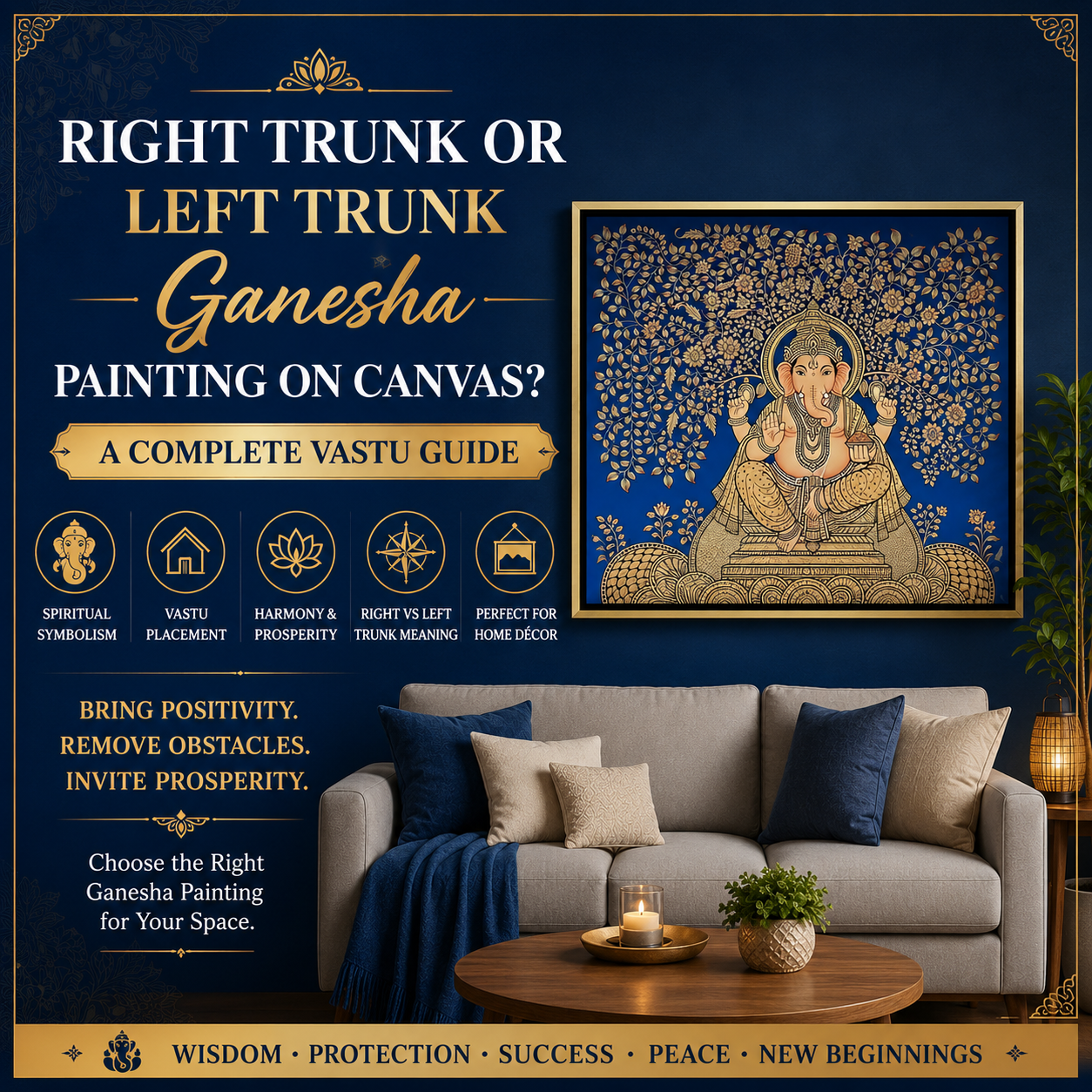
Choosing a ganesha painting on canvas is about more than selecting a beautiful piece of wall décor. For many Indian homeowners, Lord Ganesha represents wisdom, prosperity, protection, and the removal of obstacles. As a result, the symbolism within a Ganesha painting often carries spiritual significance, especially when Vastu considerations are involved. If you're exploring spiritual décor, you may also find our guide on the best Vastu paintings for home positivity and prosperity helpful.
One of the most common questions people ask before purchasing a ganesha canvas painting is whether they should choose a left-trunk or right-trunk Ganesha. While both forms are revered, they are associated with different energies, traditions, and placement recommendations.
In this guide, we'll explore the meaning of each form, understand what Vastu suggests, compare their symbolism, discuss ideal placement, and help you select a ganesha painting for home that aligns with your space, beliefs, and décor preferences.
Understanding Ganesha Symbolism
Lord Ganesha is among the most widely worshipped deities in Hindu tradition. Known as the remover of obstacles and the lord of beginnings, Ganesha is often invoked before starting new ventures, entering a new home, launching a business, or undertaking important life events.
Like other sacred artworks, Ganesha paintings are often selected not only for aesthetics but also for their symbolism. You can explore additional ideas in our article on wall paintings believed to promote positive energy at home.
Every element of Ganesha's iconography carries symbolic meaning:
- Elephant Head: Wisdom, intelligence, and perspective.
- Large Ears: The ability to listen and absorb knowledge.
- Small Eyes: Focus and concentration.
- Large Belly: Acceptance of life's experiences.
- Mouse Vehicle: Control over desires and ego.
- Trunk: Adaptability, strength, and spiritual energy.
Among these elements, the direction of the trunk is often given special attention in ganesha painting vastu discussions. While spiritual interpretations can vary across regions, traditions, and schools of thought, many Vastu practitioners associate different meanings with left- and right-facing trunks.
What Left-Trunk Ganesha Represents
A left-trunk Ganesha is generally considered the most common and widely accepted form for homes. In this depiction, the trunk curves toward Ganesha's left side.
Symbolism of the Left Trunk
The left side is traditionally associated with calmness, nurturing energy, receptivity, and harmony. Many spiritual traditions connect the left side with the lunar energy channel, often linked to peace, emotional balance, and intuition.
Because of these associations, the left trunk ganesha meaning is often interpreted as:
- Domestic harmony
- Peaceful living
- Emotional stability
- Spiritual growth
- Prosperity with balance
Why Homeowners Prefer Left-Trunk Ganesha Paintings
Many Vastu consultants recommend left-trunk depictions for residential spaces because they are believed to create a welcoming and harmonious atmosphere. This makes them particularly suitable for living rooms, entrance areas, prayer rooms, family lounges, and common spaces.
A left-trunk ganesha wall art piece can serve as both a spiritual symbol and an elegant decorative focal point. Homeowners seeking spiritually inspired décor often browse curated Vastu wall art collections to find artwork aligned with their space and intentions.
Best Situations for Left-Trunk Ganesha
- New homes
- Family residences
- Apartments and flats
- Meditation corners
- Home offices
- Living room accent walls
For most homeowners seeking positive symbolism without strict ritual requirements, a left-trunk Ganesha is often considered a practical and spiritually meaningful choice.
What Right-Trunk Ganesha Represents
In a right-trunk depiction, the trunk curves toward Ganesha's right side. This form is less commonly seen in residential décor but carries powerful symbolism within many spiritual traditions.
Symbolism of the Right Trunk
The right trunk ganesha meaning is frequently associated with solar energy, discipline, action, and spiritual intensity. It is often viewed as representing a more active and dynamic form of divine energy.
Common interpretations include:
- Determination and focus
- Strong spiritual discipline
- Leadership and authority
- Transformation and progress
- Powerful manifestation energy
Traditional Beliefs Around Right-Trunk Ganesha
Many traditions consider right-trunk Ganesha forms highly auspicious but also more demanding in terms of reverence and maintenance. Some spiritual practitioners believe they require greater attention to rituals and cleanliness.
For this reason, right-trunk depictions are sometimes more commonly associated with temples, dedicated worship areas, or spaces where regular spiritual practices are observed.
It is important to note that interpretations vary considerably. Not all schools of Vastu or spiritual traditions share identical views regarding right-trunk Ganesha images.
When a Right-Trunk Ganesha Painting May Be Appropriate
- Dedicated prayer rooms
- Meditation spaces
- Business premises
- Professional offices
- Areas focused on achievement and discipline
For homeowners who strongly connect with traditional symbolism and understand the associated spiritual interpretations, a right-trunk vastu ganesha painting can hold deep significance.
Right Trunk vs Left Trunk Comparison Table
| Aspect | Left-Trunk Ganesha | Right-Trunk Ganesha |
|---|---|---|
| Energy Association | Calm, nurturing, balanced | Active, disciplined, powerful |
| Traditional Element | Lunar energy | Solar energy |
| Suitability for Homes | Widely recommended | Depends on tradition and usage |
| Atmosphere Created | Harmony and peace | Focus and determination |
| Common Placement | Living rooms, entrances, family spaces | Prayer rooms, offices, spiritual spaces |
| Popularity in Home Décor | Very common | Less common |
| Vastu Preference | Generally considered easier for residential settings | Often associated with stronger spiritual discipline |
Which Ganesha Painting on Canvas Is Best for Home?
The best ganesha painting on canvas depends on your personal beliefs, lifestyle, spiritual preferences, and design goals.
Choose a Left-Trunk Ganesha If:
- You want a balanced and peaceful atmosphere.
- You are selecting wall art primarily for home décor and positivity.
- You prefer a universally accepted Vastu-friendly option.
- You want a versatile painting suitable for living areas.
Choose a Right-Trunk Ganesha If:
- You have a dedicated spiritual practice.
- You appreciate traditional symbolism.
- You are creating a focused prayer or meditation area.
- You resonate with themes of discipline, achievement, and transformation.
Many homeowners today also consider artistic style alongside symbolism.
If you're decorating a contemporary home, our guide on trending canvas wall art ideas can help you balance spiritual symbolism with modern interior design.
A thoughtfully selected spiritual wall art piece can complement contemporary interiors while preserving cultural and spiritual meaning.
Vastu Placement Guidelines
Even the most beautiful ganesha painting for home can lose some of its intended symbolic impact if placed carelessly. While Vastu recommendations vary among practitioners, several commonly accepted guidelines are frequently suggested.
Ideal Directions
Many Vastu experts recommend placing Ganesha artwork in the north, northeast, or east direction whenever practical. These zones are often associated with positive energy flow and spiritual growth.
Direction plays an important role in many Vastu recommendations. For a deeper understanding of directional placement, read our guide to the best paintings for the north wall according to Vastu.
Recommended Rooms
- Living room
- Entrance foyer
- Prayer room
- Meditation room
- Study room
- Home office
Placement Tips
- Position the artwork at eye level whenever possible.
- Keep the surrounding area clean and uncluttered.
- Use proper lighting to highlight the artwork.
- Choose a wall where the painting becomes a positive focal point.
- Ensure the artwork is displayed respectfully.
- Select a size proportional to the room dimensions.
- Consider a frame or finish that complements your interior style.
Entrance Placement
Many homeowners choose a Ganesha painting near the entrance because Lord Ganesha is traditionally associated with protection and the removal of obstacles. A thoughtfully placed canvas can create a welcoming first impression while adding spiritual significance to the entryway.
Living Room Placement
The living room remains one of the most popular locations for ganesha wall art. If you're designing this area thoughtfully, you may also enjoy our recommendations for choosing wall art for the drawing room and Vastu-friendly living room wall art.
For larger homes, a statement-sized Ganesha canvas can act as a centerpiece above a sofa or console table, creating visual balance while reinforcing the spiritual theme of the room.
Common Mistakes to Avoid
While selecting and placing a Ganesha painting is largely a personal decision, avoiding certain common mistakes can help maintain both visual harmony and symbolic respect.
- Choosing artwork solely based on size without considering symbolism.
- Placing the painting in a cluttered or neglected area.
- Ignoring room proportions when selecting canvas dimensions.
- Using poor-quality prints that diminish visual impact.
- Positioning the artwork where it is frequently obstructed.
- Overcrowding a wall with too many competing decorative elements.
- Assuming all Vastu interpretations are identical across traditions.
- Selecting a painting style that clashes with the overall décor theme.
Remember that Vastu principles are interpreted differently by various practitioners. What matters most is creating a space that feels peaceful, meaningful, and aligned with your personal values.
How to Choose the Right Ganesha Canvas Painting
When shopping for a ganesha canvas painting, consider more than just trunk direction.
Artwork Style
Traditional paintings often feature rich colors, ornate details, and symbolic elements. Contemporary pieces may use minimal lines, abstract forms, or textured finishes that suit modern interiors.
Homeowners who enjoy handcrafted aesthetics may also appreciate styles such as Tanjore wall art, Kalamkari wall art, or Kerala mural wall art, all of which share strong cultural and artistic roots.
Color Palette
Warm golds, reds, and oranges can create an energetic atmosphere, while whites, blues, and neutral tones often contribute to a calmer environment.
Room Size
Large statement canvases work well on feature walls, while smaller artworks may be more suitable for entryways, study areas, or meditation corners.
The size and layout of your artwork matter just as much as its symbolism. Before purchasing, consider reading our guide on how to choose the right canvas for your space.
Emotional Connection
Perhaps the most important factor is your personal response to the artwork. A painting that inspires positivity, calmness, or devotion is often the right choice regardless of design trends.
A meaningful Ganesha painting combines symbolism, aesthetic appeal, and personal connection. The most suitable artwork is one that enhances both your space and your sense of well-being.
FAQs
Is a left-trunk Ganesha painting good for home?
Yes. Many traditions consider left-trunk Ganesha depictions suitable for homes because they are associated with harmony, balance, and peaceful energy.
What does a right-trunk Ganesha symbolize?
Right-trunk Ganesha is often associated with discipline, action, strength, and powerful spiritual energy. Interpretations may vary across traditions.
Which direction should a Ganesha painting face?
Many Vastu practitioners recommend placement in the north, northeast, or east zones. However, individual guidance may differ depending on the property's layout.
Can I place a Ganesha painting in the living room?
Yes. The living room is one of the most popular locations for a Ganesha painting because it allows the artwork to become a positive focal point.
Is a Ganesha canvas painting suitable for modern interiors?
Absolutely. Modern canvas artwork is available in traditional, contemporary, minimalist, and abstract styles that blend seamlessly with current interior design trends.
Does trunk direction matter in Vastu?
Many Vastu practitioners believe trunk direction carries symbolic significance. Left-trunk forms are generally considered more suitable for residential settings, while right-trunk forms are often associated with stronger spiritual discipline.
Can I gift a Ganesha painting to someone?
Yes. A thoughtfully chosen Ganesha painting is often considered a meaningful gift for housewarmings, weddings, festivals, and new beginnings.
Final Thoughts
Selecting the right ganesha painting on canvas involves balancing symbolism, aesthetics, Vastu considerations, and personal belief. While left-trunk Ganesha paintings are commonly preferred for homes due to their association with harmony and balance, right-trunk depictions hold their own spiritual significance for those who resonate with their symbolism.
It's important to remember that Vastu guidance is not universally interpreted in the same way. Traditions, regions, and spiritual schools may offer different perspectives. Rather than viewing these recommendations as rigid rules, consider them as helpful guidelines that can support your decision-making process.
A carefully selected ganesha painting for home can elevate your décor, create a meaningful focal point, and serve as a daily reminder of wisdom, positivity, and new beginnings. Whether you choose a serene left-trunk design or a powerful right-trunk representation, the ideal artwork is one that reflects your values, complements your interiors, and brings a sense of inspiration to your living space. You can explore more spiritual and decorative options in our Vastu Wall Art collection or browse additional inspiration in our wall art blog.