
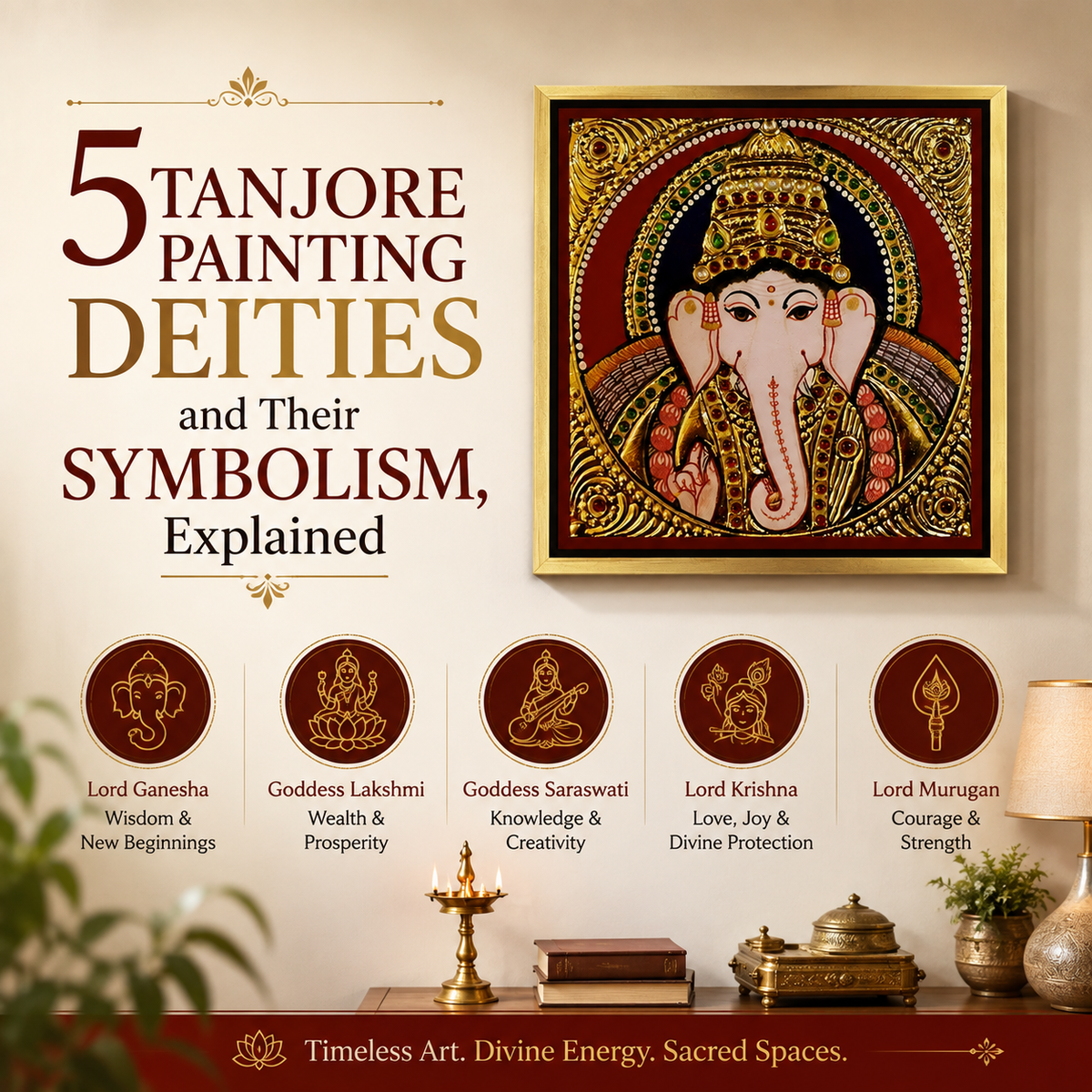
Tanjore painting - the traditional South Indian art style known for its rich colour and signature gold foil work - almost always centers on a specific deity, and which one you choose matters as much as the craftsmanship. Here are five of the most popular Tanjore deity depictions, what each one symbolizes, and where it tends to work best at home.
1. Ganesha
Ganesha is the most widely chosen subject in Tanjore art, and for good reason - he's associated with removing obstacles, marking auspicious beginnings, and bringing wisdom into a household. A Tanjore Ganesha painting is an especially common choice for entrances and living rooms, where the belief is that he "guards" the threshold and welcomes good fortune in. The elephant-headed form itself carries additional symbolism - strength paired with gentleness, and the kind of patient intelligence needed to work through life's difficulties.
Featured piece: Tanjore Lord Ganesha Canvas Painting - Traditional Wall Art for Auspicious and Ethnic Interiors.
2. Radha Krishna
Radha and Krishna together represent devotional love in its most complete form - not romantic love alone, but the union of the devotee's soul with the divine. A Tanjore Radha Krishna painting is a popular choice for living rooms and shared family spaces, where its themes of harmony and devotion are thought to extend to relationships within the household. Some renditions include a "jhula" (swing) motif, referencing the playful, joyful side of their story alongside its deeper devotional meaning.
Featured pieces: Tanjore Radha Krishna Canvas Painting - Divine South Indian Artwork for Ethnic Home Decor, and Radha Krishna Tanjore Wall Art - Wooden Jhula Canvas for Home.
3. Bal Krishna
Bal Krishna - Krishna in his childhood form - is associated with innocence, playfulness, and protective divine grace rather than the more solemn imagery found in other deity depictions. It's a gentler, warmer choice, often placed in bedrooms, nurseries, or family spaces rather than a formal pooja room, since the childlike form is seen as approachable and joyful rather than austere.
Featured piece: Bal Krishna Tanjore Wall Art - Child Form Canvas for Home Decor.
4. Shiv Parivar
A Shiv Parivar painting depicts Lord Shiva alongside Parvati, Ganesha, and Kartikeya as a complete family unit - a symbol specifically of family harmony, protection, and spiritual grounding, distinct from a solo Shiva depiction. It's a meaningful choice for a shared family living space, where the imagery is thought to extend its themes of unity and balance to the household itself.
Featured piece: Tanjore Shiv Parivar Canvas Painting - Divine Wall Art for Spiritual and Ethnic Interiors.
5. Tirupati Balaji
Tirupati Balaji (a form of Lord Vishnu, also known as Venkateswara) is one of the most visited and revered deities in India, associated with the fulfillment of sincere wishes and deep devotion. A Tirupati Balaji painting is typically reserved for dedicated devotional spaces - a pooja room or a prominent wall specifically intended for daily prayer - reflecting the seriousness and reverence associated with this particular deity in South Indian tradition.
Featured piece: Lord Tirupati Balaji Canvas Painting - Spiritual Wall Art for Devotional Spaces.
A Note on Non-Deity Tanjore Designs
Not every Tanjore piece needs to center on a deity. Decorative motifs - Cipher Spaces' Tanjore Parrot design, for instance - carry their own auspicious associations (birds are broadly tied to grace and positive energy in Indian iconography) without the devotional weight of a deity painting, making them a good fit for spaces where you want the Tanjore style itself without a specific religious focus.
Choosing Between Them
- For entrances and general good fortune: Ganesha
- For living rooms and shared family harmony: Radha Krishna or Shiv Parivar
- For bedrooms, nurseries, or a softer tone: Bal Krishna
- For a dedicated pooja or prayer space: Tirupati Balaji
Final Thoughts
The gold foil and rich detailing of Tanjore painting are what catch the eye, but the deity depicted is what gives each piece its specific meaning. Whether you're drawn to Ganesha's auspicious presence, the devotional warmth of Radha Krishna, or the quiet reverence of Tirupati Balaji, choosing based on symbolism - not just style - makes for a more intentional addition to your home.
Browse the full Tanjore Wall Art collection to see all designs, sizes, and pricing.