
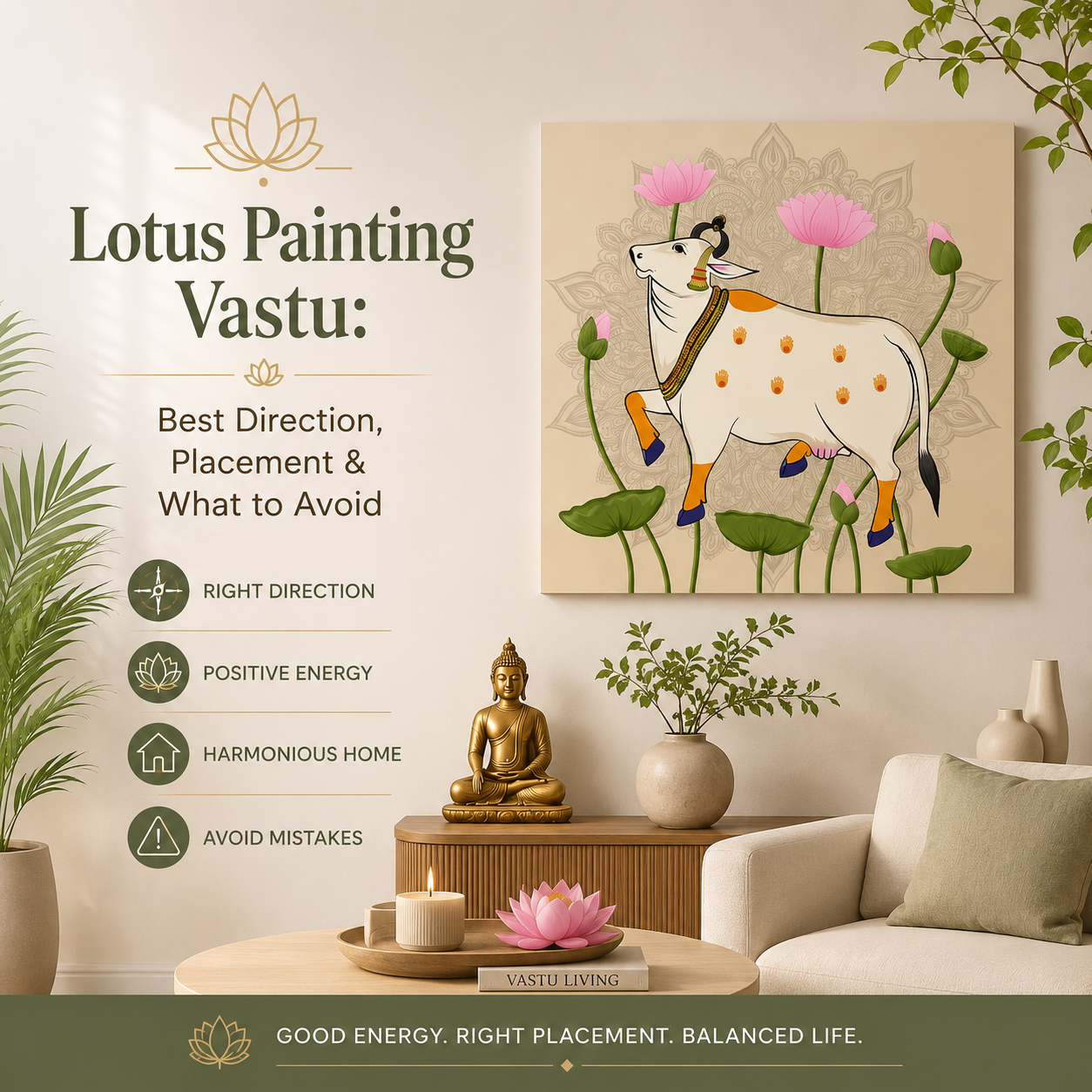
The lotus is one of the most recognisable symbols in Indian spiritual art — purity, prosperity, and spiritual growth, all wrapped into a single image. But like most Vastu-significant paintings, a lotus painting's effect depends heavily on where you actually hang it. Get the direction right and it's believed to support calm, clarity, and abundance. Get it wrong, and the same painting does very little for the room.
Here's a clear answer to the lotus painting vastu direction question, along with what to avoid and where it works best room by room.
Short Answer
The best direction for a lotus painting as per Vastu is north-east — the direction most closely tied to spiritual growth and purity, and the natural home for water-linked imagery like the lotus. East and north are strong alternates. South and west are generally avoided, since their fire and earth-element associations don't align well with the lotus's gentle, water-linked energy.
Why North-East Is the Ideal Direction
North-east is considered the most spiritually significant direction in Vastu Shastra, closely associated with water and divine energy. Since the lotus itself is a water flower with deep ties to purity and spiritual awakening, this pairing is considered especially strong — which is why a lotus painting is such a common choice for pooja rooms, meditation corners, and quiet reading nooks specifically in this direction. If your north-east wall is already home to devotional art, a lotus painting pairs naturally alongside it rather than competing with it.
East and North: Strong Alternates
If your north-east wall isn't available, east and north are both well-supported alternatives. East carries the rising sun's association with new beginnings and vitality, making a lotus painting here a good fit for health and overall wellbeing. North is tied to prosperity and steady growth, so a lotus painting placed there — particularly in golden or warm tones — leans into a wealth-and-career association rather than a purely spiritual one.
Directions to Avoid
South and west are generally not recommended for a lotus painting. Both are governed by more intense elements — fire in the south, and a heavier, more grounded energy in the west — that don't harmonise well with the calm, gentle symbolism the lotus carries. If you're decorating one of these walls, a different painting style is usually the better fit; our guides to south wall and west wall Vastu art cover what works better there specifically.
Colour and Composition
Colour carries meaning here too. White lotus paintings are tied to purity and spiritual clarity, making them the strongest choice for a pooja room or meditation space. Pink or red lotus imagery leans toward family wellness and warmth, a good fit for a living room. Golden lotus tones are the pick for anyone leaning into the wealth association, particularly on a north-facing wall. Whatever the colour, avoid a painting with torn petals, faded colour, or a damaged frame — a worn lotus image is considered to work against the calm energy it's meant to represent.
Shopping for a Lotus Motif
A pure standalone lotus painting is less common than lotus imagery worked into a broader devotional piece. Shrinath Ji Pichwai artwork is the most fitting option here — these traditional paintings incorporate lotus, along with cows and peacocks, into a single devotional composition, making them a natural pick for anyone drawn to the lotus's symbolism but looking for a fuller piece. Browse the Shrinath Ji wall art collection.
Room-by-Room Guide
Lotus Painting Vastu for Pooja Room
This is the strongest placement of all, particularly on a north-east wall. Since a pure lotus painting isn't something we stock directly, a Shrinath Ji Pichwai piece — which naturally incorporates the lotus motif alongside cows and peacocks — makes an excellent alternative here. Browse the Shrinath Ji wall art collection.
Lotus Painting Vastu for Living Room
An east or north-facing living room wall works well for lotus symbolism, especially in warmer pink or golden tones that suit a shared family space better than a purely meditative white lotus. A Shrinath Ji Pichwai piece captures this warmth naturally, with the lotus worked into a fuller devotional scene. Browse the Shrinath Ji wall art collection.
Lotus Painting Vastu for Bedroom
A softer-toned piece works well in a bedroom on a north or east-facing wall, supporting rest and calm without the higher intensity of more dramatic Vastu motifs. A softer, pastel-leaning Shrinath Ji Pichwai design carries the same gentle lotus symbolism here. Browse the Shrinath Ji wall art collection.
Lotus Painting Vastu for Study Room
Since the lotus is tied to clarity and calm focus, a north-east or east-facing study wall is a strong fit for anyone wanting a quieter alternative to more energetic study-room motifs. Browse the Shrinath Ji wall art collection for a lotus-motif option, or our study room wall art collection more broadly.
Frequently Asked Questions
What is the best direction for a lotus painting as per Vastu?
North-east is the most recommended direction, given its strong association with water, purity, and spiritual growth. East and north are both solid alternatives.
Can a lotus painting go on the south or west wall?
It's generally not recommended — both directions carry more intense elemental associations (fire and earth) that don't align well with the lotus's calm, water-linked symbolism.
Does the colour of the lotus matter?
Yes. White suits spiritual and meditative spaces best, pink or red suits family-oriented rooms like the living room, and golden tones lean into a wealth association, particularly on the north wall.
Is a lotus painting good for a bedroom?
Yes, especially in softer tones on a north or east-facing wall — it supports calm and rest without the intensity some other Vastu motifs carry.
Looking for more flower-based Vastu options beyond the lotus? See our broader guide on the purpose and Vastu benefits of flower paintings. If you're decorating a specific wall direction, browse our full range: north-east wall, east wall, and north wall collections.