
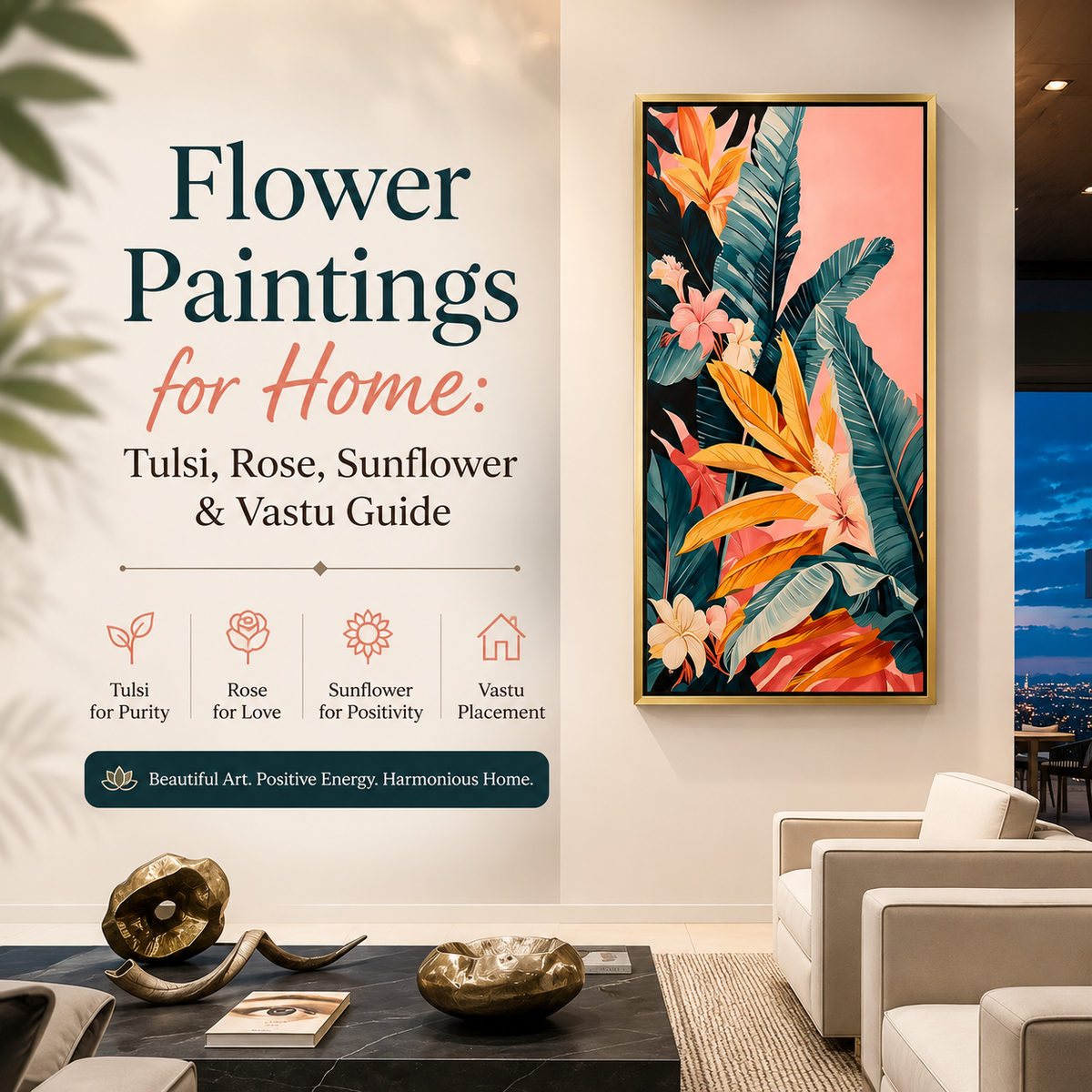
Flower paintings have been cherished for centuries- not just as décor, but as symbols of peace, growth, and beauty. Different flowers carry very different meanings, and in Vastu, the type of flower matters as much as where you hang it.
This guide covers Tulsi, rose, sunflower, and other popular flower paintings for home, along with general Vastu placement guidance. Looking specifically for lotus painting guidance? We've covered that in depth separately- see our Lotus Painting Vastu: Best Direction, Placement & What to Avoid guide.
Tulsi Painting: Meaning and Vastu Guidance
Tulsi (holy basil) holds a distinct place in Indian households, worshipped daily in many homes and closely associated with Goddess Lakshmi and the purity of the household. A Tulsi painting- often depicting the plant in its traditional Tulsi Kota or Vrindavan (the raised, decorated planter used at home)- is a devotional piece in its own right, separate from general flower art.
- Symbolism: purity, protection of the household, health, and daily devotion.
- Best direction: North-East, mirroring the traditional placement of a live Tulsi plant.
- Common styles: Tulsi Vrindavan/Kota-style paintings depicting the decorative planter, simple Tulsi leaf compositions, and colour-accented versions for a more contemporary take.
- Best rooms: courtyards, entrances, and pooja rooms- the same spaces where a live Tulsi plant is traditionally kept.
- What to avoid: paintings showing wilted or browning Tulsi leaves- as with most devotional flower imagery, the plant should read as fresh and thriving.
Rose Painting: Meaning and Placement
The rose is one of the most universally recognised symbols of love, warmth, and emotional connection.
- Symbolism: love, passion, and emotional expression.
- Best rooms: living rooms and bedrooms, where its warmth suits shared or intimate spaces.
- Vastu note: red and pink tones work well in the South-East (the direction associated with relationships and warmth in some Vastu traditions) or East; avoid pairing a rose painting with imagery of wilted or dropping petals, which undercuts the intended warmth.
Sunflower Painting: Meaning and Placement
Sunflowers are associated with energy, optimism, and loyalty- largely thanks to their natural tendency to follow the sun.
- Symbolism: positivity, vitality, and steady loyalty.
- Best rooms: kitchens, hallways, and workspaces- anywhere a boost of energy is welcome.
- Vastu note: East wall placement pairs naturally with the sunflower's own sun-facing symbolism, reinforcing the fresh-start, health-oriented associations of that direction.
Other Flower Paintings Worth Knowing
- Cherry blossom painting- represents beauty in transition and the impermanence of life; suits modern, minimalist living rooms.
- Tulip or lily painting- associated with grace and elegance; a softer choice for guest rooms and lounges.
- Lotus painting- deeply tied to purity, prosperity, and spiritual growth; best on the North-East, East, or North wall. We cover this in full detail, including colour meaning and room-by-room guidance, in our dedicated Lotus Painting Vastu guide.
General Vastu Tips for Flower Paintings
Regardless of the specific flower, a few placement principles apply broadly:
- North, North-East, or East walls are generally the strongest choices for flower paintings- associated with peace, clarity, and fresh starts.
- Living rooms and hallways suit larger, more vibrant flower paintings well, energizing shared spaces and welcoming guests.
- Avoid wilted, dead, or falling-petal imagery- regardless of which flower is depicted, this is generally read as stagnant or negative energy in Vastu, and the effect is thought to outweigh whatever positive symbolism the specific flower carries.
- Match the flower to the room's purpose- Tulsi and lotus for devotional or meditative spaces, rose for personal/intimate spaces, sunflower for energizing shared or work spaces.
Frequently Asked Questions
Which flower painting is good for home?
Tulsi for daily devotion and protection, lotus for spirituality and peace, rose for love and warmth, sunflower for positivity and energy.
Is a Tulsi painting good for Vastu?
Yes- Tulsi is associated with purity and protection, and a Tulsi painting is best placed in the North-East, entrance, or pooja room, mirroring where a live Tulsi plant is traditionally kept.
Which direction is best for flower paintings generally?
North, North-East, or East are the most commonly recommended directions across most flower symbolism, though the ideal choice can vary by the specific flower- see our lotus-specific guide for that flower's exact direction guidance.
Can I place a flower painting in the bedroom?
Yes- calming choices like rose or softer-toned florals work well. Avoid paintings depicting wilted or dying flowers regardless of the room.
Where can I buy flower paintings online?
Browse Cipher Spaces' Floral Wall Art collection for Tulsi, rose, sunflower, and devotional flower-motif paintings.
Final Thoughts
Different flowers carry genuinely different meanings- Tulsi for daily protection, rose for warmth, sunflower for energy- and choosing the right one for each room matters as much as getting the Vastu direction right. For lotus specifically, our dedicated guide covers direction, colour meaning, and room-by-room placement in full.
Browse the Floral Wall Art collection for Tulsi, rose, sunflower, and other flower-motif paintings. For a full lotus-specific breakdown, see our Lotus Painting Vastu guide.