
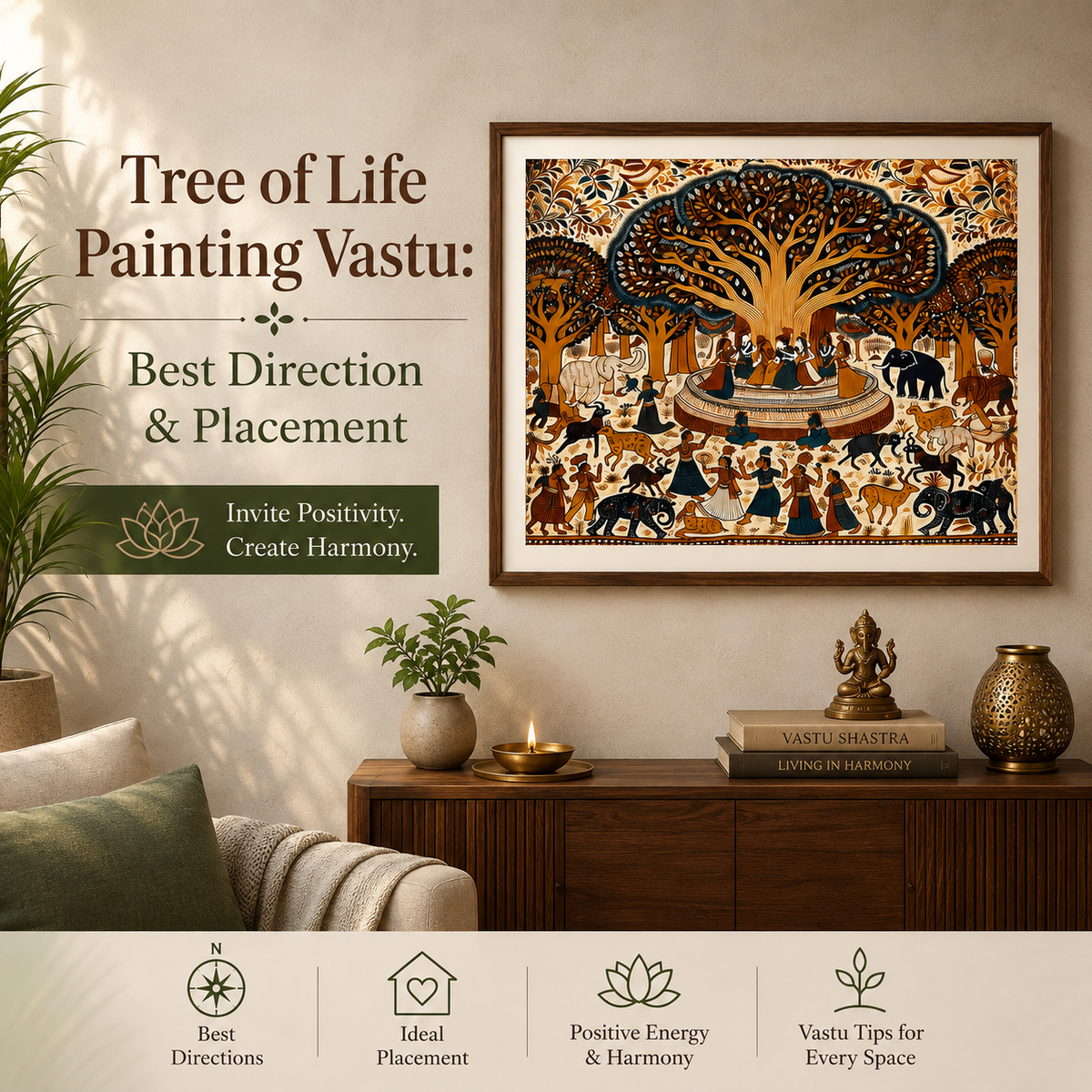
The Tree of Life - roots reaching into the earth, branches stretching toward the sky - is one of the more universal symbols in spiritual art, showing up across Hindu, Buddhist, and folk traditions alike. In Vastu Shastra specifically, it's tied to growth, abundance, and the interconnectedness of everything in a household. Like most Vastu-significant motifs, though, its placement matters as much as the painting itself.
Here's a clear answer to the tree of life painting vastu direction question, along with how to bring the motif into your home.
Short Answer
The best direction for a Tree of Life painting as per Vastu is east or north-east - both governed by the air element, associated with growth, wealth, and spiritual clarity. North is a solid secondary option, particularly if career growth and financial clarity are the priority. Avoid pairing the motif with dark, cluttered, or worn imagery - a Tree of Life painting is meant to represent vitality, and a tired-looking piece works against that.
Why East and North-East Work Best
Both east and north-east are air-element directions in Vastu, and air is closely tied to growth and expansion - a natural pairing for a motif that's literally about a tree growing in both directions at once. North-east carries the added weight of being the most spiritually significant zone in a home, which is why a Tree of Life painting here is often placed alongside other devotional or meditative pieces rather than as a standalone statement.
North: A Strong Alternate for Career and Prosperity
If east or north-east isn't available, the north wall is a reasonable substitute, particularly for anyone leaning into the tree's association with financial clarity and career growth over its more spiritual symbolism.
Placement Details That Matter
A few practical notes beyond direction: hang the painting at a visible height, ideally around six feet from the floor, in a well-lit and uncluttered spot. Avoid a painting with visible wear, fading, or damage - a worn depiction of a tree meant to symbolise growth is considered to work against its own purpose.
Shopping for a Tree of Life Motif
A dedicated Tree of Life collection isn't something we've built out yet, but the motif does show up in a few of our traditional and folk-art pieces - Madhubani and Kalamkari-style paintings in particular often incorporate the Tree of Life as a central theme, alongside birds, animals, and floral detail consistent with its traditional depiction. Browse the traditional wall art collection to see what's currently available.
Frequently Asked Questions
What is the best direction for a Tree of Life painting as per Vastu?
East or north-east is most recommended, both being air-element directions associated with growth and prosperity. North is a solid alternate for a more career-and-finance-focused placement.
Can a Tree of Life painting go in the living room?
Yes - an east or north-east facing living room wall works particularly well, since the room's shared, communal nature aligns with the motif's symbolism of interconnectedness.
Does the style of the painting matter - traditional versus modern?
Not fundamentally. Traditional folk-art styles like Madhubani often carry the motif more explicitly, but the underlying Vastu significance holds regardless of artistic style.
Looking for more air-element, growth-linked Vastu guidance? See our north-west wall Vastu paintings guide, which covers the same element from a different direction. If you're decorating a south-west wall specifically, note that Tree of Life symbolism is sometimes associated with that direction too - our south-west wall guide covers the stronger, more traditional choices for that zone.